
Emergency Air Duct Cleaning Near Me: What Suffolk Homeowners Should Do First
If you search “emergency duct cleaning” and call the first number you find, you’re likely to get a cleaning crew when what you actually need first is a containment assessment. True duct emergencies – smoke contamination after a fire, sewage backup into the system, or confirmed mold spread – have a sequence, and cleaning is rarely step one. In Suffolk, the right order is containment, source identification, documentation, then cleaning. Get the order wrong and you can spread the problem through the house before anyone touches a vacuum. If you’d rather not sort through that yourself, call (855) 740-0661 and we’ll walk you through it.
What Counts as a Real Duct Emergency in Suffolk?
A genuine duct emergency is any situation where contamination is actively moving through your HVAC system and can spread to rooms that aren’t yet affected. That’s a narrow category. Most of what people panic about falls into urgent but not emergency, and the difference changes who you call first.
- Post-fire smoke contamination – Soot and smoke residue have entered the return side of the system. Running the air handler pushes that residue into every room it serves.
- Sewage backup into ductwork – Standing water or sewage has reached duct runs, usually through a slab penetration or a flooded crawl space. This carries biological contamination and needs remediation-grade handling, not a shop vac.
- Confirmed mold spread inside the ducts – Visible growth on duct interior surfaces, or a musty smell that returns within days of any cleaning attempt. Confirmation matters here; a smell alone isn’t proof.
Here’s what’s urgent but not an emergency: a dusty house after a renovation, a dryer that takes two cycles, a musty smell you can’t pin down, or a system that hasn’t been cleaned in years. Those deserve a scheduled appointment, not a panic call. Knowing which bucket you’re in saves you money and keeps you from hiring the wrong trade.
Why Running Your HVAC After Smoke, Sewage, or Mold Is the Big Mistake
Turning on the system is the single most common thing Suffolk homeowners do before help arrives, and it’s the one thing that makes the situation worse. The air handler is a distribution machine. Whatever is sitting in the return plenum or on the duct walls gets pulled in, filtered poorly, and pushed out into living spaces.
After a fire, that means smoke residue lands on soft surfaces in rooms the fire never touched. After a sewage backup, it means biological contamination migrates from one wet section into dry ducts and carpet. With mold, it means spores that were localized get a fresh distribution across the whole house. Filters help, but a standard filter isn’t designed to stop soot particles or sewage aerosols, and a loaded filter just bypasses air around its edges.
What to do instead: shut the system off at the thermostat, close the registers in the affected area if you know where it started, and leave the house ventilated with windows if the weather allows. Don’t spray sanitizer into the return – it makes the assessment harder and can void remediation work. Don’t run a box fan to dry things out near the affected ducts either. Still air is your friend until someone qualified looks at the system.
What a Legitimate Remediation-Grade Response Actually Includes
A real emergency response has four components, and vacuuming is only one of them. If a company shows up with a shop vac, a blower, and a can of sanitizer spray, that’s not a remediation response – it’s a surface cleaning dressed up as one.
- Containment – Plastic sheeting and sealed openings so debris can’t escape into occupied rooms during the work.
- Source identification – Finding where the contamination entered. A fire has a room of origin. Sewage has a broken line or a flooded crawl. Mold has a moisture source. Cleaning without finding the source means it comes back.
- Negative pressure protocol – A HEPA air machine pulling the work area into negative pressure so contaminants flow toward the equipment, not into your kitchen. This is what Abatement Technologies equipment is built for, and it’s why the work stays contained rather than just moved.
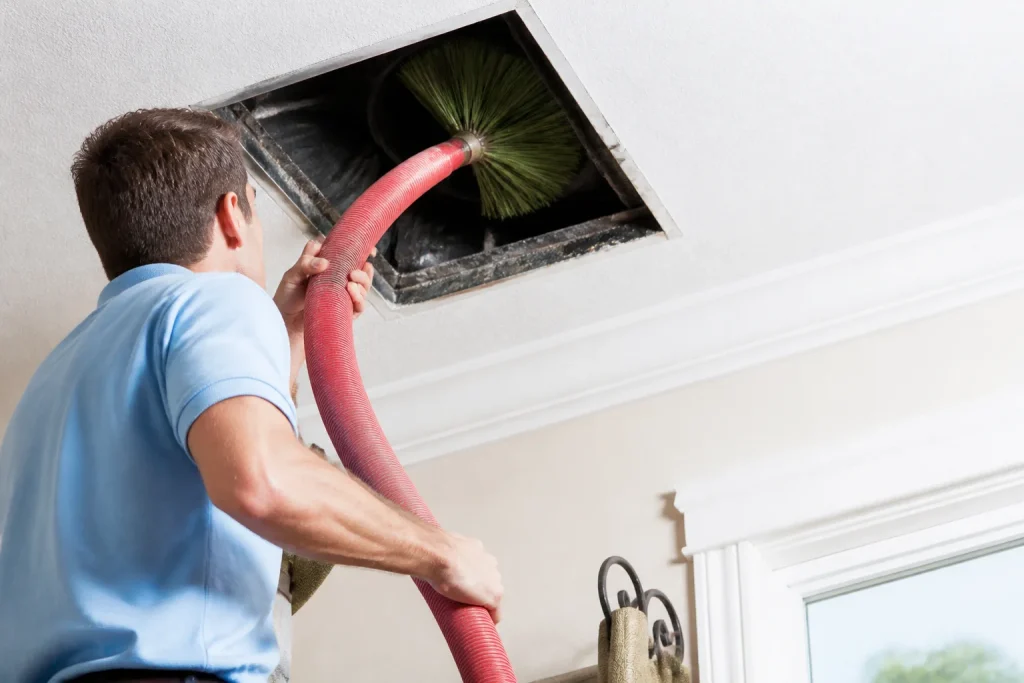
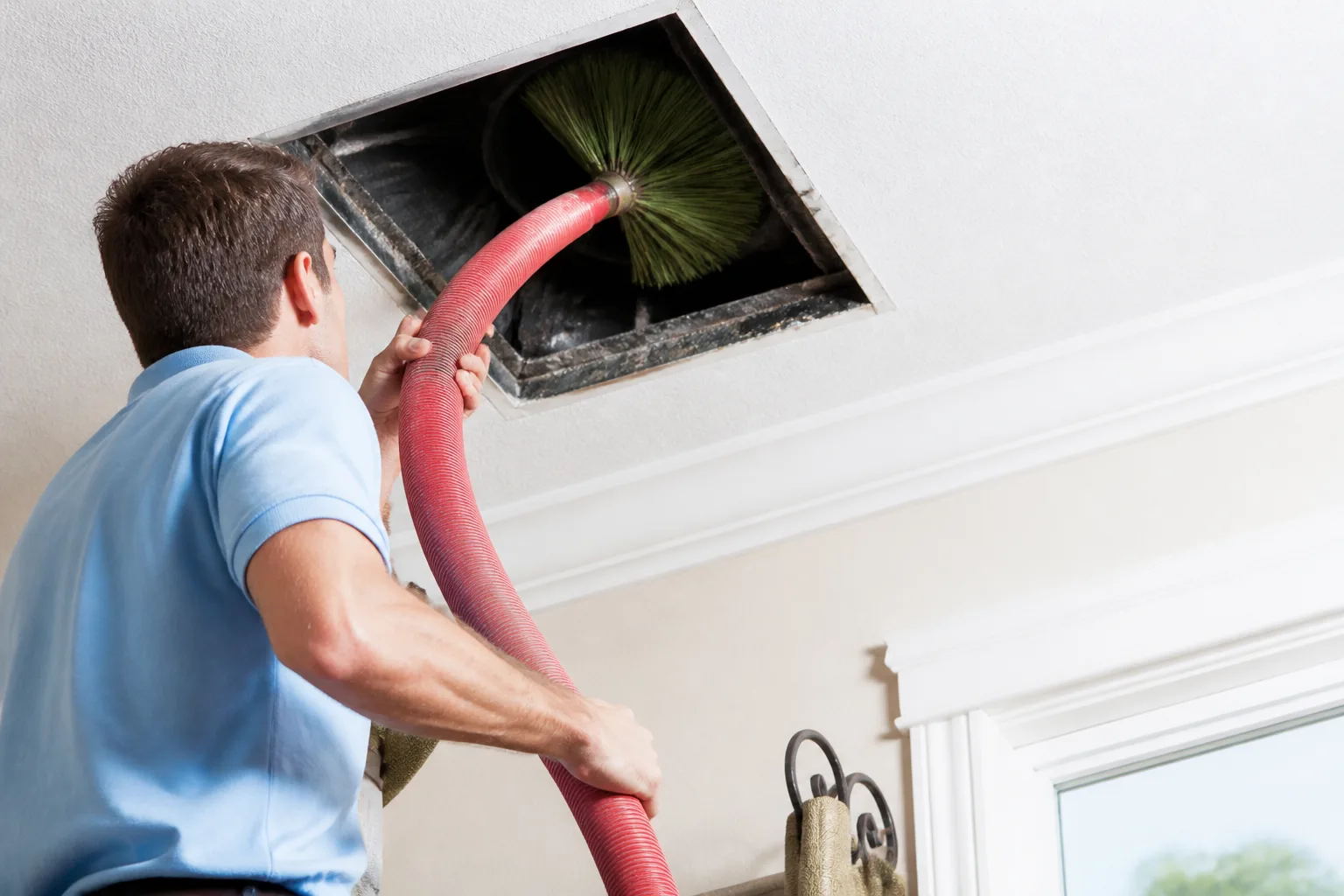
- Contact cleaning of the duct interior – Mechanical agitation with a system like Rotobrush, paired with a high-powered vacuum like Nikro to capture what’s loosened, so debris leaves the house instead of redistributing.
Air duct repair belongs in this list too. A fire can warp flex duct, and a sewage event can leave sections that need replacement, not cleaning. Air duct cleaning fixes contamination; repair fixes structure. Skipping the repair step leaves a compromised system that will contaminate again.
What happens when you call
- 1
A real person answersNo phone trees – you reach a local pro.
- 2
You get an upfront price rangeHonest numbers before anyone is dispatched.
- 3
A background-checked tech heads outLicensed & insured, dispatched right away.
- 4
You approve before work beginsNothing starts until you say go.
How to Document the Event for Insurance Before Anyone Touches Anything
Documentation happens before cleaning, full stop. Once a crew disturbs the ducts, the evidence that supports your claim is gone, and adjusters work from evidence. This is the step homeowners most often skip because they’re focused on getting the mess out of the house.
- Photograph and video every affected room, register, and visible duct opening before anything is moved.
- Photograph the source – the fire origin, the sewage line, the visible mold growth – with something for scale.
- Keep the receipts for any emergency mitigation: water extraction, board-up, hotel stay while the house is uninhabitable.
- Get a written scope of work from the mitigation or remediation company before work begins, and keep a copy.
- Save the HVAC service records you already have, if any. They establish the system’s condition before the event.
Your insurer can work with you on sequencing, and most will want the mitigation company to document before remediation. We’ve seen claims get complicated when the order was reversed, so it’s worth the extra ten minutes to take photos before anyone lifts a register cover.
Who to Call in Suffolk, and in What Order
Duct cleaning is typically third in line, not first. That surprises people, but it reflects how the work actually depends on the steps before it.
- Mitigation company – The one that gets called first for water, sewage, or fire damage. They handle extraction, drying, and containment of the immediate hazard. This is often a separate trade from duct cleaning.
- HVAC technician – Confirms whether the system is safe to run, checks the air handler and coils, and identifies any damaged components that need repair or replacement before cleaning begins.
- Duct cleaning and repair – Once the source is controlled and the system is cleared for service, cleaning and any duct repair happen. That’s where we come in.
- Insurance adjuster – Reviews the documentation and the scope. Sometimes this happens in parallel with step three, which is fine as long as the photos are already taken.
If you’ve had a dryer vent fire scare in Suffolk rather than a full duct emergency, the logic is simpler: dryer vent cleaning is a risk-reduction service, and NFPA-cited fire risk is a safety reason to schedule it, not a reason to panic. Call us and we’ll book it as a normal appointment.
When to call a pro
Call a professional when the contamination source isn’t obvious, when the system has been running since the event, when you can see growth or standing moisture inside a duct, or when your insurer needs a written scope. Our technicians have up to 12 years of experience, and we use professional-grade equipment because a consumer-grade vacuum can’t capture what’s already airborne. We answer 24/7. Fast dispatch from 7am to 7pm, Sunday through Friday. A call outside dispatch hours is booked into the next opening.
Related services in Suffolk: if your system is due for routine maintenance rather than emergency work, our Duct Cleaning Suffolk page covers the standard scope, pricing, and what to expect on a typical scheduled visit.
The Bottom Line
True duct emergencies in Suffolk are narrow: post-fire smoke, sewage intrusion, or confirmed mold. For those, the sequence is containment, source identification, documentation, then cleaning. Turn the system off first, take photos before anyone touches anything, and call the mitigation company before the duct crew. Cleaning is third in line because it depends on the steps that come before it, and skipping them means the problem comes back.
Urgent but not emergency – a dusty post-renovation house, a slow dryer, a musty smell – is a scheduled appointment, not a crisis. We work with the systems already in your home, including Honeywell and Aprilaire air-quality setups, so if you’ve invested in filtration, we’ll understand what you’re working with.
If you’re in Suffolk and need help, Duct Cleaning Suffolk offers free estimates – call (855) 740-0661. We answer 24/7. Fast dispatch from 7am to 7pm, Sunday through Friday. One flat price per system, agreed before work starts, and before-and-after photos of your own ducts so you can see what was actually removed. We can work with your insurer on documentation for remediation-related cleaning.
Frequently Asked Questions
No. The price is set per job by the written estimate, based on what the system needs, not on when you call. Remediation-grade work takes longer because of containment and negative pressure, and that scope is reflected in the estimate – but there’s no emergency surcharge. Call (855) 740-0661 for an exact quote; estimates are free.
No. Running the system pushes soot and smoke residue from the return side into rooms that weren’t affected by the fire. Shut the system off at the thermostat, ventilate with windows if weather allows, and wait for an assessment. Once the source is controlled and the system is checked by an HVAC technician, cleaning can follow.
Usually because containment and negative pressure aren’t included, which means debris gets moved around the house instead of captured and removed. A low quote often means a shop vac and a sanitizer spray rather than Abatement Technologies containment equipment and Rotobrush contact cleaning. Ask what equipment they’ll use and whether the work is contained. Then call (855) 740-0661 for a comparison quote – estimates are free.
Ask for before-and-after photos of your own ducts, not stock images. A legitimate crew will also walk you through what they found at the source and what they removed. We provide both as standard. Call (855) 740-0661 to schedule an estimate.
Written by the team at Duct Cleaning Suffolk.
Need Air Duct Cleaning Help?
Call Duct Cleaning Suffolk - licensed & insured, here with fast help in Suffolk.
(855) 740-0661