
Last updated November 15, 2026
 Whole-home duct cleaning
 Dryer vent cleaning
 Camera inspection
 Sanitizing & deodorizing
Whole-system duct and dryer vent check with before-and-after photos - you see exactly what came out of your vents
That "$99 whole-house special" is a bait ad - the real number appears once they are in your hallway, or the "clean" is a shop-vac at the register. We photograph the inside of your ducts before and after instead.
The Complete Guide to Air Duct Cleaning in Suffolk
Most homeowners assume duct cleaning is a spring-cleaning chore, best done when the house starts to smell stale. In Suffolk, the timing and the scope of the job are shaped by something bigger: the air itself. This city sits inside one of the highest humidity corridors on the East Coast, and for months at a stretch relative humidity climbs past 70%. That’s the threshold where ordinary household dust stops being loose and starts binding with moisture, giving mold the conditions it needs to establish. Add the pine canopy that sheds pollen across the region every spring, and the inside of a Suffolk duct system sees a different accumulation pattern than a home in a drier market. This guide covers what actually builds up in local ductwork, how professional cleaning differs from a consumer-grade blowout, when repair should come before cleaning, and how to judge a quote without getting burned by bait-and-switch pricing. You’ll finish knowing exactly what a legitimate job covers in Suffolk and what questions to ask before anyone climbs into your attic.
Quick Answer
Air duct cleaning in Suffolk removes accumulated dust, pollen, and moisture-bound debris from the entire duct system, not just the visible grilles. A complete job reaches the supply lines, return plenums, coil compartment, and register boots using professional vacuum and contact-cleaning equipment. In Suffolk’s humid climate, cleaning is typically warranted every few years, or sooner after a renovation, a mold discovery, or a noticeable drop in airflow.
Styles & brands we work with
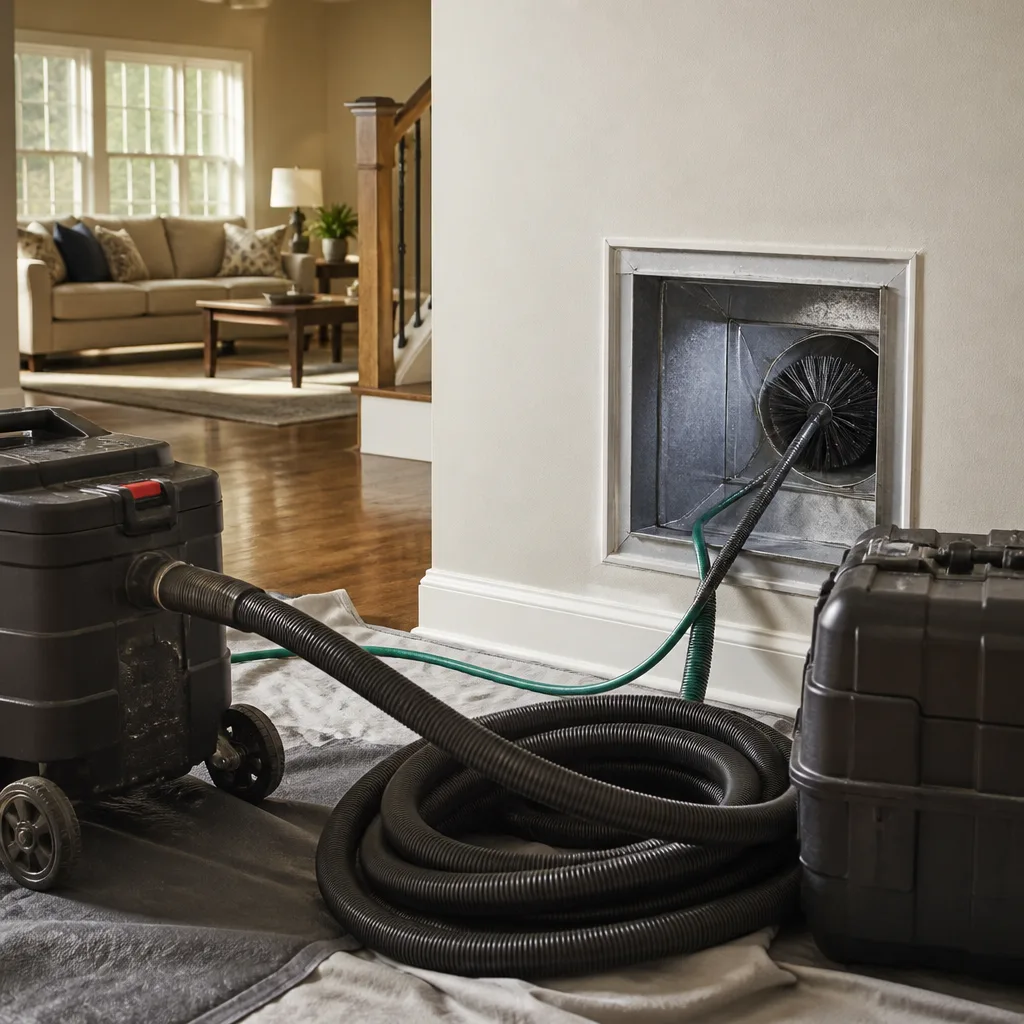
- Whole-home duct cleaning
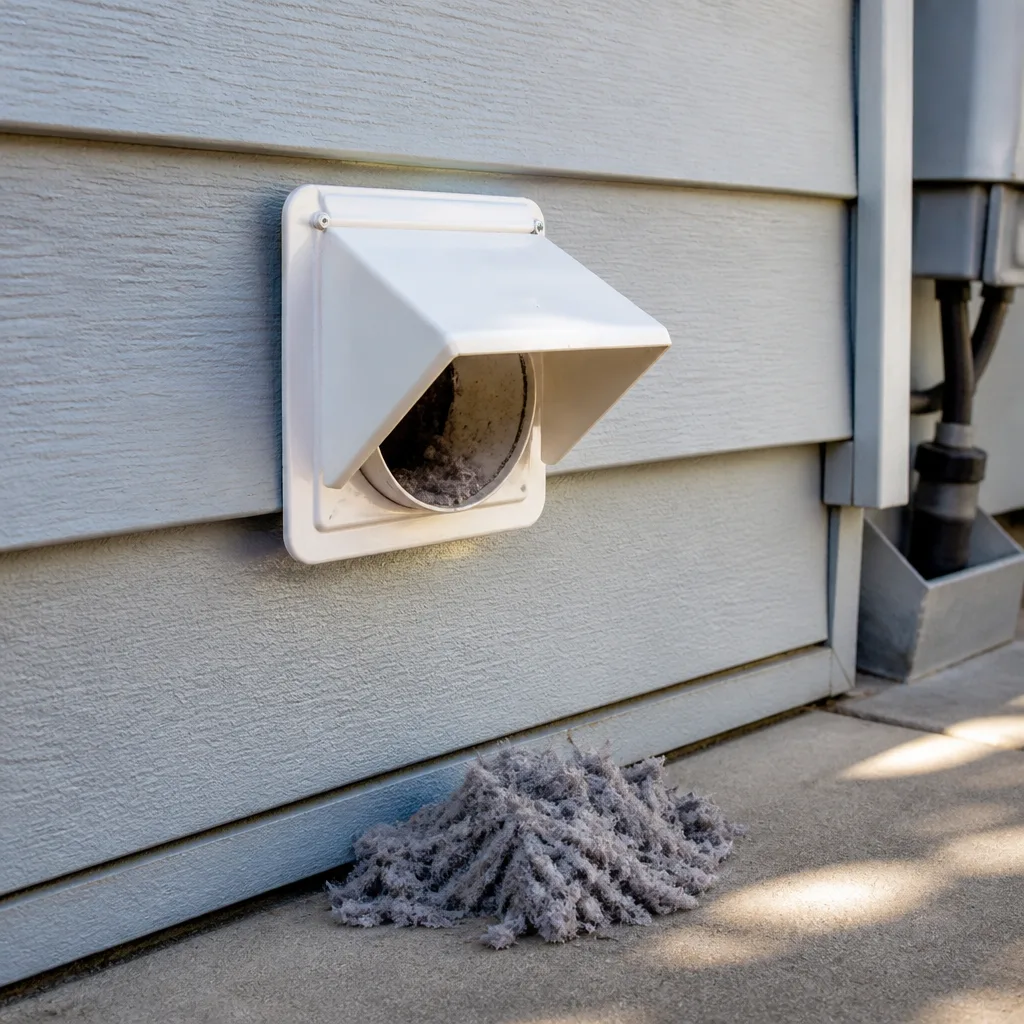
- Dryer vent cleaning
- Camera inspection
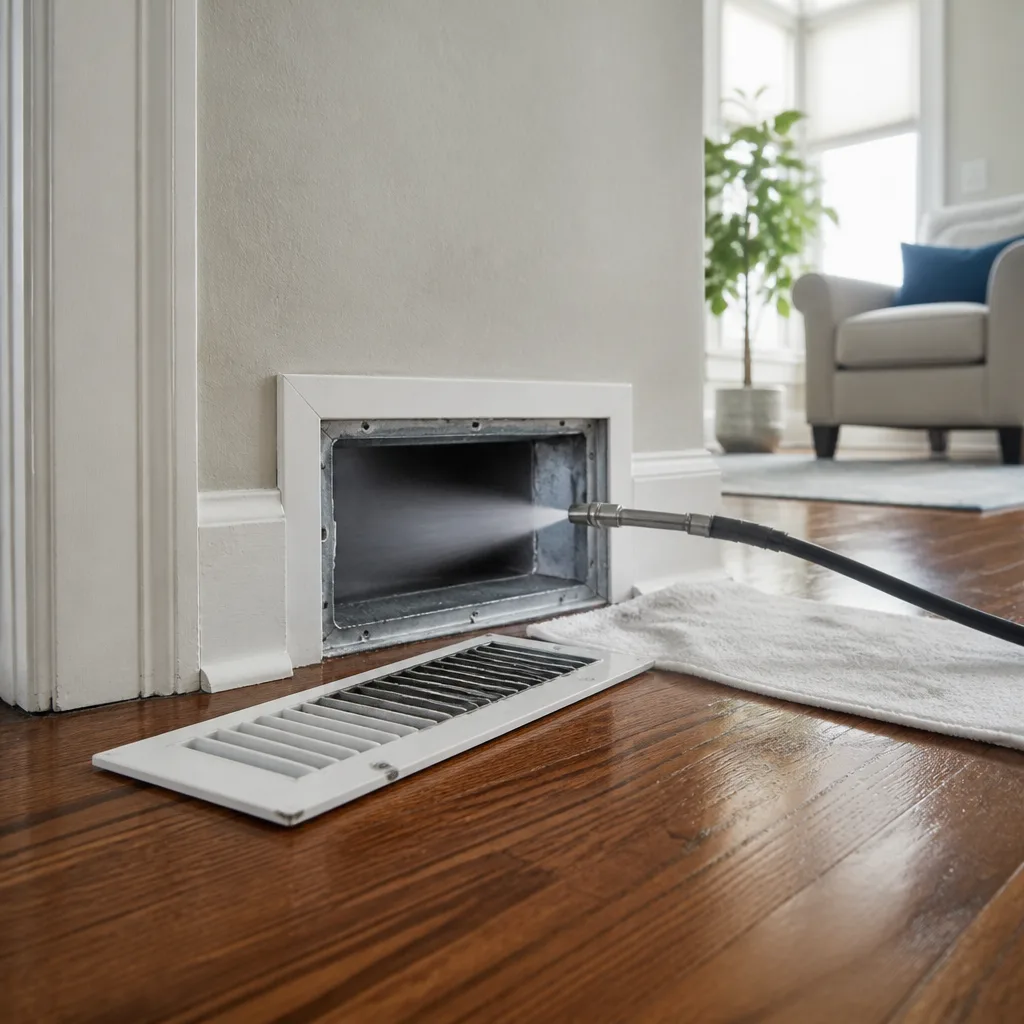
- Sanitizing & deodorizing
Table of Contents
- Why Suffolk Ductwork Collects Contaminants Differently
- How Humidity and Pine Pollen Change What Accumulates
- Equipment Class: Negative-Pressure Vacuums vs. Portable Units
- What a Legitimate Cleaning Scope Actually Covers
- How Suffolk’s Older Housing Stock Changes the Approach
- When Cleaning Is the Right Call and When Repair Comes First
- How to Judge a Duct Cleaning Quote in Suffolk
- Common Mistakes to Avoid
Why Suffolk Ductwork Collects Contaminants Differently
Suffolk sits in a stretch of the Mid-Atlantic where humid air parks for months rather than passing through. The area’s tidal rivers and low-lying terrain hold moisture in the air well into the summer, and the surrounding pine canopy releases a heavy seasonal pollen load every spring. Neither factor alone is unusual. Combined, they create a duct environment that behaves differently from what you’d find in a drier inland market, and that changes both what accumulates and how often it needs to come out.
The core issue is what happens to ordinary dust when moisture is present. In a dry climate, dust stays powdery and largely blows through the system or settles loosely in horizontal runs. In Suffolk, that same dust absorbs ambient moisture and becomes tacky. It sticks to duct walls instead of passing through, and once it’s stuck it holds onto whatever else travels past: pollen, pet dander, cooking particles, construction dust from the renovation down the street. Over a season or two, those layers build up and reduce the effective cross-section of the duct, which is one reason airflow feels weaker in a humid Suffolk home even when the HVAC equipment itself is working correctly.
Homeowners often assume the filter is catching everything and the ducts stay clean as a result. That’s rarely true. A standard 1-inch filter protects the equipment, not the ductwork downstream of it, and it only catches a fraction of fine particles. The duct interior is where the accumulation really lives, and it’s invisible from the register grille. A look inside a supply run during a service visit usually tells a different story than the homeowner expects.
If you’re weighing whether your own system is due, our air duct cleaning page walks through the signs worth watching for in this climate.
How Humidity and Pine Pollen Change What Accumulates
When relative humidity stays above 70% for extended periods, dust that would otherwise stay loose starts binding with moisture. That’s a real threshold, not a marketing talking point. Below it, most dust remains friable and easy to extract. Above it, duct surfaces stay damp enough that accumulation becomes sticky and layered. The practical consequence is that Suffolk homes tend to accumulate a denser, more adhesive coating than homes in drier climates, and that coating is harder to remove with anything short of proper contact cleaning.
Mold is the second concern. Mold needs moisture, organic material, and the right temperature to establish. In a humid Suffolk duct system, all three are usually present. That doesn’t mean every home has a mold problem. It means the conditions exist for one, and the difference often comes down to how well the system has been maintained and whether a moisture source has been allowed to persist. A slow drip from a poorly sealed duct joint or an improperly sized return can raise humidity inside the duct run above the rest of the house, which is exactly the setup mold exploits.
Pine pollen adds a seasonal layer on top. In spring, fine pollen travels into the return system and settles on the same tacky surfaces the moisture has prepared. Left in place, pollen becomes part of the bonded layer and stays until the duct walls are physically cleaned, not just blown through. Running the HVAC fan constantly during pollen season doesn’t solve the problem. It just pushes more material into the system faster.
This is why a “blow-and-go” job does so little in Suffolk. Air movement alone can’t break the bond between moisture-bound accumulation and the duct wall. Something has to physically agitate the surface while a vacuum extracts what’s freed.
Equipment Class: Negative-Pressure Vacuums vs. Portable Units
The single biggest difference between one duct cleaning quote and another is the equipment behind it. Professional cleaning extracts debris from the system; consumer equipment displaces it. If you watch a crew work and you can’t see a high-powered vacuum connected to the trunk line, the job isn’t set up to remove what’s in the ducts. It’s set up to move it into your living room.
Here’s what separates the two approaches:
- Negative-pressure extraction. A high-powered vacuum unit, systems like Nikro or comparable professional units, pulls a sustained vacuum on the trunk line while the technician works each branch. Debris is drawn out of the house, not into the room.
- Contact cleaning. Rotobrush-style rotary tools pass a whipping brush and vacuum head through each supply run. That mechanical agitation is what breaks the bonded layer loose. Air alone cannot do it.
- Containment. Negative-air equipment from a manufacturer like Abatement Technologies pulls contaminated air into a HEPA-filtered unit and exhausts clean air. Where dust or possible mold is a concern, containment is what keeps the work from spreading particles through the house.
- Consumer-grade shortcuts. Shop-vacs, leaf blowers, and compressed-air “whips” have no way to capture the material they dislodge. They aerosolize it, which is the opposite of cleaning.
In a humid Suffolk home where accumulation tends to be adhesive, contact cleaning is even more important than in a dry market. Rotary brush systems physically scrub the duct wall. Without that step, the moisture-bound layer simply stays in place, and the homeowner ends up paying for a visit that looks thorough but doesn’t remove the accumulation.
The brand names on the equipment aren’t there as decoration. Rotobrush, Nikro, and Abatement Technologies are the same systems certified HVAC contractors and remediation crews use for the same reason. They work. When a company invests in this tier of equipment, it can actually deliver on the scope it quoted.
What a Legitimate Cleaning Scope Actually Covers
A complete cleaning touches far more than the grilles you see on the wall. Those visible registers are the easy part; the accumulation that matters lives further up the system. Here’s what a full-scope job should include in a Suffolk home:
- Register boots and grilles. The short transitions between the ductwork and the register. Easy to miss, but they collect as much debris as the runs themselves.
- Supply lines. Every duct branch that carries conditioned air to a room. Each one needs individual contact cleaning, not just a pass with air.
- Return plenums and return ducts. Often the heaviest accumulation in the system, because return air carries unfiltered particles back through the house.
- Coil compartment access. The area around the evaporator coil, where airflow is highest and dust tends to deposit. Access to this area is a real scope point, not a bonus.
- Main trunk lines. The large ducts feeding and returning from the air handler. Negative pressure is applied here so the whole system is under vacuum during cleaning.
- Air handler exterior. The cabinet around the blower and coil, which collects dust that would otherwise re-enter the ducts.
A company that quotes a low price and only runs a hose through the visible grilles is not cleaning the system. It’s cleaning the doorway. If a quote doesn’t specify supply lines, returns, and coil access, ask for it in writing. The scope on paper should match the scope in the attic.
Whole-home filtration adds another layer worth discussing. Homes that run Honeywell or Aprilaire air-quality systems benefit from cleaning that accounts for the filtration setup, because filter media, cabinet configuration, and bypass ducts all affect where debris ends up. Our technicians have up to 12 years of experience and know these systems well enough to clean without interfering with the setup you’ve invested in.
How Suffolk’s Older Housing Stock Changes the Approach
A cleaning plan built for slab construction doesn’t fit a Suffolk home with a crawl space foundation and a flex duct system. That older stock makes up a meaningful share of the city’s housing, and it changes both the technical approach and the equipment setup.
Crawl space foundations mean a portion of the ductwork runs through an unconditioned, humid zone. In Suffolk, those crawl spaces stay damp for much of the year, and flex duct laid across the ground or pulled tight under joists is exposed to moisture in a way slab ducts never are. That exposure matters for two reasons. First, flex duct interior surfaces are corrugated, which gives pollen and dust more places to cling. Second, if flex duct sags, the low point collects condensation and becomes the first place to show mold growth.
Access is the other constraint. Flex duct and older rigid systems often have fewer access points from above, which means the technician has to work from the crawl space, attic, or both. The right equipment setup handles that; a portable vacuum on a long hose with no contact-cleaning tool usually doesn’t. When you’re comparing quotes on an older Suffolk home, ask whether the company plans to clean from inside the crawl space, not just from the registers.
Older duct systems also tend to have compromised insulation wrap or disconnected joints. A cleaning that uncovers those problems is worth more than one that ignores them, because a disconnected joint is a durability issue, not just a dust issue. If the scope includes opening a duct joint to clean behind it, take the opportunity to check the joint while it’s accessible.
Suffolk neighborhoods across the city have systems in every stage of wear. The cleaning plan that fits one home won’t necessarily fit the house next door, so a walkthrough before quoting matters more here than it does in a uniform housing market.
When Cleaning Is the Right Call and When Repair Comes First
Cleaning and repair are separate jobs, and sometimes repair has to come first. Cleaning a system with badly compromised ductwork is like mopping a floor that’s still leaking; it works until the next rain. Here’s how to tell which problem you actually have:
Cleaning is the right call when:
- Airflow has been dropping gradually and registers feel weak.
- The home has a persistent dust smell when the HVAC runs.
- There’s been a renovation and construction dust got into the system.
- Allergy or asthma symptoms seem to worsen indoors.
- It’s been years since the ducts were last cleaned and the system is otherwise intact.
Repair should come first when:
- Ductwork is disconnected, crushed, or pulled apart at a joint.
- Flex duct is torn or collapsed in a run.
- Insulation wrap has failed and is introducing material into the airstream.
- A duct run sags in a way that’s collecting condensation.
- Airflow issues trace to physical damage rather than accumulation.
The distinction matters because cleaning a damaged system pushes air through a leak, not into the room it was meant for. If a supply run is disconnected in the attic, cleaning it doesn’t fix the fact that the air never reaches the room. Repair restores the system’s ability to deliver; cleaning restores its cleanliness. Doing them in the right order makes both jobs hold up longer.
Having both capabilities under one call matters in Suffolk, because the same older housing stock that needs thorough cleaning also tends to have more joint and wrap issues to find. Our Suffolk service overview covers the full scope of cleaning and repair together. When both are on the menu, a single visit can resolve contamination and structural problems rather than leaving the homeowner to call a second company for the repair.
How to Judge a Duct Cleaning Quote in Suffolk
Duct cleaning has a reputation problem, and it comes from the gap between a low teaser quote and the invoice that arrives afterward. The fix is to price the whole system, not the number of vents, and to put the scope in writing. A legitimate quote describes what gets cleaned, names the equipment, and states one flat price before anyone starts work.
Here’s what to look for when evaluating a company in Suffolk:
- One flat price for the whole system. Not per-vent, not per-register, not a coupon that expands once the technician is on site. Whole-system pricing avoids the bait-and-switch the industry is known for.
- Equipment named, not implied. Ask what vacuum and contact tools the crew brings. If the answer is vague, the equipment likely is too.
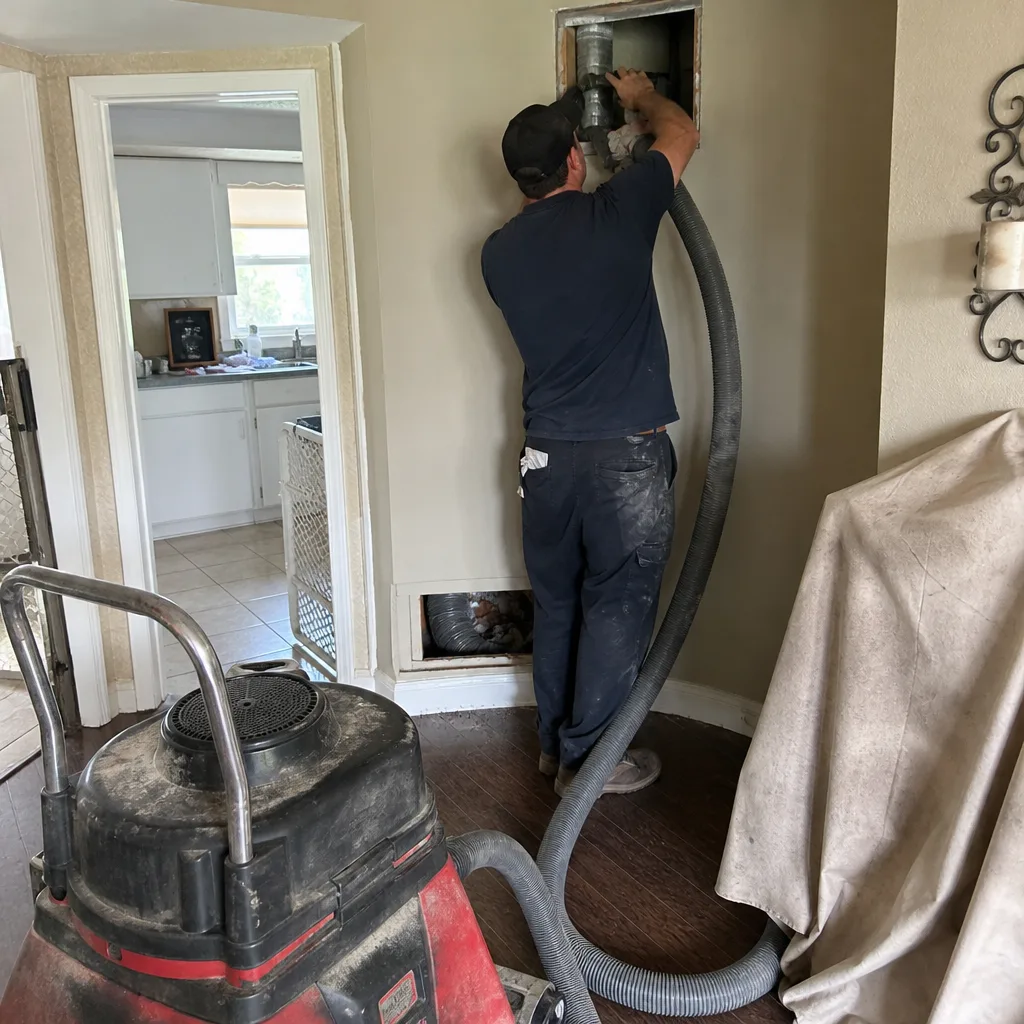
- Before-and-after photos. A reputable company documents the work with photos of your own system, not stock images. This is the best proof of what actually happened in your attic.
- Real containment for dust-sensitive jobs. If you have mold concerns or respiratory sensitivity, ask whether negative-air equipment is used.
- Repair capability, or a clear referral. If the cleaning uncovers damaged ductwork, does the company fix it, or leave you to find someone else?
Pricing per system is the single clearest sign a company is being straight with you. Per-vent pricing invites the crew to find add-ons mid-job. Whole-system pricing means the number you agreed to is the number you pay.
For the specific safety service that addresses fire risk in the home, see dryer vent cleaning. It’s a separate system from the HVAC ducts but uses much of the same equipment and deserves its own visit.
Common Mistakes to Avoid
- Assuming the filter protects the ducts. Standard filters protect the equipment downstream of the filter, not the ductwork itself. Even with a good filter in place, dust, pollen, and moisture-bound buildup still accumulate in the runs.
- Hiring the lowest per-vent quote. Per-vent pricing is the setup that turns into a bait-and-switch. In Suffolk’s humid housing stock, whole-system pricing tied to the actual scope protects you better than a low teaser number.
- Cleaning before diagnosing damage. In older Suffolk homes with flex duct and crawl space foundations, disconnected joints and failing insulation are common. Cleaning a compromised system wastes money; repair should come first.
- Accepting a blow-and-go job with no contact cleaning. Air alone can’t break the moisture-bound layer that forms in this climate. Without rotary contact tools like Rotobrush, the accumulation stays put.
- Skipping containment on a dust-sensitive home. If anyone in the house has respiratory sensitivity or mold concerns, ask for negative-air containment. Displacing debris without capturing it spreads the problem.
- Ignoring the dryer vent until it fails. Dryer vents are a leading cause of residential fires. A dryer that takes two cycles to dry a load is a warning sign, not a minor inconvenience.
- Believing the “we found mold” upsell. Ask to see photos of your own system. A real finding is documented; an upsell usually isn’t.
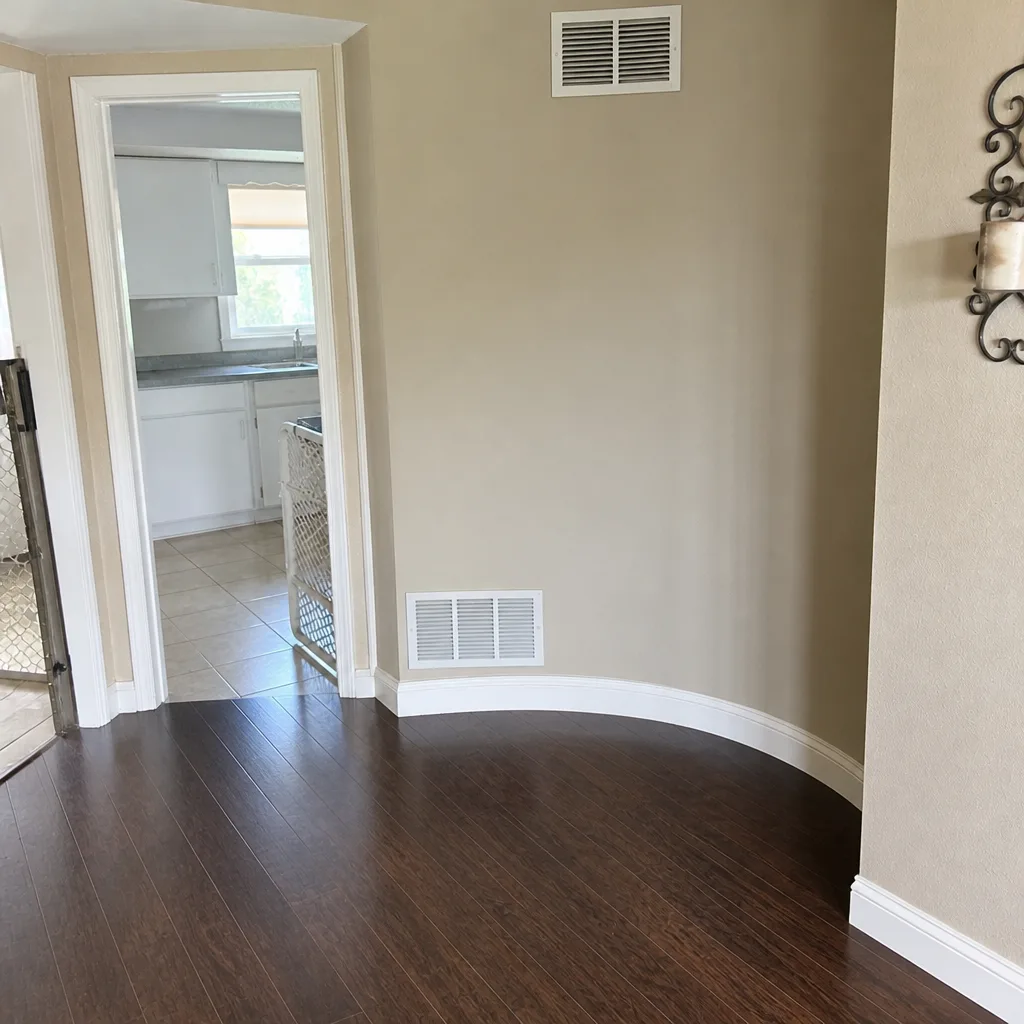
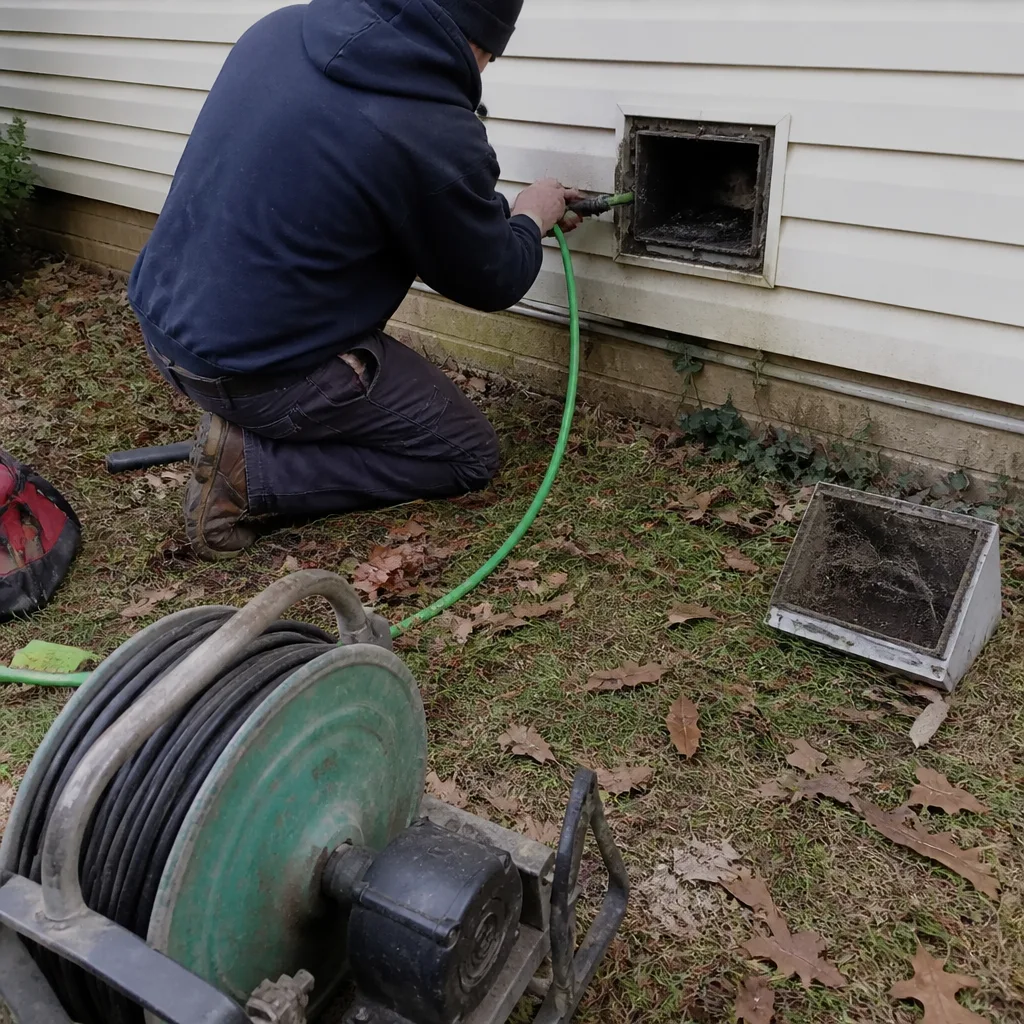
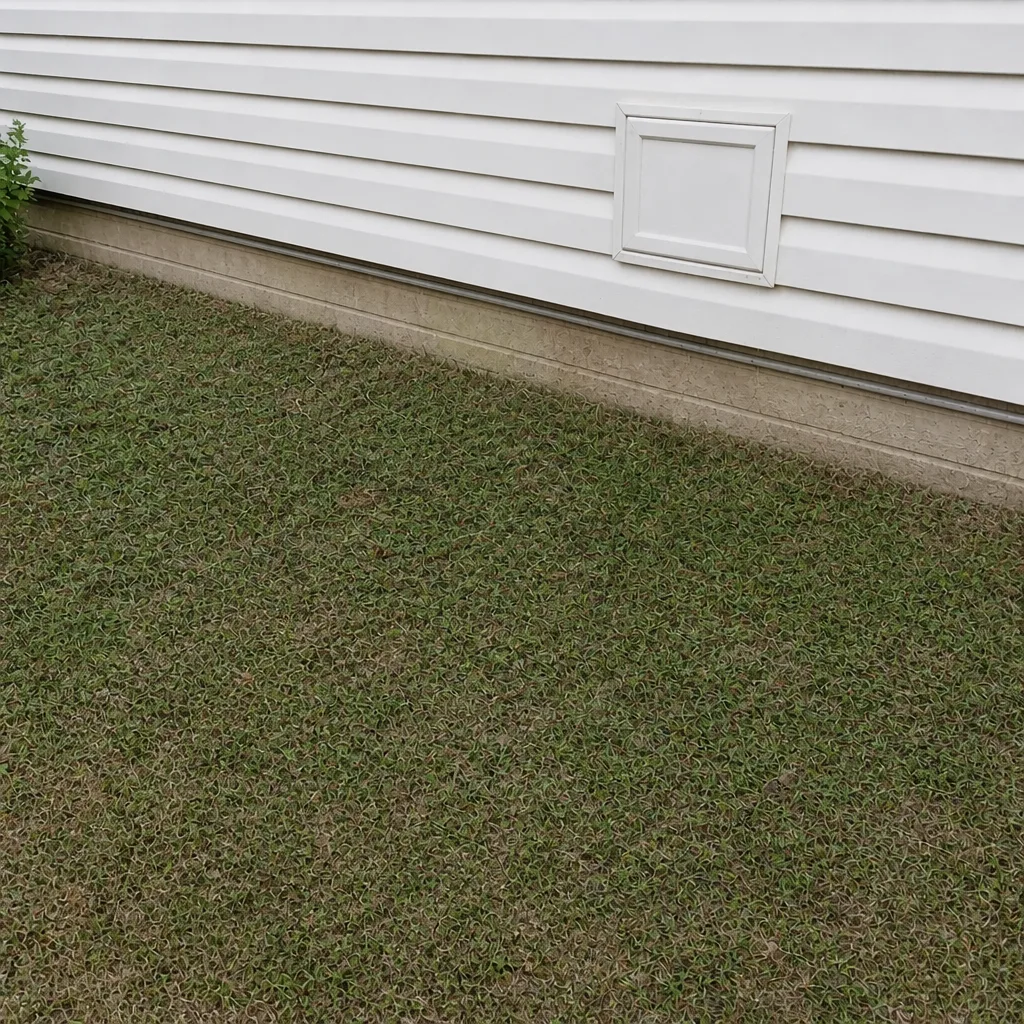
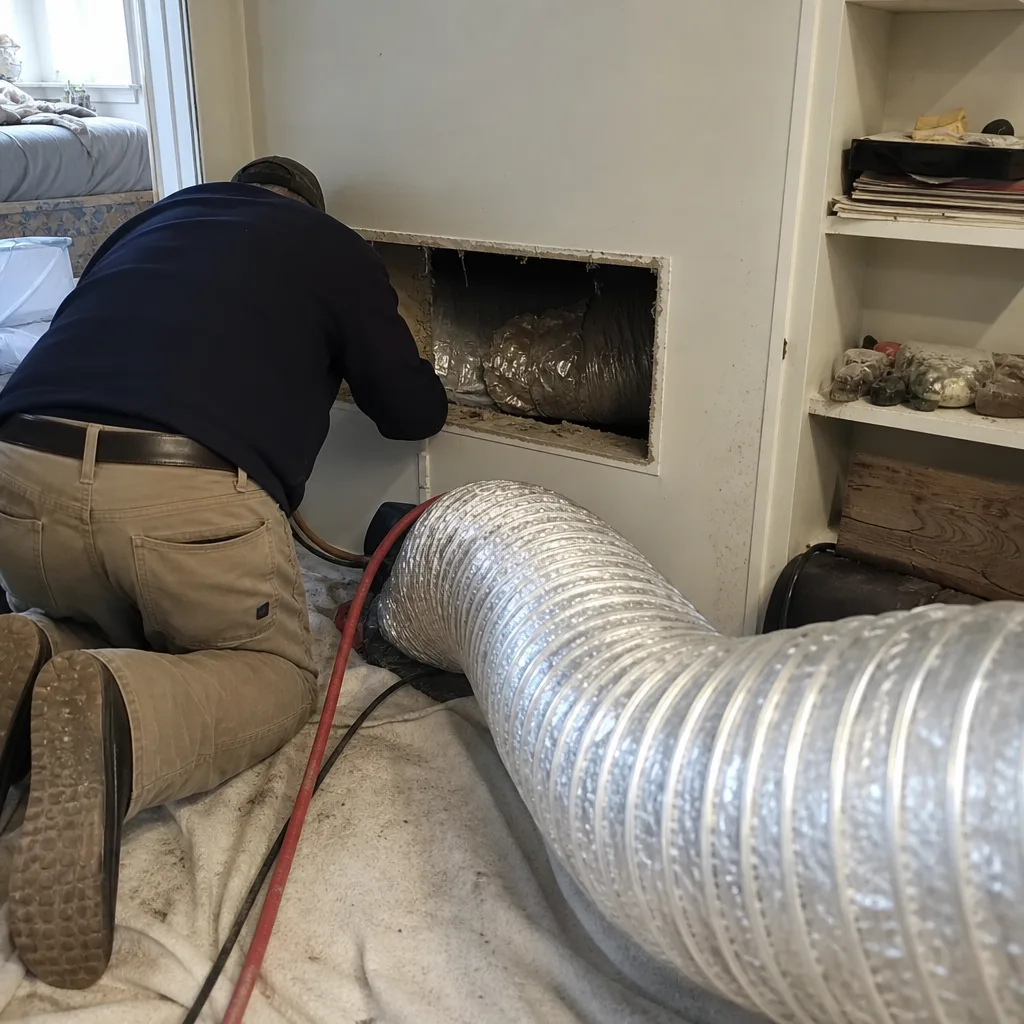
See the difference
 Before
 After
 Before
 After
 Before
 After
When to Call a Professional
You need a professional duct cleaning when the symptoms point to the system rather than the equipment. Persistent dust when the HVAC runs, weaker airflow at the registers, a musty smell that returns after cleaning the room, or a recent renovation that pushed construction dust into the returns all point the same direction. Allergy or asthma symptoms that worsen indoors are worth taking seriously. And if the dryer takes noticeably longer than it used to, the vent is a safety concern and not just an efficiency one. Duct Cleaning Suffolk offers free estimates in Suffolk. Call (855) 740-0661. We answer 24/7. Fast dispatch from 7am to 7pm, Sunday through Friday. Every job is quoted at one flat price per system, agreed before work starts, with before-and-after photos of your own ducts as proof of what was done.
Frequently Asked Questions
Pricing is quoted per system based on the scope actually needed, not per vent, and the written estimate sets the final price. Whole-system pricing avoids the per-vent markup that turns a low quote into a much larger invoice on site. Call (855) 740-0661 for a free estimate; a walkthrough before quoting gives a more accurate number than a phone-only figure.
Cheap quotes usually reflect a shorter scope and lighter equipment: a portable vacuum and a pass with air rather than negative-pressure extraction and rotary contact cleaning. In Suffolk’s humid climate, that lighter approach can’t break the moisture-bound accumulation that forms on duct walls, so the ducts look marginally better but the actual buildup stays. Low quotes also tend to price per vent, which invites add-ons during the visit. Ask what equipment and what scope a quote covers before comparing numbers.
The clearest proof is before-and-after photos of your own system, taken during the job. Photos of your trunk, your supply runs, and your register boots show what changed; stock images prove nothing. Ask for photos as part of the estimate agreement, not as an afterthought. A company confident in its scope will offer them without being asked.
Every few years is a reasonable baseline for most Suffolk homes, and the humidity here pushes the timing more often than in drier markets. Homes with pets, recent renovations, mold or moisture issues, or heavy pollen exposure may need it sooner. The condition of the system, not a fixed calendar, is the better guide. A quick inspection tells you whether cleaning is due.
No. The dryer vent is a separate system with its own risks. Lint buildup in the vent is a leading cause of residential fires, and it’s not something air duct cleaning touches. If your dryer takes longer than it used to, treat the vent as a safety item and have it cleaned independently.
A full-scope cleaning can reveal disconnected joints, torn flex duct, or failing insulation. When the company can also handle repair, one call resolves both. If a cleaning company doesn’t do repair work, they should tell you what they found so you can get it fixed before cleaning a system that will just leak again.
The Bottom Line
Duct cleaning in Suffolk is shaped by conditions that exist here specifically: sustained humidity that binds dust to duct walls, a heavy pine pollen season that settles into returns, and older housing stock with crawl space foundations and flex duct that change the equipment setup. A complete job means negative-pressure extraction, rotary contact cleaning, and coverage of the full scope, not just the visible grilles. When repair is needed, fixing the ducts before cleaning them is what makes both jobs hold up. The right move is a whole-system quote, agreed at one flat price, with photos as proof of the work. Call (855) 740-0661 for a free estimate. We answer 24/7. Fast dispatch from 7am to 7pm, Sunday through Friday. Browse the full service lineup at Duct Cleaning Suffolk.
Written by the team at Duct Cleaning Suffolk.