
Last updated November 15, 2026
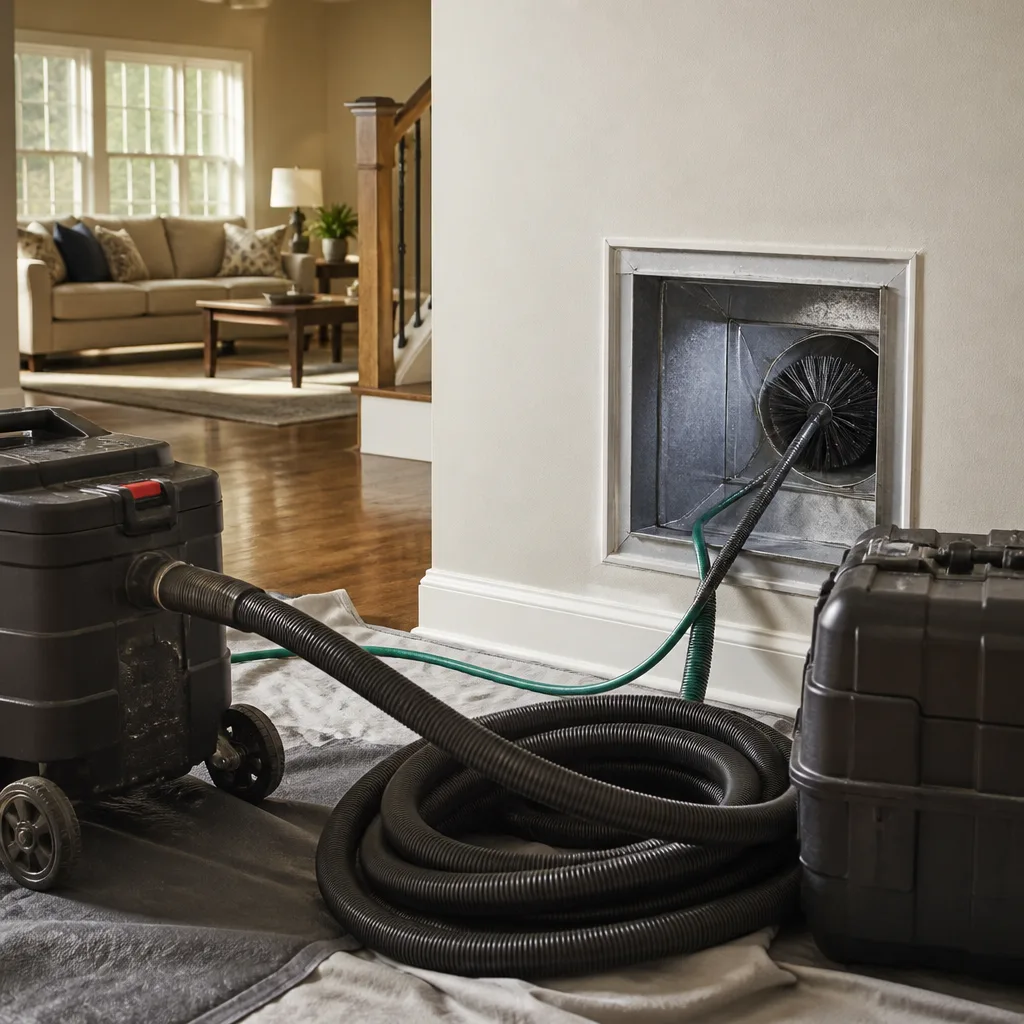 Whole-home duct cleaning
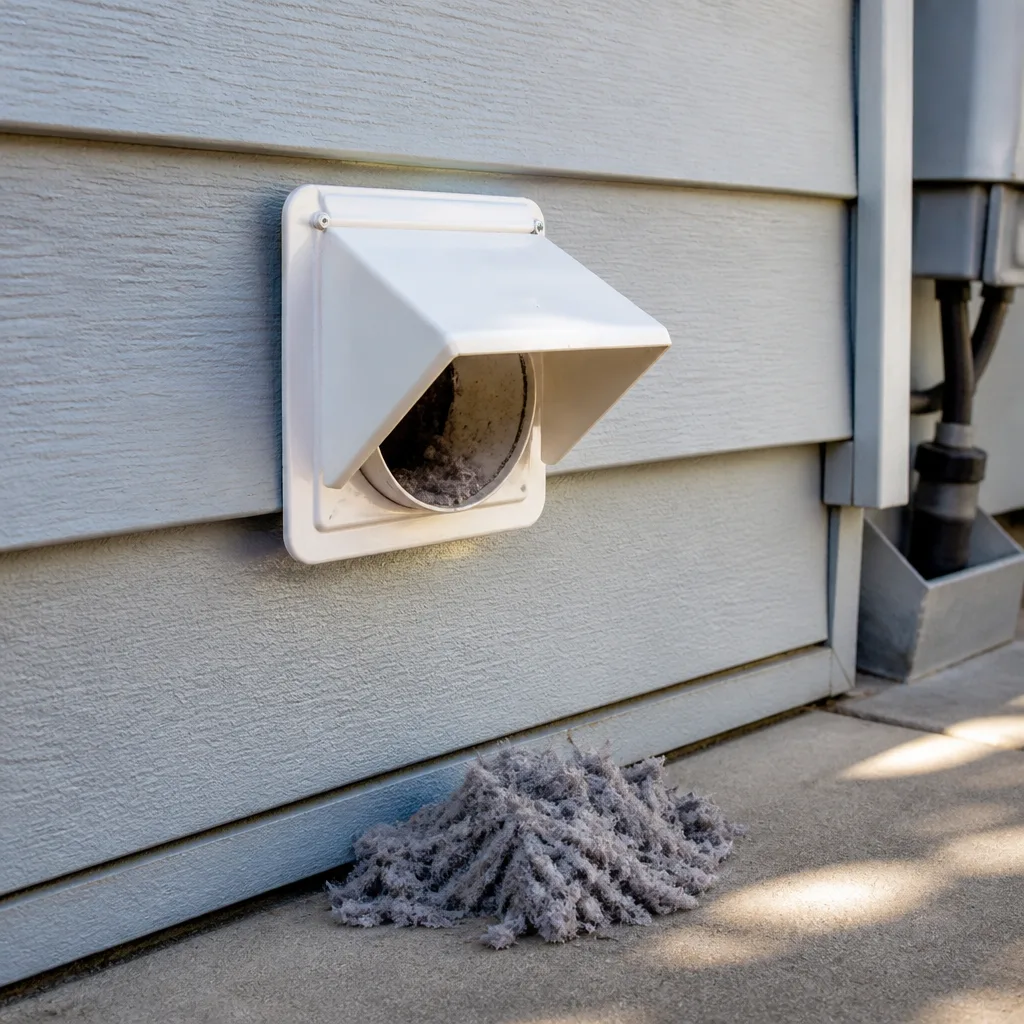 Dryer vent cleaning
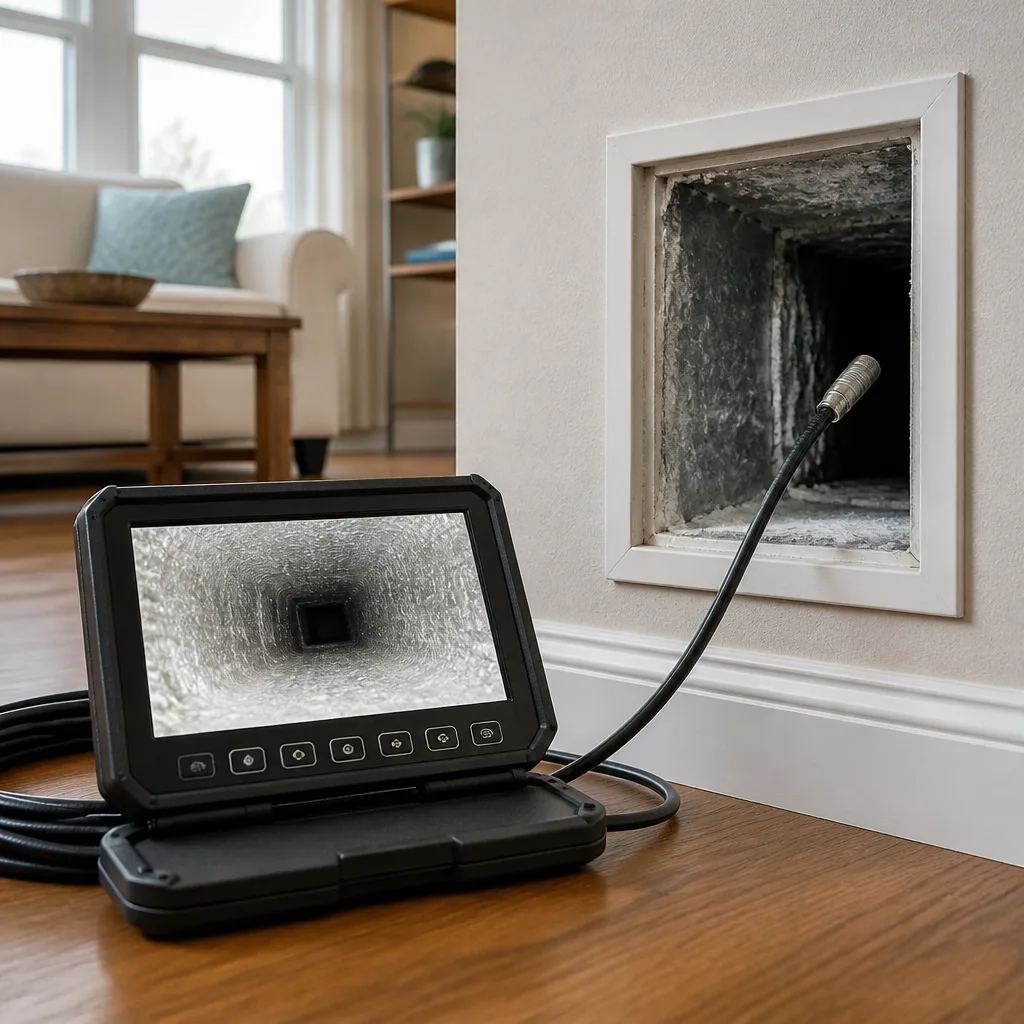 Camera inspection
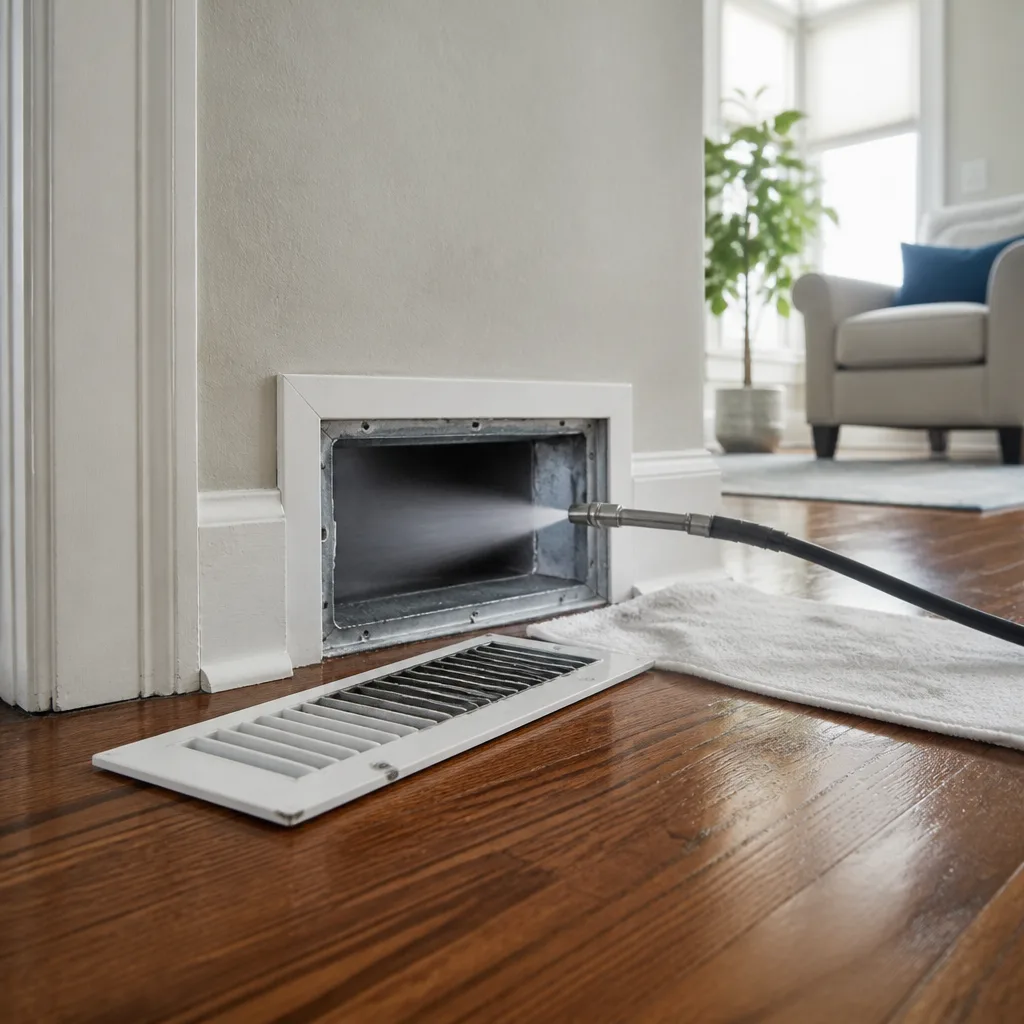 Sanitizing & deodorizing
Whole-system duct and dryer vent check with before-and-after photos - you see exactly what came out of your vents
That "$99 whole-house special" is a bait ad - the real number appears once they are in your hallway, or the "clean" is a shop-vac at the register. We photograph the inside of your ducts before and after instead.
How to Hire an Air Duct Cleaning Contractor in Suffolk: A Step-by-Step Guide
Virginia does not require a specific duct cleaning license. That means anyone with a van and a shop-vac can legally advertise duct cleaning in Suffolk today. There’s no state exam to pass, no board that checks equipment, and no minimum standard for what “cleaned” means. So the vetting process is the entire job. What separates a proper whole-house cleaning from a blow-and-go visit isn’t a credential on a wall. It’s the machine in the driveway, the containment setup in the hallway, and whether the contractor will show you photos of what came out. This guide walks you through exactly what to ask, what answers are acceptable, and how to structure a job scope in writing before anyone touches your ductwork. We’ll cover equipment verification, the NADCA signal, Hampton Roads red flags, and the one question that catches most bad bids before you book.
Quick Answer
To hire an air duct cleaning contractor in Suffolk, verify three things before booking: the source vacuum’s airflow and negative-pressure capability, whether agitation uses a rotary brush or compressed air, and whether the company will provide before-and-after photos of your own system. Ask for a written, line-item scope of work. Treat NADCA membership as a useful signal, not proof. Skip any bid that quotes per vent, refuses photos, or pushes sanitizer on a system with no contamination. The lowest quote is usually the contractor whose portable equipment can’t pull whole-house negative pressure.
Styles & brands we work with
- Whole-home duct cleaning
- Dryer vent cleaning
- Camera inspection
- Sanitizing & deodorizing
Table of Contents
- Why There’s No Licensing Safety Net in Virginia
- The Three Equipment Questions to Ask Before Booking
- What NADCA Membership Tells You (and What It Doesn’t)
- Hampton Roads Red Flags to Watch For
- How to Structure the Job Scope in Writing
- Why the Lowest Bid in Suffolk Usually Means Weak Equipment
- What a Proper Service Visit Looks Like
- How Suffolk’s Climate and Housing Affect Your Ducts
Why There’s No Licensing Safety Net in Virginia
Most trades that work inside your home sit behind a state license. Electricians, plumbers, and HVAC technicians operating in Virginia are regulated through the Department of Professional and Occupational Regulation. Duct cleaning is not. A contractor who cleans ducts does not need a special trade license to advertise the service, buy a starter vacuum, and start booking jobs in Suffolk. That’s the part most homeowners don’t know until they start comparing quotes and realize the paperwork looks different from every other contractor they’ve hired.
This creates a specific problem in the local market. Suffolk has grown quickly, with a lot of new construction and a steady stream of homeowners moving in. That’s a healthy market for anyone offering home services, and it attracts both serious operators and people testing whether a low-overhead side business will stick. The result is a wide quality spectrum presented identically on the internet. Every website looks polished. Every quote is free. The differentiators live in the details.
So what does a homeowner do without a license number to check? You shift the vetting burden to observable, verifiable things:
- Equipment. What specific machine will be on site, and what is it rated for?
- Process. Is the work done under negative pressure with containment, or is debris just agitated loose?
- Documentation. Will you receive before-and-after photos of your actual system?
- Scope. Is the price fixed per system in writing, or does it float based on vent count discovered on site?
This is the same framework a facilities manager uses when hiring a contractor for a commercial building. They don’t trust branding. They ask what equipment arrives and what standard the work is held to. You can run the same playbook on a residential job in Suffolk. For an overview of what a proper cleaning involves from start to finish, see our page on air duct cleaning.
The Three Equipment Questions to Ask Before Booking
This is the heart of the guide. If you only do one thing differently after reading this, make it these three questions. Ask them before you book. A contractor who knows their equipment will answer instantly. One who doesn’t will dodge.
Question 1: What’s the airflow rating of your source vacuum?
Duct cleaning requires a vacuum powerful enough to pull debris through the entire duct run while the system is being agitated. Consumer shop-vacs and small portables don’t have the cubic-feet-per-minute capacity for that. Professional units used by HVAC contractors and remediation crews are in a different class. Ask for the CFM rating. An acceptable answer names a specific machine and a real number. A bad answer is “it’s industrial” or “it’s the best on the market.”
The professional setups we run are built around that requirement. Our machines include Nikro high-powered vacuum units paired with Rotobrush contact-cleaning systems, and we use Abatement Technologies negative-air equipment to hold containment during the pull. What matters for your hiring decision is that the contractor can name their equipment and explain why it’s rated for whole-house work. If they can’t, the machine likely can’t either.
Question 2: How do you establish negative pressure?
Negative pressure means the cleaning setup pulls air into the duct system from the living space rather than pushing contamination out into it. Without it, agitation just moves debris around inside the house. Ask whether the contractor sets up a vacuum connection at the main trunk or through a service port, and what they do to seal the returns while cleaning. The answer should describe a setup that keeps the home’s air clean during the process, not just a hose shoved into a register.
Question 3: Rotary brush or compressed air for agitation?
Debris clings to duct walls. Vacuum alone doesn’t dislodge it. Agitation tools break the bond, and the type of tool matters. Rotary brush systems physically scrub the interior and are the standard for resilient duct materials. Compressed air whips work for some configurations and are typically used alongside a brush system, not as the only tool. Ask which is used on source runs, and whether the contractor adjusts agitation for different duct materials. Ducts made of flex, sheet metal, and duct board respond differently, and a contractor who knows that will tell you.
If a bidder answers all three questions clearly and names their equipment, you’re talking to someone serious. If any answer is vague, treat the quote as a placeholder, not a deal.
What NADCA Membership Tells You (and What It Doesn’t)
The National Air Duct Cleaners Association publishes a standard for how the work should be done, and membership is a useful signal. A company that joins has at least agreed to be measured against a published process. But membership is not a license, and it is not a guarantee that your specific job will meet the standard. Some members run excellent operations. Membership alone doesn’t prove that.
What matters is what the standard actually requires during a service visit. The ACR standard, in broad terms, covers a defined scope of work, source removal of debris rather than surface disruption, containment so contamination doesn’t escape into the home, and verification that the work was completed. That last part is the one homeowners rarely think to ask about. Verification means evidence: photos, a walk-through, an evaluation of what came out of the system. If a contractor claims to follow the standard, ask how they document compliance on your job.
In our experience, the useful way to read the NADCA label is as a starting filter, not a finish line. Combine it with the three equipment questions above. A NADCA member who can’t name their vacuum’s CFM or explain their negative-pressure setup is worth a second look. A careful non-member who can answer all three and shows you before-and-after photos on request is worth a serious conversation. Local reputation is a real thing in a market the size of Suffolk, and a contractor whose process you can verify is your best indicator of a good result.
Hampton Roads Red Flags to Watch For
The Hampton Roads market has its own recurring patterns, and Suffolk homeowners run into the same handful of them. None of these are automatic dealbreakers on their own. Together, they form a picture.
- Per-vent pricing. A quote built around dollars per vent incentivizes the contractor to count vents generously and encourages bait-and-switch. The advertised price is per vent, and once the technician is on site the count grows. A legitimate estimate prices the whole system, in writing, before work starts.
- Sanitizer upsell on a clean system. Chemical sanitizing has a place when there’s confirmed microbial contamination. On a system that just needs source removal, it’s a line item that doesn’t serve you. Ask why it’s being recommended and what evidence supports it.
- Refusing before-and-after photos. This is the loudest red flag. A contractor with professional equipment has nothing to hide. A contractor with a shop-vac does.
- Teaser coupon pricing. A very low advertised starting price that doubles on the invoice once “extras” are discovered on site. Ask for the fixed price up front and get it in writing.
- No named equipment. If the answer to “what machine are you bringing” is vague, that’s the tell.
- Pressure to book immediately. Legitimate contractors don’t need to scare you into a same-hour decision, and they don’t need a deposit before they’ve seen the system.
One more local pattern worth naming: a homeowner calls about a dryer that takes too long to dry, and the contractor pitches air duct cleaning instead of a dedicated dryer vent cleaning. Those are different jobs on different systems. A contractor who conflates them is not paying attention to what you actually need. The dryer vent is a fire-safety concern in its own right, and it deserves its own service line, not a pivot into a bigger ticket.
How to Structure the Job Scope in Writing
Before anyone touches your ductwork, you should hold a written scope that lists exactly what will happen. A legitimate estimate reads like a work order, not a marketing page. Here’s what it should include, line by line:
- The systems being cleaned. Numbered by system, with the furnace or air handler identified. Not a vent count.
- The source vacuum specification. CFM rating and equipment model, or at least the equipment class.
- The agitation method. Rotary brush, air whip, or both, and which duct materials it’s rated for.
- The negative-pressure setup. Where the vacuum connects and how returns are sealed.
- The components inside the scope. Supply trunks, branch runs, return plenum, registers, and the evaporator coil area if it’s being accessed.
- Any add-ons with a stated reason. Sanitizer, coil cleaning, or a repair line item should carry a “why” and a price, not a vague option.
- The documentation you’ll receive. Line-item confirmation that before-and-after photos of your system will be provided.
- The final price, fixed. One number per system, agreed before work begins, not subject to a post-hoc vent count.
Notice there’s no per-vent line anywhere in that list. That’s deliberate. A per-vent structure means the price isn’t known until the technician has walked your whole house and counted, which is precisely when a low teaser price becomes a much larger invoice. A fixed price per system in writing is the structure that protects you, and it’s the structure we work to. Our technicians have up to 12 years of experience, and the estimate is free.
If your system already has a compromised trunk or a disconnected branch, cleaning is only half the job, and a legitimate scope should say so. We handle air duct repair as a separate line so contamination and structural problems can be resolved on the same visit.
Why the Lowest Bid in Suffolk Usually Means Weak Equipment
Equipment drives the price of a duct cleaning job more than anything else. A Rotobrush system and a high-powered Nikro vacuum cost real money. A portable unit with a hose attachment costs a fraction. When one bid comes in dramatically lower than the others, the difference is almost always the machine and the time the job takes, not a more efficient process.
That gap shows up on site in predictable ways. An underpowered vacuum can’t pull whole-house negative pressure, so the agitation dislodges debris that settles into the living space instead of being captured. The contractor may still do a visible pass through the registers, and the system looks cleaner at the surface. What’s left behind in the trunk and branch runs is the part you can’t see, and that’s the part that matters. Ask yourself why an operator with the correct equipment would charge far less than the market. In a market without licensing, the answer is usually that they don’t have it.
The reverse is also true. A contractor with professional equipment can quote honestly, because the price reflects real capability. When you compare bids, compare what’s actually included: the machine, the containment, the scope, and the documentation. The lowest number on the page is rarely the lowest real cost.
What a Proper Service Visit Looks Like
Once you’ve vetted the contractor and signed off on a written scope, here’s the sequence a proper visit follows. You can use it as a checklist on the day.
- Pre-clean inspection. The technician inspects the system, confirms the scope, and identifies any issues (disconnected ducts, damaged flex, evidence of pests) that might change the plan.
- Containment and vacuum hookup. The source vacuum connects to the main trunk or an access port and runs continuously. Returns are sealed. Negative pressure is established before any agitation.
- Source removal. Branch runs and trunks are agitated with rotary brush or air whip while the vacuum captures the dislodged debris. Registers and grilles are cleaned separately.
- Coil and component inspection. The evaporator coil area, blower, and drain pan are checked while the system is open.
- Verification. Photos are taken before and after, and a walk-through confirms the system is back together and running cleanly.
- Documentation. Before-and-after photos of your actual system are provided.
If your contractor skips the containment step or can’t explain the negative-pressure setup, stop the visit. If your system has a Honeywell or Aprilaire whole-home air cleaner or filtration unit, flag it before the visit so the technician accesses it correctly and re-seats the filter or media properly. Familiarity with these systems matters, and a contractor who knows them will ask about your setup in advance.
You can read more about the broader approach we take in this market on our homepage: Duct Cleaning Suffolk.
How Suffolk’s Climate and Housing Affect Your Ducts
Suffolk runs on a humid summers, mild winters cycle, and that pattern has a real effect on what ends up in ductwork. Long cooling seasons mean the AC runs hard from spring into fall, and that means more condensation on cold surfaces inside the system. Where moisture hangs around, dust and organic debris settle into a film on the interior duct walls. That film is harder to dislodge than dry dust, which is one reason brush agitation matters here more than in a drier climate.
The local housing stock adds another layer. A lot of Suffolk homes have duct systems running through unconditioned attic space, and those runs see temperature swings between the attic and the living space. Duct board and flex in that environment can degrade faster than sheet metal, and disconnected or crushed runs are common in homes that have had additions or system changes. That’s why an honest contractor inspects the system before quoting, and it’s why “cleaning” and “repair” belong in the same conversation. Our area guides, including the one for Suffolk, go deeper into what we see locally.
Construction dust is another factor. New builds and renovations in the area put fine drywall dust and construction debris into supply runs during the build, and that debris settles into branch runs and the return plenum. If your home has had work done in the last year, a proper cleaning is worth a look rather than a simple register rinse.
Common Mistakes to Avoid
- Booking on price alone. The lowest bid is usually the smallest equipment. Compare scope and machine, not the number at the bottom.
- Accepting a per-vent quote. Two sentences: ask for a fixed price per system, in writing, before booking. If the price depends on a vent count done on site, that’s a teaser, not an estimate.
- Skipping the equipment questions. Two sentences: ask about the vacuum CFM, negative-pressure setup, and agitation tool before you book. A contractor who can’t answer those questions in detail is telling you something.
- Not asking for photos. Two sentences: before-and-after photos of your own system are the one form of proof you cannot fake. If a contractor won’t provide them, you have no way to confirm the work was done.
- Letting a dryer vent get folded into the duct cleaning quote without a conversation. Two sentences: dryer vent cleaning is a distinct fire-safety service, not an upsell. Ask for it as its own line with its own scope.
- Assuming NADCA membership proves the job. Two sentences: membership is a useful signal, but you still need to verify equipment and process. A logo on a website is not the same as a professional machine in your driveway.
- Not flagging your air-quality equipment. Two sentences: if you have a Honeywell or Aprilaire system, tell the contractor before the visit. Improper handling of filtration equipment during cleaning is an avoidable problem.
See the difference
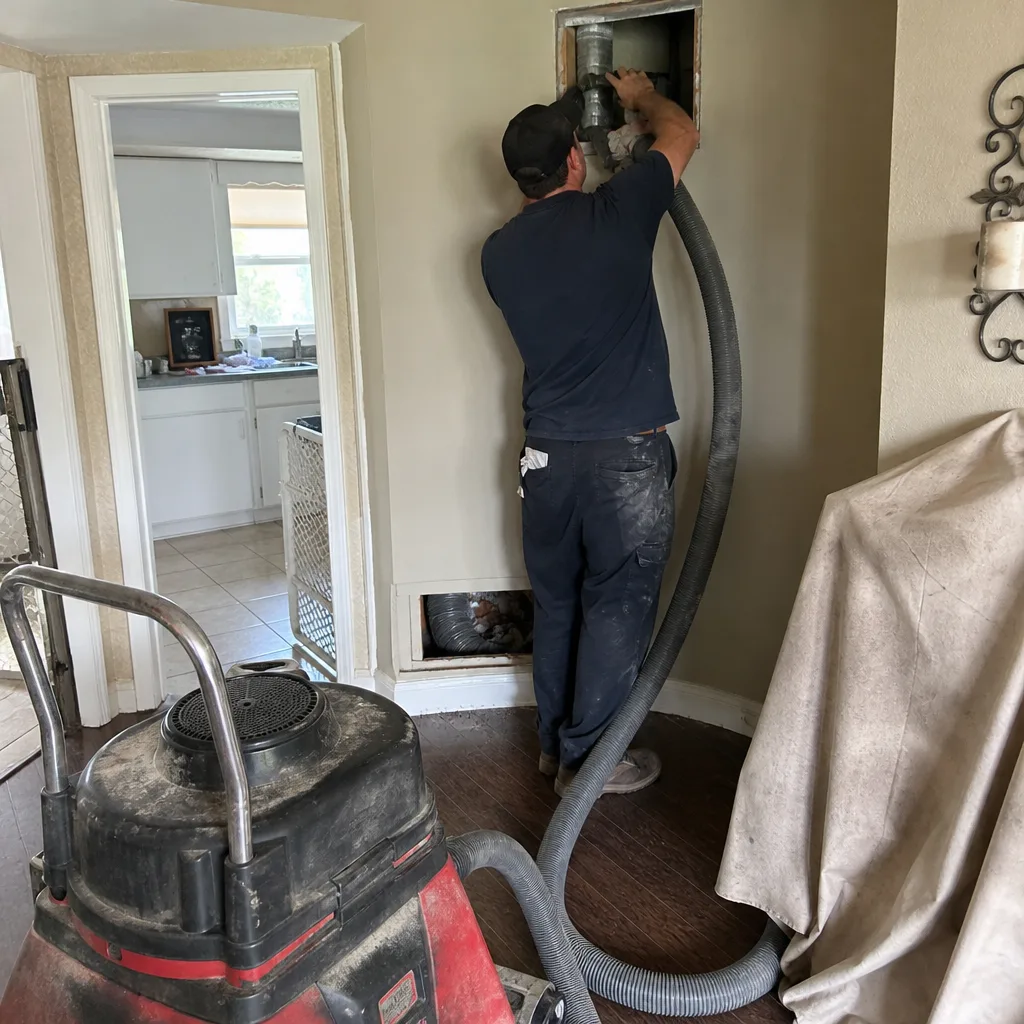 Before
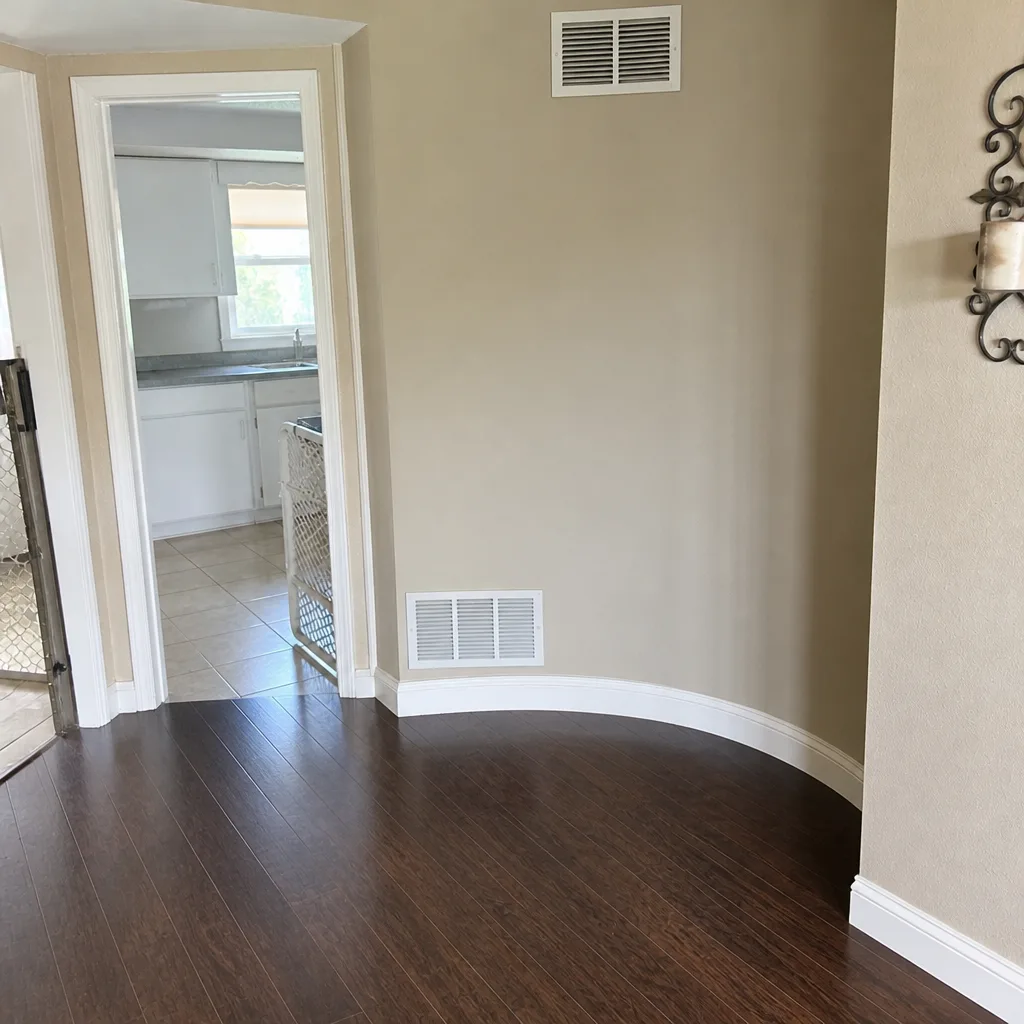 After
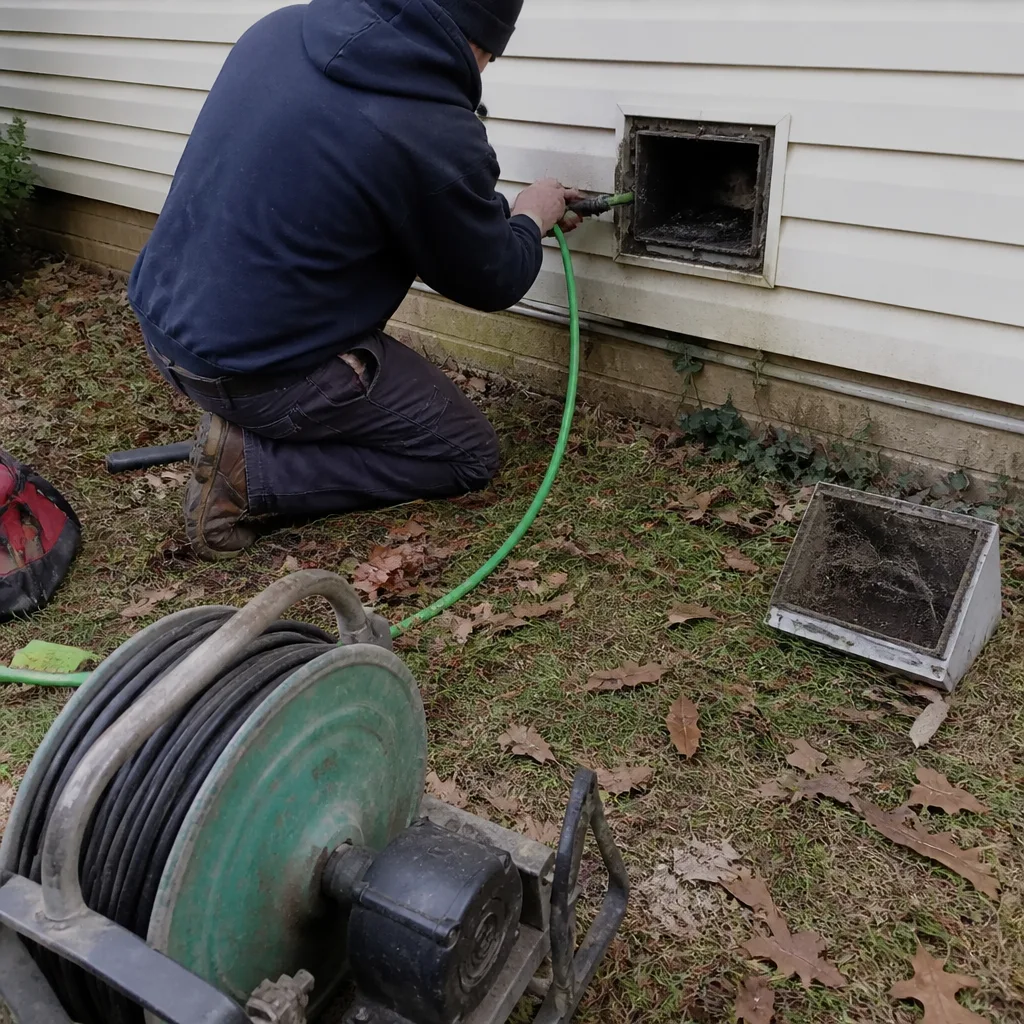 Before
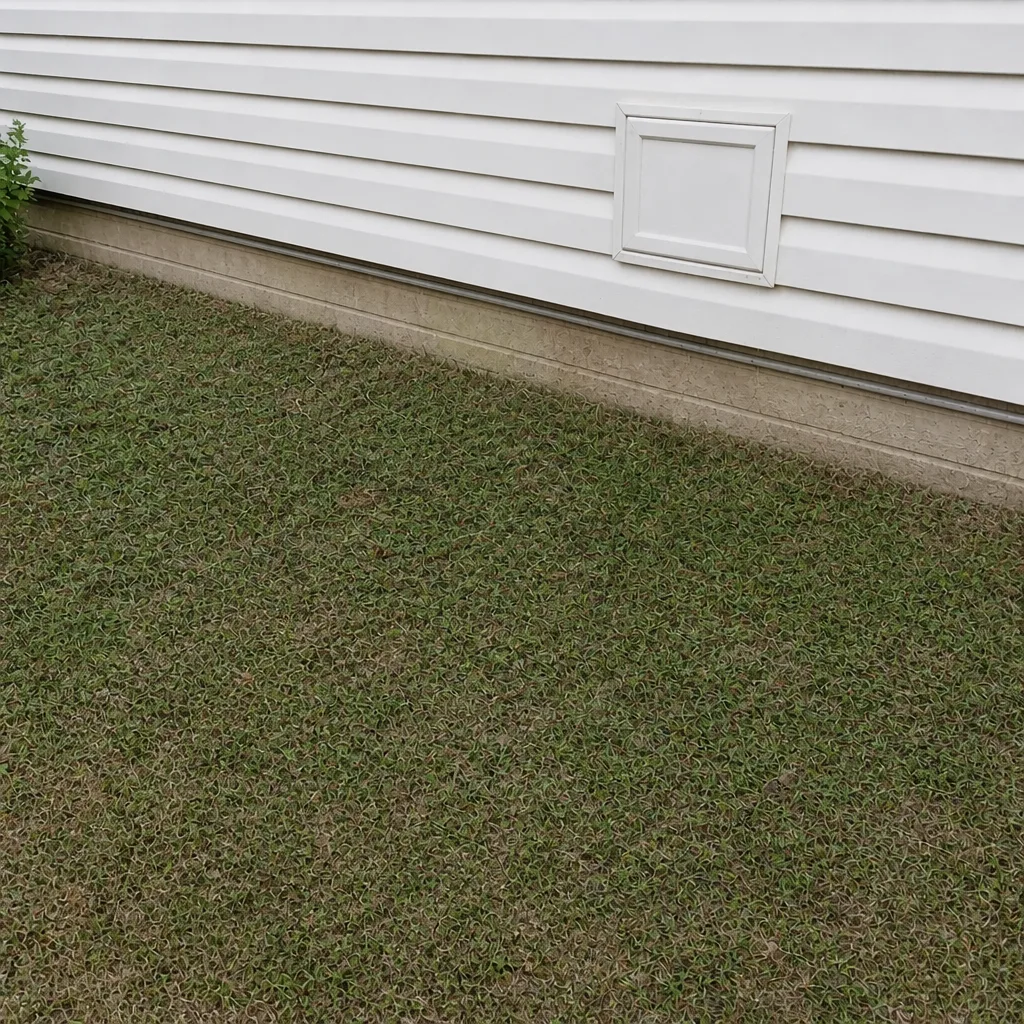 After
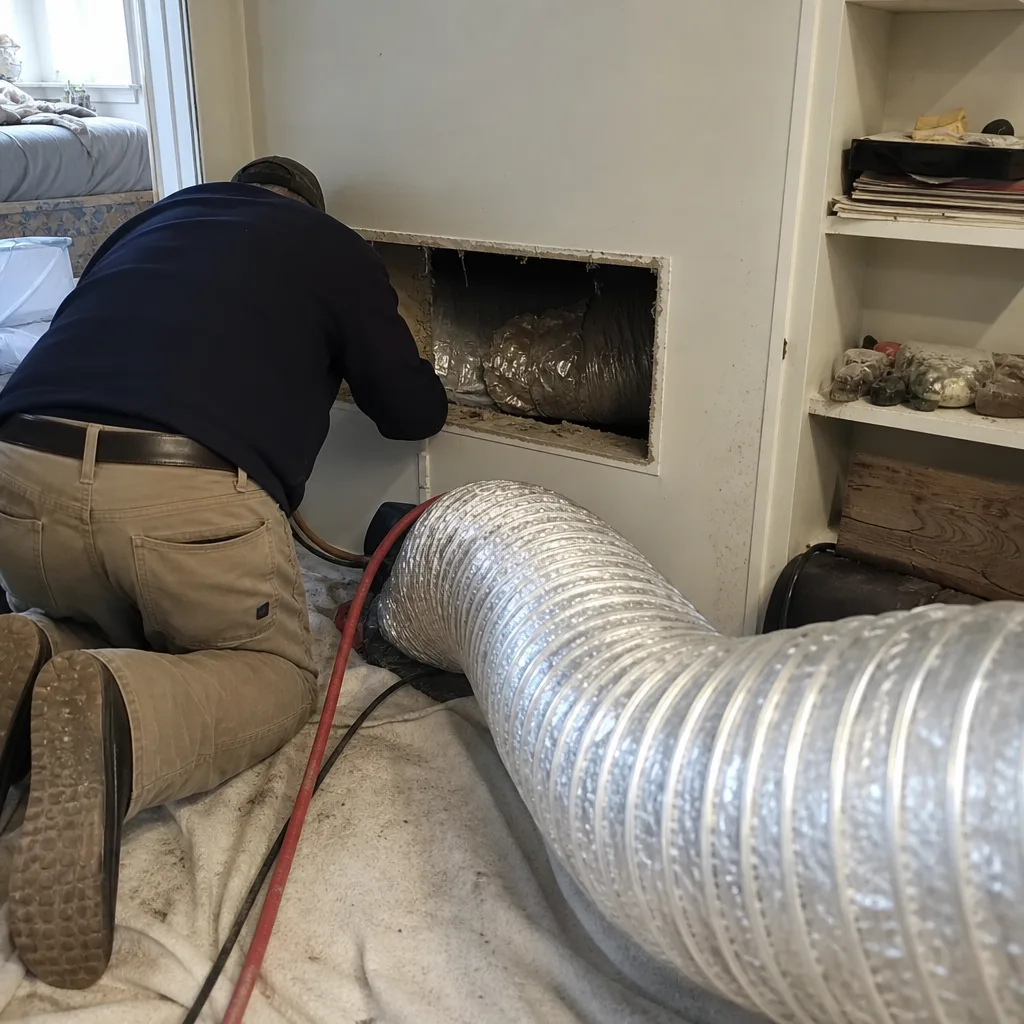 Before
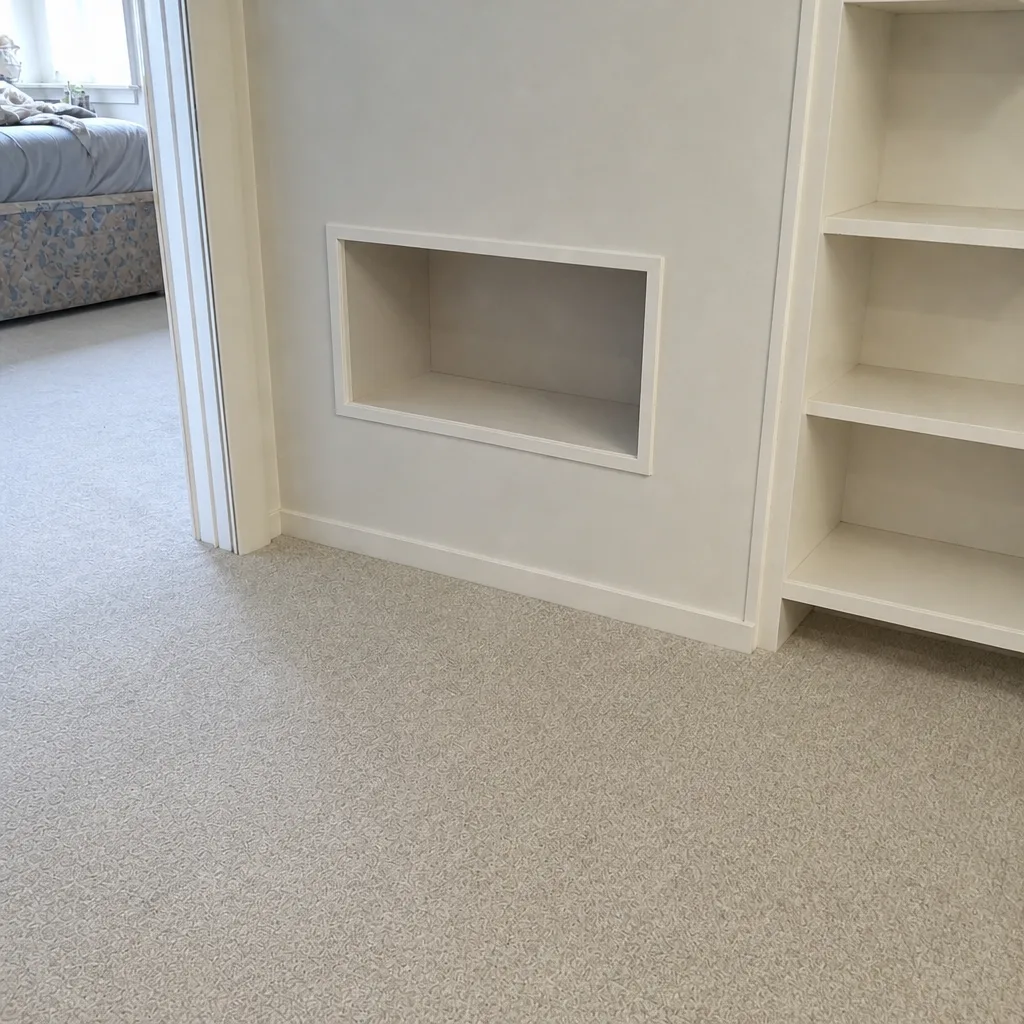 After
When to Call a Professional
Some signs warrant a professional evaluation rather than a wait-and-see. In Suffolk, the common triggers are visible dust plumes from registers when the system starts, a musty or stale smell that returns after cleaning the filters, a recent renovation that put construction dust into the returns, allergy or asthma symptoms that seem to track with system runtime, and a dryer that takes noticeably longer than it used to. Those last two are different jobs (duct system versus dryer vent) and both deserve a professional look. A system that hasn’t been cleaned since the home was built, or one with an older HVAC system showing reduced airflow, is worth a professional assessment of the system’s condition and whether duct repair is needed alongside cleaning. Duct Cleaning Suffolk offers free estimates in Suffolk. Call (855) 740-0661. We answer 24/7. Fast dispatch from 7am to 7pm, Sunday through Friday.
Frequently Asked Questions
The typical range depends on the number of systems and the condition of the ductwork, and the final price is set per job by the written estimate you receive before work begins. We don’t quote per-vent prices, because those numbers float upward on site once the technician counts vents that weren’t in the estimate. Call (855) 740-0661 for a free estimate. We answer 24/7.
Virginia does not require a specific duct cleaning license, so the vetting process is entirely on the homeowner. That means verifying equipment, process, documentation, and written scope instead of a license number. In a market without licensing, a contractor’s equipment and transparency are the closest thing to a credential. Call (855) 740-0661 for a free estimate.
The short answer is equipment and time. A portable unit with a starter vacuum cannot pull the same negative pressure a professional-grade machine can, so the job goes faster and cheaper without delivering the same result. A low quote priced per vent also tends to grow on site. Compare what’s in the scope and what machine is on the job, not just the bottom line. Call (855) 740-0661 for a free estimate.
Ask for before-and-after photos of your own duct system, taken during the visit, and confirm that in writing when you book. That’s the one form of proof that can’t be faked, and any contractor with professional equipment has no reason to refuse. If photos aren’t offered, ask, and treat a refusal as a red flag. Call (855) 740-0661 for a free estimate.
There’s no single schedule that fits every home, because the right interval depends on the system, the home, and what’s happened in it recently. A home with a recent renovation, a newer build, pets, or allergy concerns benefits from an assessment more often than a well-maintained home with a clean history. A professional evaluation beats a fixed calendar. Call (855) 740-0661 for a free estimate.
Yes. When your home has a Honeywell or Aprilaire whole-home air cleaner or filtration unit, tell the contractor in advance so the technician accesses the media and filter correctly during cleaning. Understanding how these systems integrate with your ductwork is part of a proper service visit, and it prevents avoidable disruption to the equipment you’ve already invested in. Call (855) 740-0661 for a free estimate.
Dryer vent cleaning is a separate service that addresses the lint buildup inside your dryer exhaust line, which is a fire-safety concern rather than a comfort one. Air duct cleaning addresses the supply and return ductwork that carries conditioned air through the home. A contractor who treats these as interchangeable jobs isn’t paying close enough attention to what you actually need. Call (855) 740-0661 for a free estimate.
The Bottom Line
Hiring a duct cleaning contractor in Suffolk is really a verification exercise. Virginia’s licensing gap means you can’t outsource the judgment to a state registry, so you evaluate what you can see and ask about what you can’t. The process comes down to three questions about equipment, a written scope with no per-vent pricing, a demand for before-and-after photos of your own system, and a healthy skepticism of the lowest bid. Get those right and the rest falls into place. Our technicians have up to 12 years of experience, we use Rotobrush, Nikro, and Abatement Technologies equipment, and the estimate is always free.
If you’d rather skip the vetting and talk to a contractor who can answer every question on this page, that’s what we’re here for. We handle three services in Suffolk: duct cleaning, dryer vent cleaning, and duct repair, so contamination and structural problems can be resolved on one call. Call Duct Cleaning Suffolk at (855) 740-0661 for a free estimate. We answer 24/7. Fast dispatch from 7am to 7pm, Sunday through Friday.
Written by the team at Duct Cleaning Suffolk.