
Last updated November 15, 2026
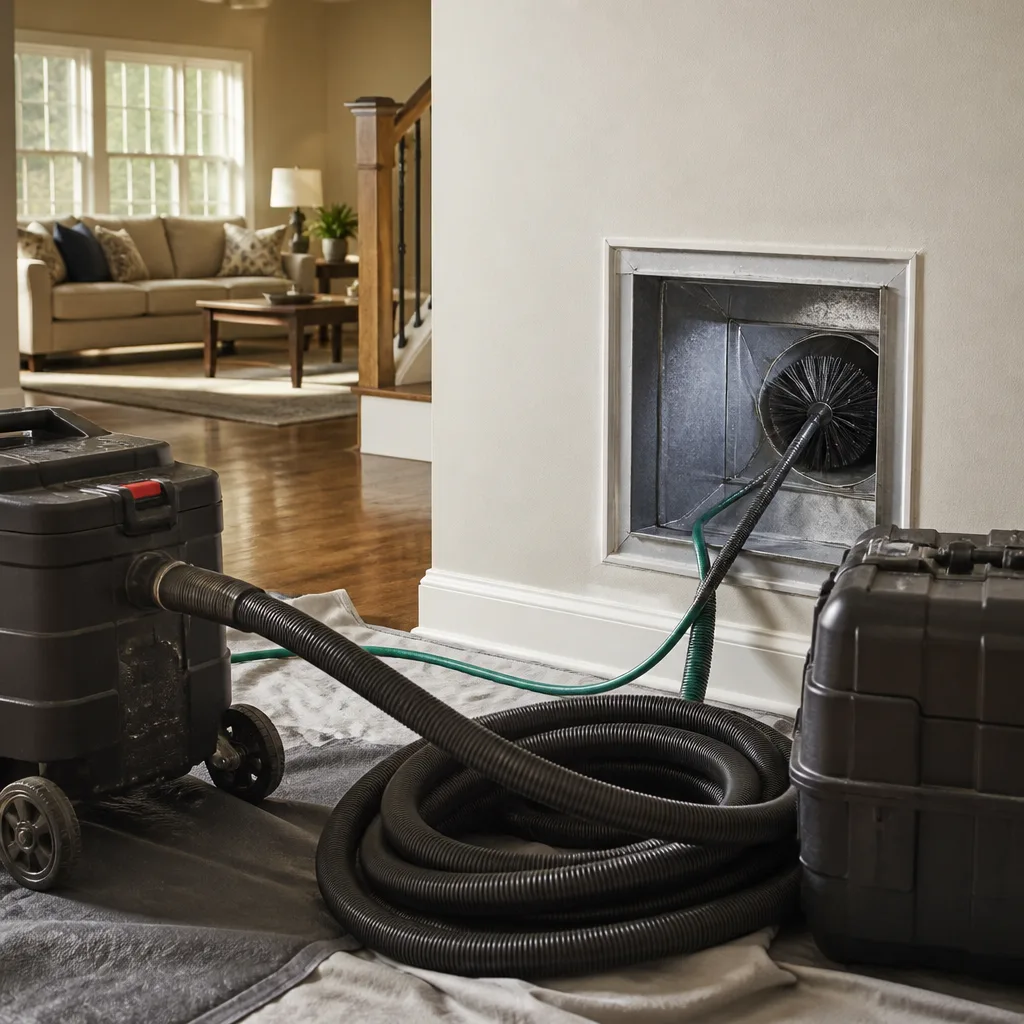 Whole-home duct cleaning
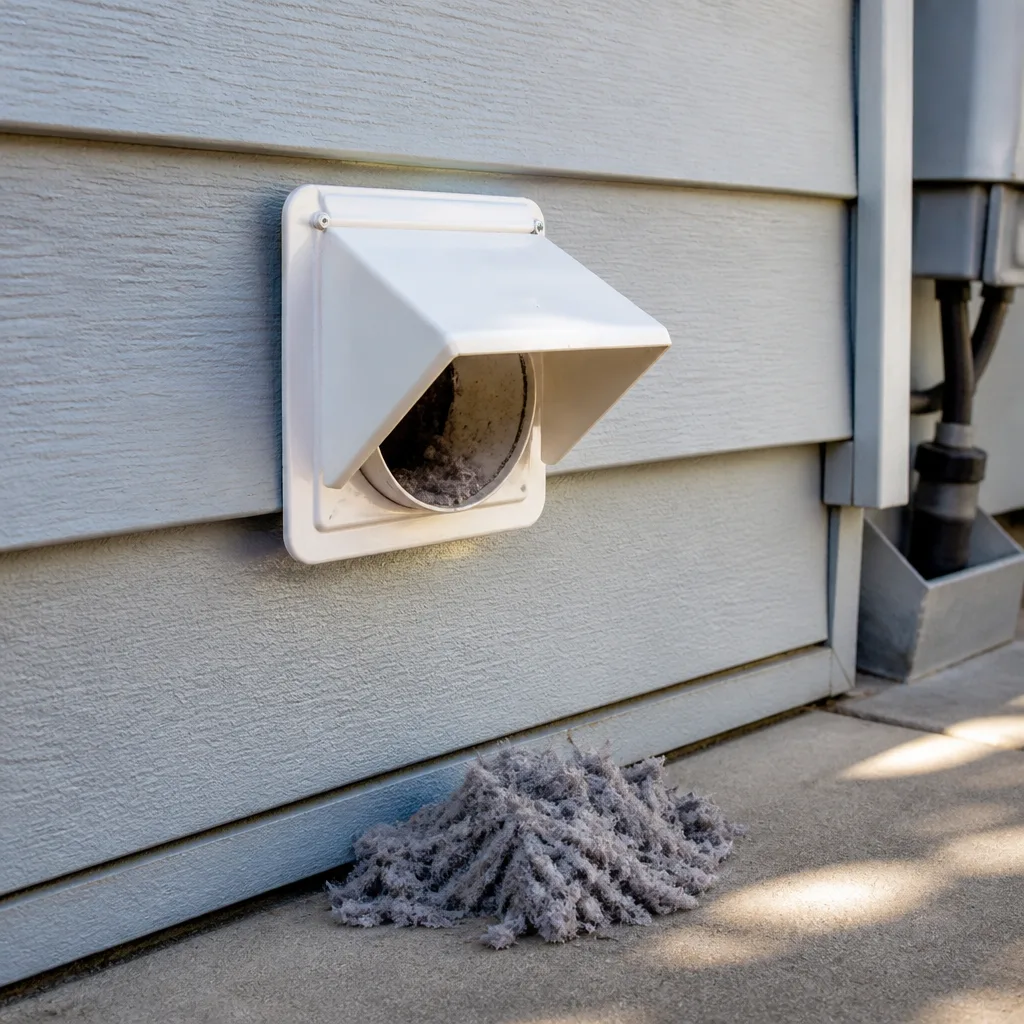 Dryer vent cleaning
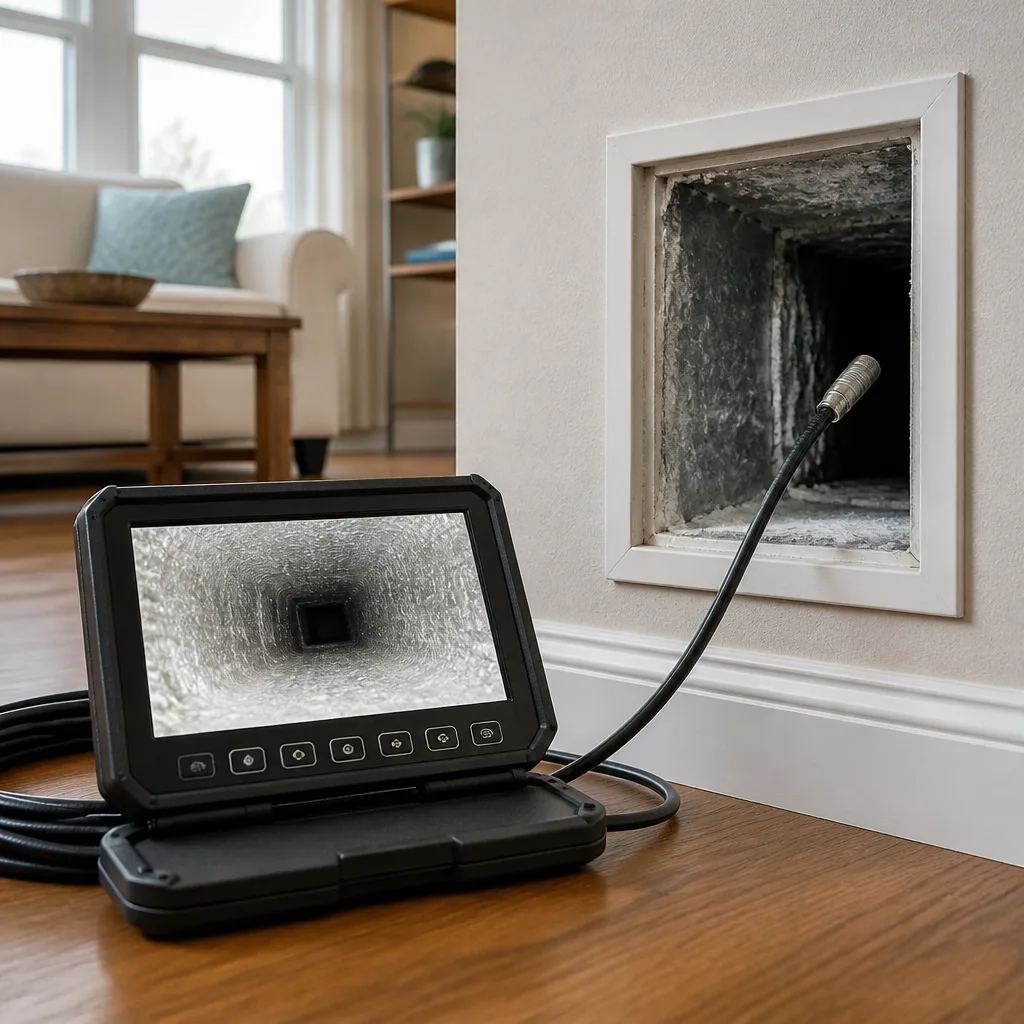 Camera inspection
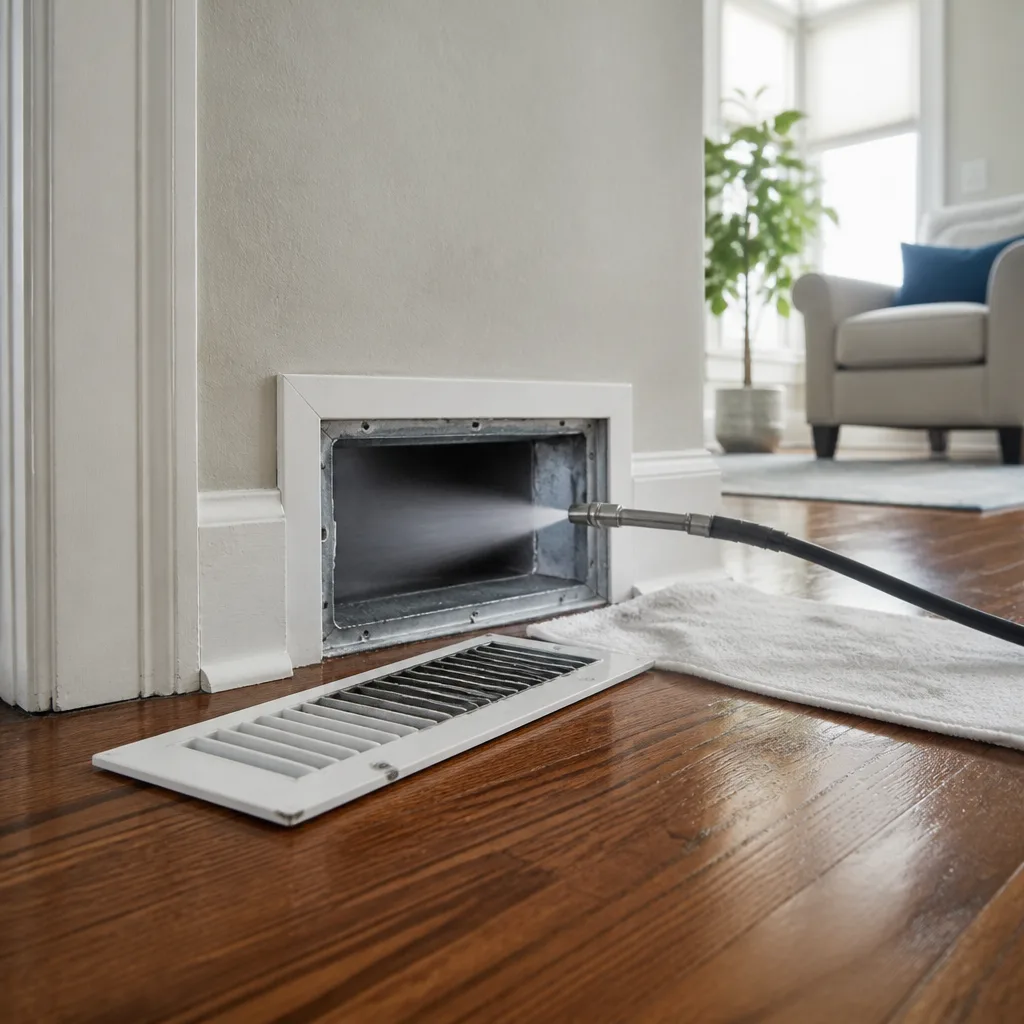 Sanitizing & deodorizing
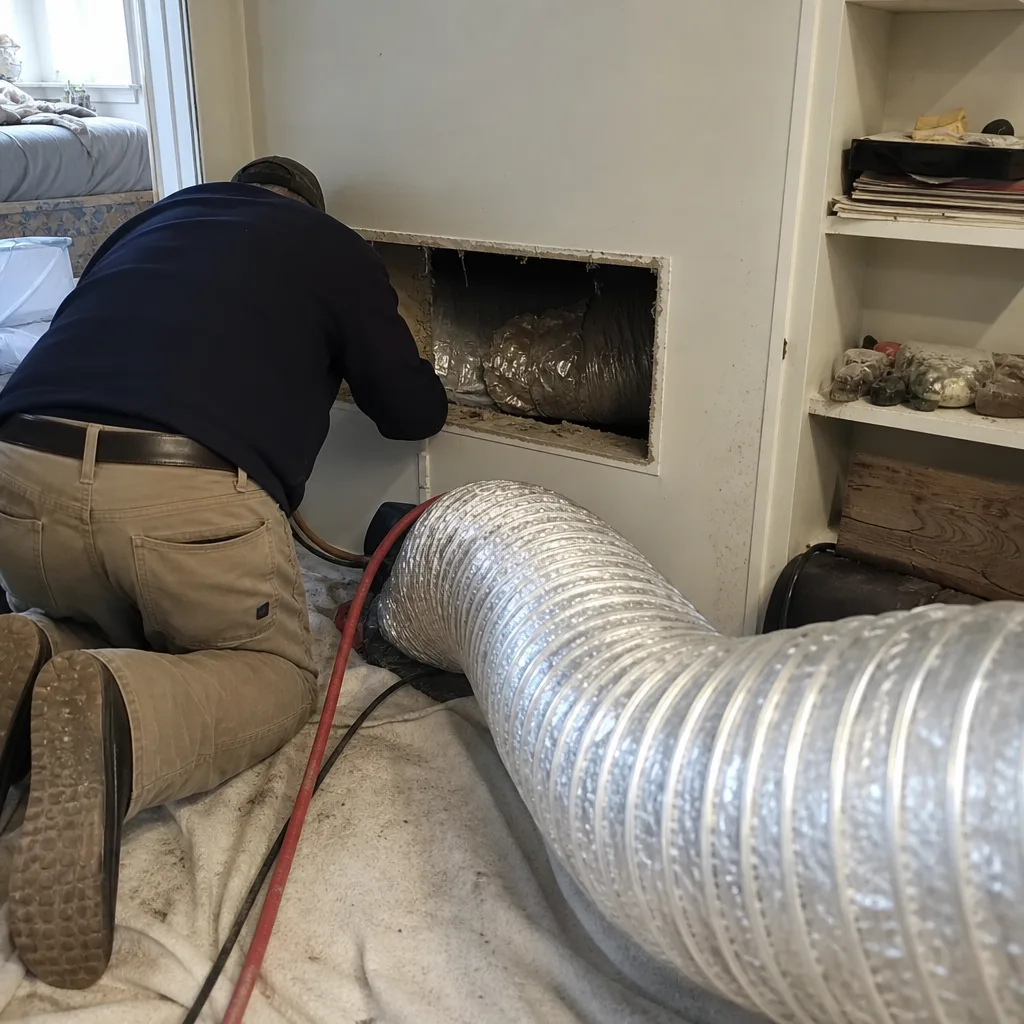
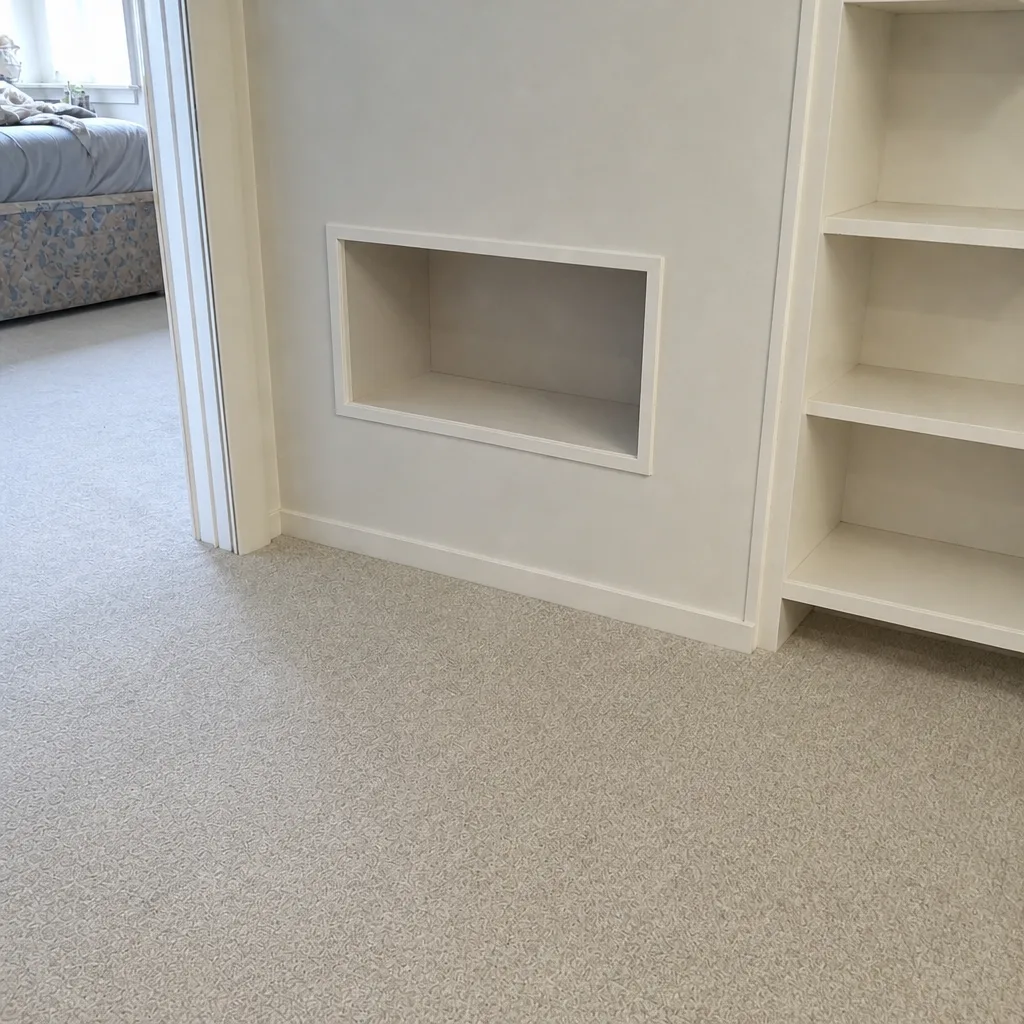
Whole-system duct and dryer vent check with before-and-after photos - you see exactly what came out of your vents
That "$99 whole-house special" is a bait ad - the real number appears once they are in your hallway, or the "clean" is a shop-vac at the register. We photograph the inside of your ducts before and after instead.
Choosing the Right Air Duct Cleaning Brand: A Buyer’s Guide for Suffolk
Most buying guides in this trade start from a faulty assumption: that a recognizable name on the van means a better result in the ductwork. It doesn’t. Unlike choosing a furnace, where a Carrier versus Trane decision carries real technical tradeoffs, there is no air duct cleaning brand that guarantees quality. A national franchise location and an independent operator down the road often run the same class of machine, and the franchise can actually be the weaker choice once markup enters the picture. What actually predicts how your job turns out is equipment class and scope, not a logo. This guide shows you how to evaluate a Suffolk operator on the five things that matter.
Quick Answer
Choosing the right air duct cleaning company in Suffolk comes down to evaluating the operator, not the brand name. Look for professional-grade equipment (rotary contact cleaning and high-powered vacuum systems, not shop-vacs and blowers), a documented process, before-and-after verification, clear warranty terms, and a scope that covers cleaning, dryer vents, and duct repair. A local operator running that equipment will consistently outperform a franchise running the same machines with more overhead.
Styles & brands we work with
- Whole-home duct cleaning
- Dryer vent cleaning
- Camera inspection
- Sanitizing & deodorizing
Table of Contents
- Why There’s No National Brand to Trust in Duct Cleaning
- The Equipment Brands That Actually Matter
- Five Criteria That Predict Job Quality in Suffolk
- What Google Reviews Reveal and What They Hide
- The Full-Service Scope Advantage
- Franchise Versus Local Operator in Hampton Roads
- Suffolk Housing and Climate: Why Ductwork Gets Dirty Here
- Questions to Ask Before You Book
Why There’s No National Brand to Trust in Duct Cleaning
Walk into any conversation about plumbing or pest control and brand names come up fast. Duct cleaning doesn’t work that way. There is no dominant national franchise brand that sets an industry standard the way some names do in other trades, and that changes the whole decision. You aren’t picking a logo with a reputation behind it. You’re picking an operator.
That’s actually good news if you know what to look for. The variance between a franchise location and an independent local operator using the same equipment is often zero, and sometimes the franchise comes out behind. Why? Because franchise locations carry royalty and marketing fees that have to come from somewhere, and that somewhere is often either the price or the corners cut to hit a margin.
In Suffolk, this plays out in a specific way. You’ll see franchise vans, regional chain vans, and independent trucks, and the person behind the wand may be equally skilled (or equally unskilled) regardless of the wrapper. What separates them is what equipment they bring and how much of the job they can actually handle.
So the honest version of this buyer’s guide is a guide to evaluating operators. We’ve written it that way because that’s what actually protects you. Our team at Duct Cleaning Suffolk would rather you compare us on equipment and scope than on a name.
What a “brand” decision really means in this trade
In most home services, a brand stands for a training protocol, a warranty, and a standardized method. In duct cleaning, those things vary wildly even within a single franchise network. The method on the truck in your driveway is set by the operator and the equipment, not by the letters on the sign. That’s why the useful comparison is equipment class plus operator scope, and that’s the frame for everything below.
The Equipment Brands That Actually Matter
When people talk about duct cleaning brands, they usually mean company names. The brands worth knowing are the equipment manufacturers. This is the single clearest signal of what kind of job you’re going to get, and it’s visible before anyone touches your ductwork.
Professional-grade duct cleaning rests on three equipment classes. Each one does something a consumer-grade setup cannot.
1. High-powered vacuum and negative-air systems
The vacuum is the engine of the whole job. A real duct cleaning setup pulls a strong negative pressure on the system so loosened debris travels out to the machine instead of drifting into your rooms. Nikro high-powered vacuum units are built for this. Abatement Technologies negative-air equipment goes a step further and signals containment-level rigor: contaminants are captured, not just relocated to the next room. When you see this class of equipment, you know the operator has thought about where the dust goes, not just how to knock it loose.
What does consumer-grade look like by contrast? A shop-vac and a blower. That approach has a basic design flaw: without real negative pressure, it pushes some debris back into the living space. If a quote is low and the truck is small, ask what vacuum system they’re running.
2. Rotary contact cleaning systems
Rotary brush systems like Rotobrush work the inside surfaces of the duct mechanically rather than just blowing air through. That matters because duct contamination adheres to the walls of the ductwork. Air pressure alone doesn’t reliably remove it. Contact cleaning does.
3. Video inspection tools
A camera tells you the truth about what’s in the duct before and after. Any operator serious about verification should be willing to show you what they’re seeing. If they can’t or won’t, that’s information too.
When an operator runs a setup like Rotobrush for contact cleaning, Nikro or Abatement Technologies for vacuum and containment, and a camera for verification, you’re looking at an equipment class that matches what certified HVAC and remediation professionals use. That’s the bar. Everything below that bar is a shortcut dressed up as a service.
Five Criteria That Predict Job Quality in Suffolk
If you take nothing else from this guide, take these five. They work whether you’re comparing a local Suffolk operator to a regional chain or two independents to each other. Use them as a scorecard.
- Equipment. Ask what vacuum and cleaning system they use, by name. A confident answer with recognizable professional brands tells you a lot. Silence or vagueness tells you more.
- Process transparency. Ask them to walk you through the steps of the job before they start. A real process sounds like a sequence: setup and containment, contact cleaning, vacuum extraction, verification, and cleanup. A non-process sounds like “we clean the ducts.”
- Scope documentation. Ask what they’ll be cleaning: supply runs, return runs, the main trunk, the plenum, the registers, the air handler area. A proper job documents the scope. A vague one cleans a few visible vents and leaves.
- Before-and-after verification. Ask whether you’ll see photos or video of your own ducts before and after the work. Photos of your system are proof. Stock photos and brochure pictures are not.
- Warranty terms. Ask in writing what they stand behind and for how long. A written satisfaction guarantee and a clear warranty tell you the operator expects the work to hold up. A handshake and a shrug do not.
Score each operator you talk to against these five. In our experience, the operators that answer all five clearly are the ones whose work holds up. In Suffolk, where the housing stock runs from newer construction out toward the Harbor View and Bennett’s Creek areas to older homes closer to downtown, the ductwork varies enough that a company’s scope documentation really matters. The same five criteria apply either way.
What Google Reviews Reveal and What They Hide
Reviews are useful. They’re just not as useful in this category as people assume. Why? Because in a trade where the customer rarely sees the inside of the ductwork, the review is mostly a review of the customer service, not the cleaning. A friendly technician, an on-time arrival, and a tidy cleanup generate glowing reviews whether the ducts were cleaned well or not. Five stars in this category are easy to generate and hard to interpret.
That doesn’t mean ignore reviews. It means read them differently.
What reviews actually tell you
- Responsiveness and professionalism. Did they answer the phone? Were they on time? Did they explain things?
- Overrun complaints. Reviews that mention the final price rising above the quote are the most useful reviews in this trade. Pay close attention to them.
- Verification complaints. Reviews that mention no proof of the work being shown are another signal. If several people note it, take it seriously.
- Pattern complaints. One bad review happens. Three reviews mentioning the same specific issue is a pattern.
What reviews cannot tell you
They can’t tell you what equipment was on the truck. They can’t tell you whether a video inspection was done. They can’t tell you whether the duct repair that showed up mid-job was necessary or manufactured. Those are the questions that actually determine whether you got a good deal, and reviews are silent on all of them.
The fix is to combine reviews with the five criteria above. Reviews tell you how the operator treats people. The criteria tell you what kind of job you’re getting. You need both.
The Full-Service Scope Advantage
Here’s a scenario that plays out more often than people realize. A cleaning company cleans the ducts, finds compromised ductwork, and hands the problem off to a contractor you’ve never met. Now you’re managing two companies, a second opinion, and a scope that nobody wants to own end to end. The cleaning company already got paid, and the repair contractor has no incentive to give you a fair price on the follow-up.
This is why scope completeness is one of the biggest underrated criteria in choosing a company. When one operator can find a problem, document it, and fix it under the same visit, three things happen. You get one estimate. You get one point of accountability. And you remove the incentive for anyone to pad a follow-up because they’re not the same company.
At Duct Cleaning Suffolk, our three service lines are air duct cleaning, dryer vent cleaning, and air duct repair. That last one matters more than people expect. Cleaning contamination is one problem. Fixing compromised ductwork is another, and if a company can only do the first, you may end up with a clean system that’s still leaking air into your crawlspace or attic.
Why dryer vent belongs in the scope
Dryer vent cleaning is often treated as an upsell tacked onto the end of a marketing call. That framing does the service a disservice. The National Fire Protection Association has long flagged dryer vent lint buildup as a leading cause of residential fires, and it’s a risk that builds slowly and invisibly. Offering it as a dedicated service rather than an afterthought reflects how it should be treated: as a safety service, not a convenience. It reduces a real risk; it doesn’t eliminate it on its own, but it’s one of the most straightforward safety measures a homeowner can take on their system.
Why familiarity with air-quality systems matters
If you’ve invested in a whole-home filtration or air-quality system, you don’t want it disturbed by someone who doesn’t recognize it. We work regularly with Honeywell, Aprilaire, and Guardsman air-quality and filtration products. That familiarity means we understand how these systems interact with the ductwork and we can communicate intelligently about them rather than working around them with a shrug. When we clean around a Honeywell or Aprilaire setup, we’re careful not to foul the components homeowners paid for.
Franchise Versus Local Operator in Hampton Roads
The Hampton Roads market has a mix of franchise vans, regional chains, and independent operators, and the price differences can be surprising for the same apparent service. The reason is straightforward: franchise royalty and regional chain overhead have to be recovered somewhere. That either shows up in the price or it shows up in the corners.
The important thing to understand is that the equipment class is often identical across all three types. A franchise location running a Rotobrush and a good vacuum is doing the same technical job as an independent running the same machines. What can vary is what happens after the basic cleaning. A franchise with limited scope may hand off repairs. An independent with a broader scope can finish the job. Neither is guaranteed by the size of the sign.
What to compare when the equipment matches
When equipment class is equal, compare on these three:
- Scope. Can they handle cleaning, dryer vent, and repair, or only cleaning?
- Process documentation. Will they show you before-and-after evidence of your own system?
- Price structure. Flat price per system agreed before work starts, or itemized add-ons that appear after the fact?
That last one matters more than most buyers realize. A franchise that quotes a teaser price and then adds line items can end up costing more than a local operator with a flat written estimate. Ask for the estimate in writing, before anyone gets on the truck.
Suffolk Housing and Climate: Why Ductwork Gets Dirty Here
Suffolk’s climate is a working reason ducts need attention. The humid subtropical conditions mean long cooling seasons with heavy humidity and pollen loads. That combination pushes contamination into the system faster than in drier climates. Pollen gets drawn in, humidity deposits moisture on interior surfaces, and dust and debris settle into the duct walls. Allergy and asthma concerns are, unsurprisingly, one of the most common reasons people call us here.
Housing stock across the city adds its own variables. Older homes closer to downtown often have ductwork that was installed before modern layout standards and can be harder to access. Newer subdivisions out toward the Harbor View and Bennett’s Creek areas tend to have more standard layouts, but they also have longer duct runs in some cases, which means more total system to clean. A serious operator should be able to explain how they’ll handle the specific layout of your home. That’s part of process transparency, and it’s part of what separates a real scope from a generic one.
How the seasons shape the work
Our busy season tracks the climate. In heavy cooling months, condensate and humidity can drive microbial concerns in the system. In heating months, tighter-sealed homes hold more dust because there’s less air exchange. Since work stays scheduled and never rushed, ask during booking when it makes sense to schedule. Either way, the same criteria apply. What matters is that the operator scopes the job properly, cleans it to the right standard, and verifies the result.
Questions to Ask Before You Book
Bring this list to the phone call. The answers tell you almost everything you need to know. If the person can’t answer most of these, you have your answer.
- What vacuum system do you use? Looking for: Nikro, Abatement Technologies, or equivalent professional-grade equipment.
- What cleaning method do you use on the interior surfaces? Looking for: rotary contact cleaning, not just air blowers.
- What’s your scope? What exactly gets cleaned? Looking for: supply and return runs, main trunk, registers, air handler area, documented.
- Will I see before-and-after photos or video of my own system? Looking for: yes, of your system specifically.
- Do you repair ductwork if you find damage? Looking for: yes, or a clear referral path with transparency about who’s doing the repair.
- What’s the price, and is it fixed before the work starts? Looking for: a written estimate and a flat price per system, no per-vent pricing.
- Can you service my air-quality system around its components? Looking for: familiarity with Honeywell or Aprilaire setup.
Common Mistakes to Avoid
- Choosing on a low teaser price. A coupon price is a lead generator. The real price emerges once the technician is on site. Ask for a written estimate before anyone books a visit.
- Not asking for before-and-after photos. Without verification, you have no way to know the work was done. Ask specifically for photos of your own ducts, not stock images.
- Assuming a familiar brand name guarantees quality. The variance within a franchise network is often larger than the variance between a franchise and an independent. Compare on equipment and scope.
- Bypassing the dryer vent. It’s an actual safety concern, and it’s often skipped because it’s not the headline service. Have it checked when you have the system serviced.
- Letting a cleaner stop at cleaning. If they find compromised ductwork, know in advance whether they can repair it or whether they’ll hand off to a contractor. That handoff is where price and accountability often go sideways.
- Accepting per-vent pricing. Wet duct per-vent pricing is easy to quote and easy to inflate. Flat price per system is what you want.
- Skipping the air-quality system question. If you have a Honeywell or Aprilaire system, confirm the technician understands it before they work around it.
See the difference
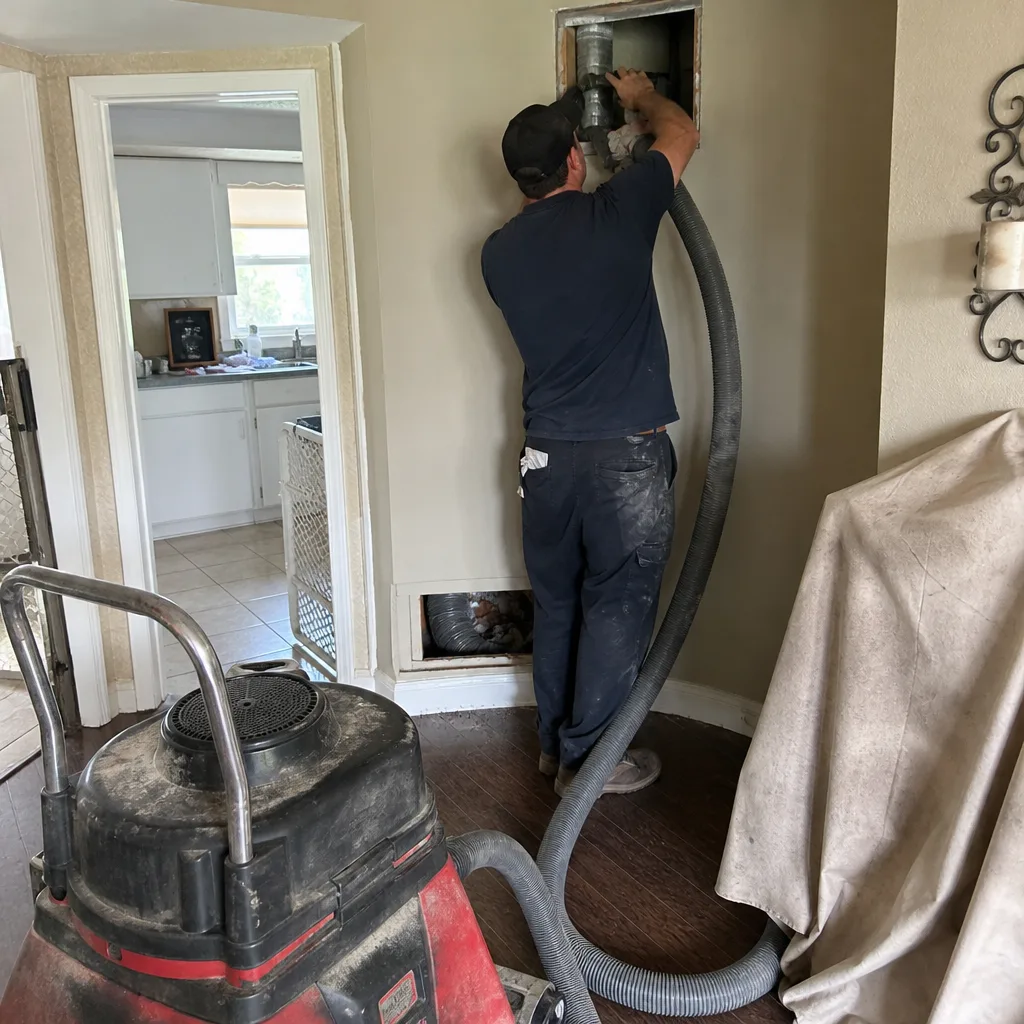 Before
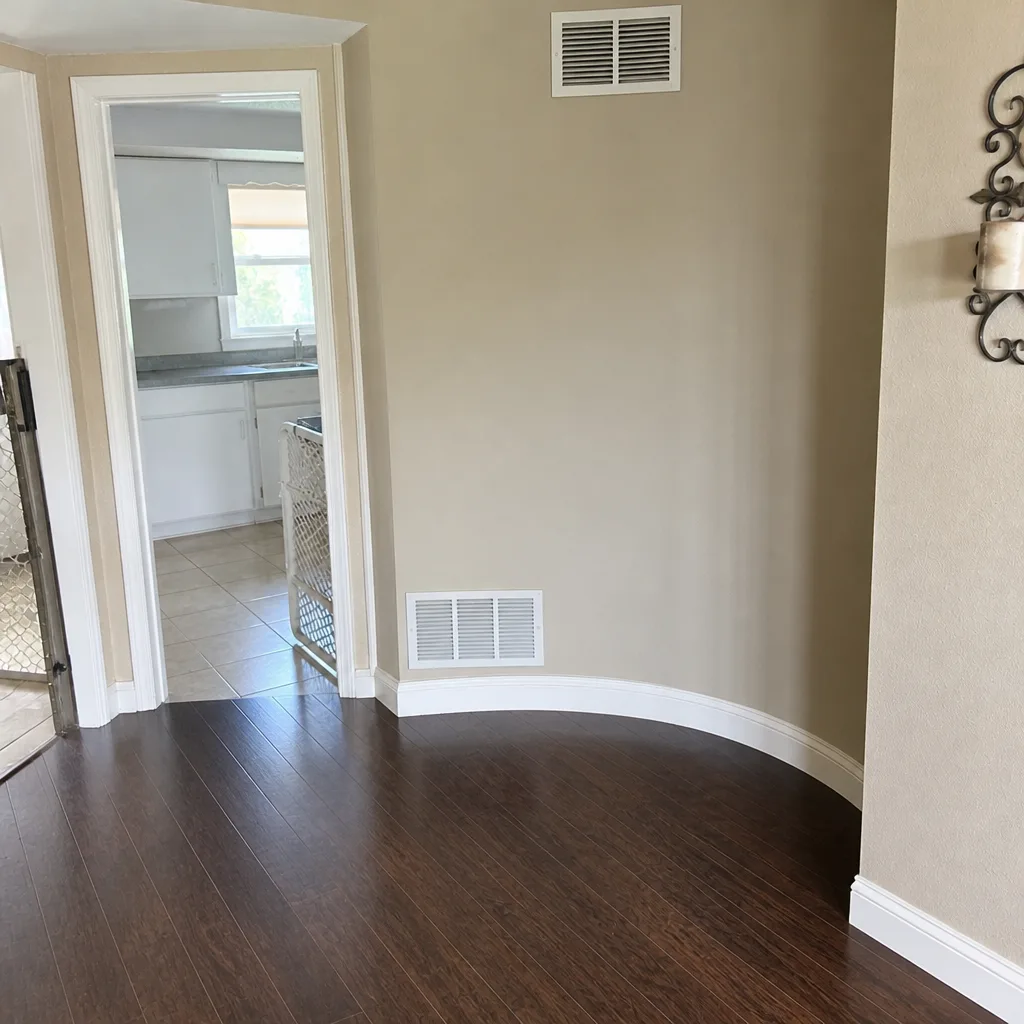 After
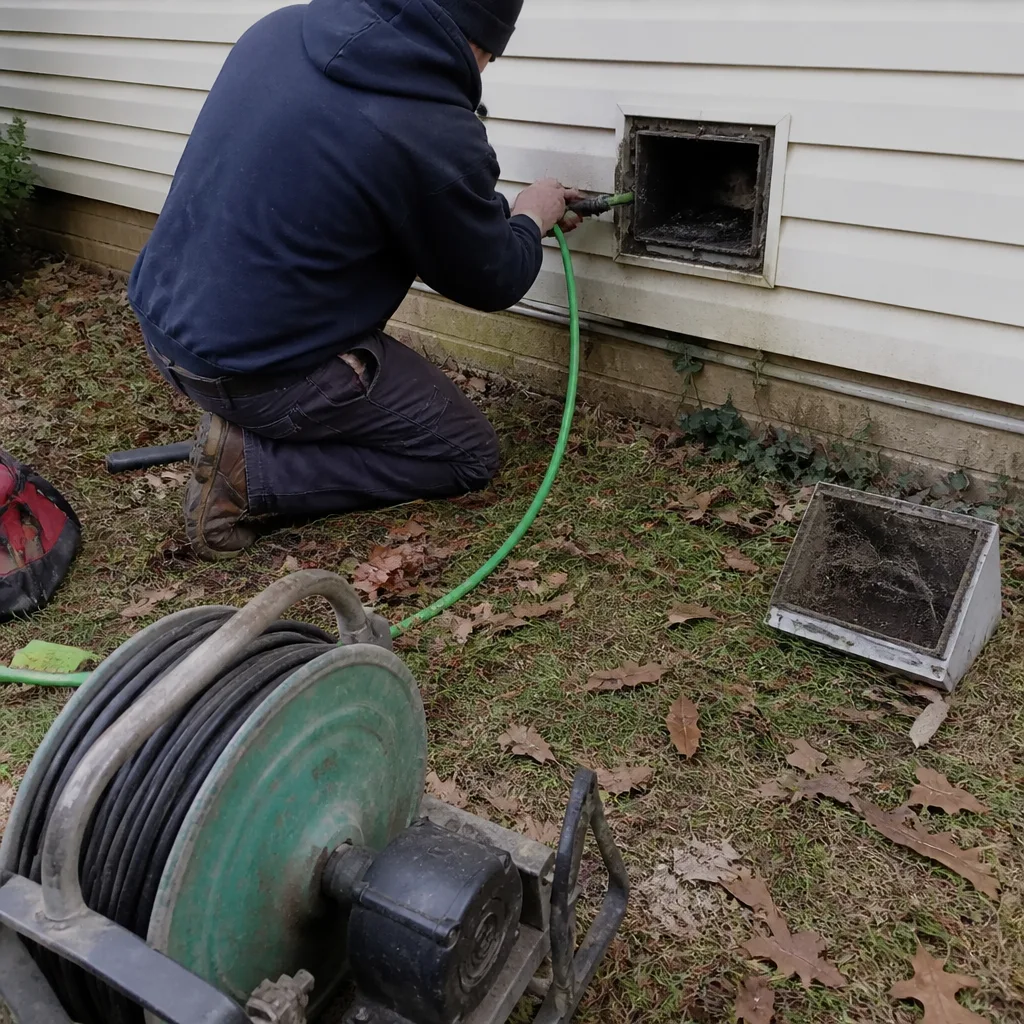 Before
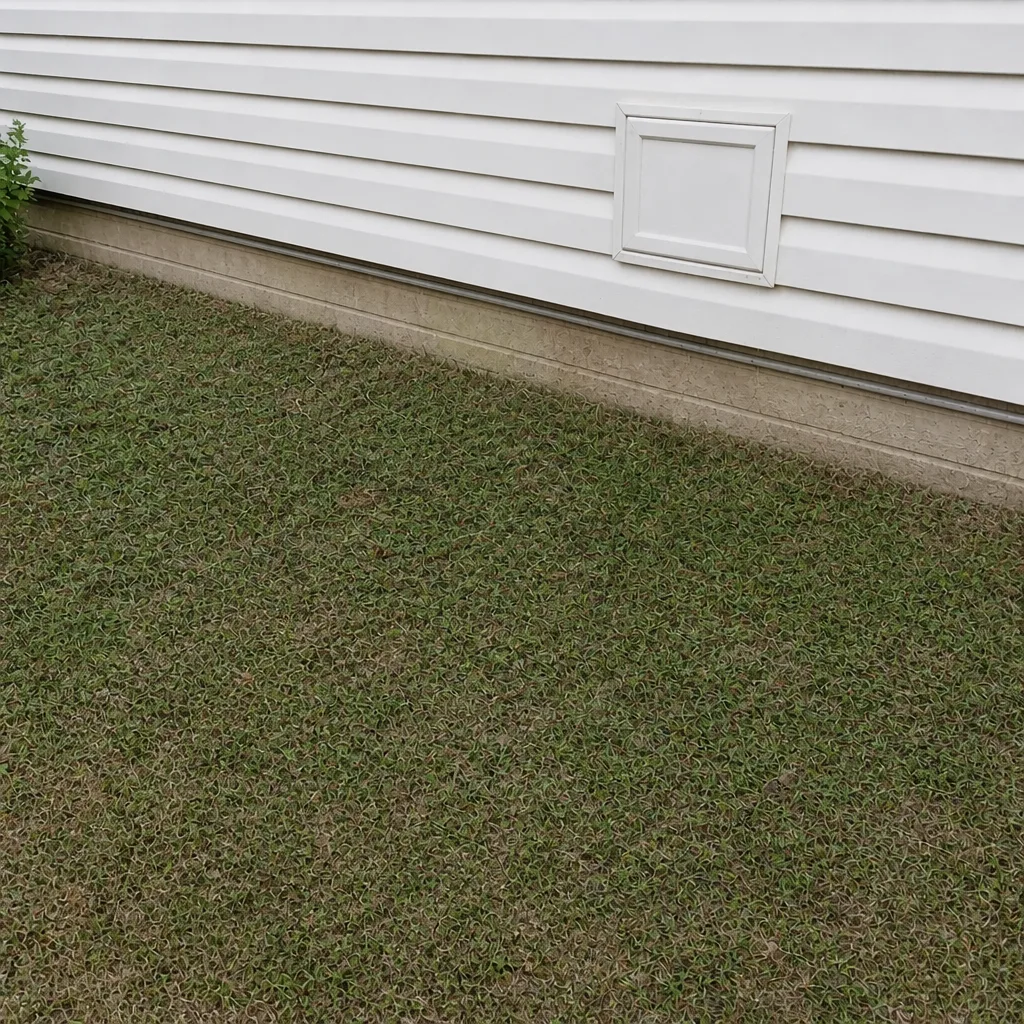 After
 Before
 After
When to Call a Professional
Some things you can evaluate yourself. Others need a trained eye on the system. Call a professional if you’ve had recent renovation work and the ductwork hasn’t been cleaned since, if allergy or asthma symptoms are worse indoors than outdoors, if your dryer is taking noticeably longer to dry clothes, if your HVAC system runs constantly without keeping up, or if you’ve noticed visible debris in the registers. Also call if you’ve recently bought a home in Suffolk and don’t know the last time the system was serviced. Duct Cleaning Suffolk offers free estimates in Suffolk. Call (855) 740-0661. We answer 24/7, with fast dispatch from 7am to 7pm, Sunday through Friday. Learn more about our Suffolk service area before you book your visit.
Frequently Asked Questions
Pricing for air duct cleaning in Suffolk depends on the size and layout of your system, and the written estimate you receive before work starts is the final price. We give a flat price per system agreed in advance, not a per-vent rate, so you know the final cost before anyone arrives. Call (855) 740-0661 for an exact quote – estimates are free.
Cheaper quotes usually reflect a different equipment class or a different scope. A shop-vac and blower setup can be offered for much less than a rotary contact clean with a high-powered vacuum and negative-air containment. Cheaper quotes also sometimes reflect a lower upfront number that grows once the technician is on-site. Ask what equipment and scope are behind the price before you compare. Call (855) 740-0661 to talk through what your job actually involves.
Before-and-after photos or video of your own ducts is the answer. Any operator running a serious setup has a camera and can show you what’s in the system before and after cleaning. If a company can’t or won’t provide that, that’s information. We provide photos of your own system as part of every job. Call (855) 740-0661 to schedule an estimate.
There’s no single schedule that fits every home, but a common guideline is every three to five years for most households, and sooner if you have pets, allergies, recent renovations, or a dryer vent that’s showing symptoms. In Suffolk’s humid climate, the heavy cooling season accelerates the build-up, so homes here often benefit from more frequent attention than the national average. Call (855) 740-0661 for an assessment of your specific system.
No. There’s no dominant national franchise brand in duct cleaning that sets a quality standard the way brands do in some other trades. What predicts quality is the equipment class, the documented process, verification, and scope, all of which you’ll find among both franchises and independents. Compare on those criteria. Call (855) 740-0661 if you want the five-criteria checklist walked through with a real operator.
We handle both. Air duct repair is one of our three core service lines, alongside air duct cleaning and dryer vent cleaning. That matters because if a cleaning reveals compromised ductwork, you won’t be handed off to a contractor you don’t know – we can resolve both the contamination and the damage in the same scope. Call (855) 740-0661 to have your system evaluated.
The Bottom Line
The brand decision in duct cleaning is really an operator decision. Focus on equipment class, process transparency, scope documentation, before-and-after verification, and warranty terms. Use the five criteria as a scorecard, and treat reviews as one input, not the whole story. Prefer operators who can handle cleaning, dryer vent work, and repair in one scope so problems don’t get handed off to someone you’ve never met. Keep the emphasis on professional-grade equipment and a written flat-price estimate. Our technicians have up to 12 years of experience, and we’re happy to walk through the checklist with you. Call (855) 740-0661 for a free estimate. We answer 24/7, with fast dispatch from 7am to 7pm, Sunday through Friday.
Written by the team at Duct Cleaning Suffolk.