
Last updated November 15, 2026
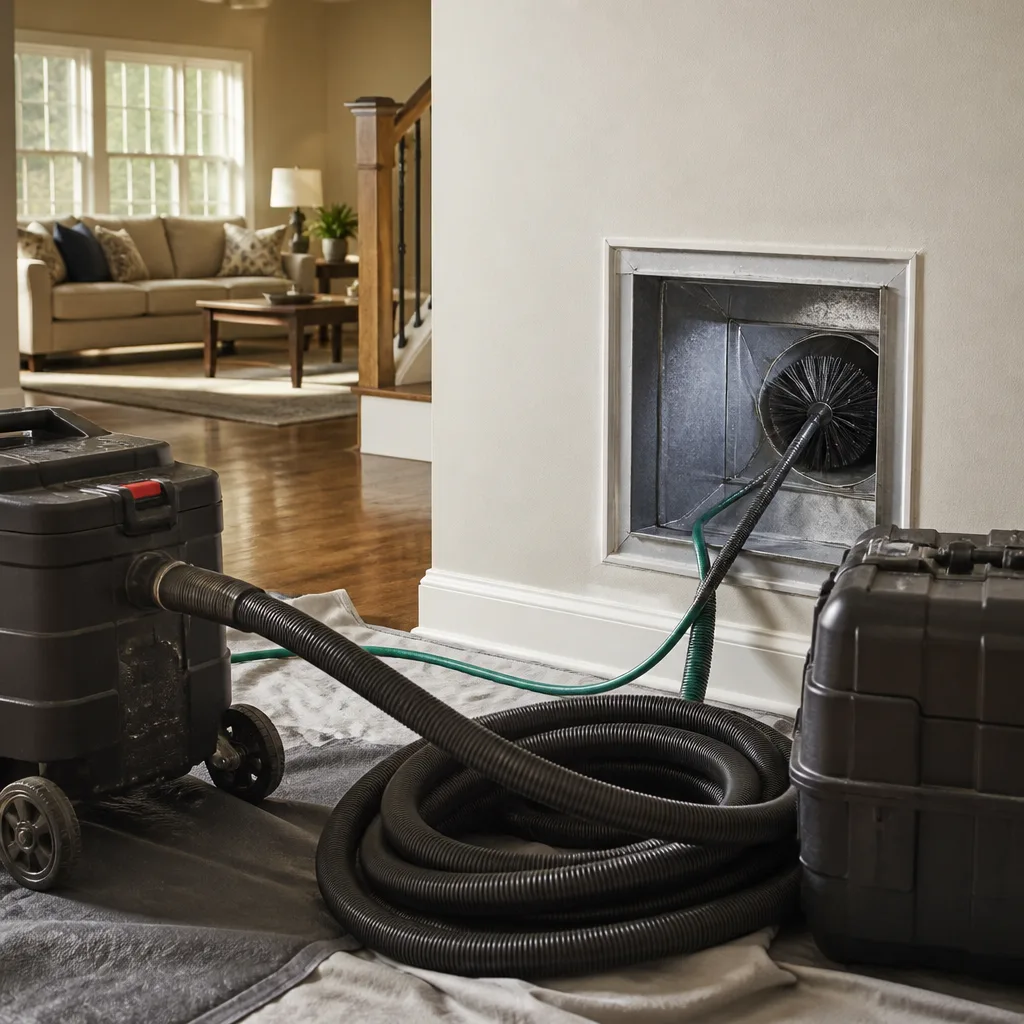 Whole-home duct cleaning
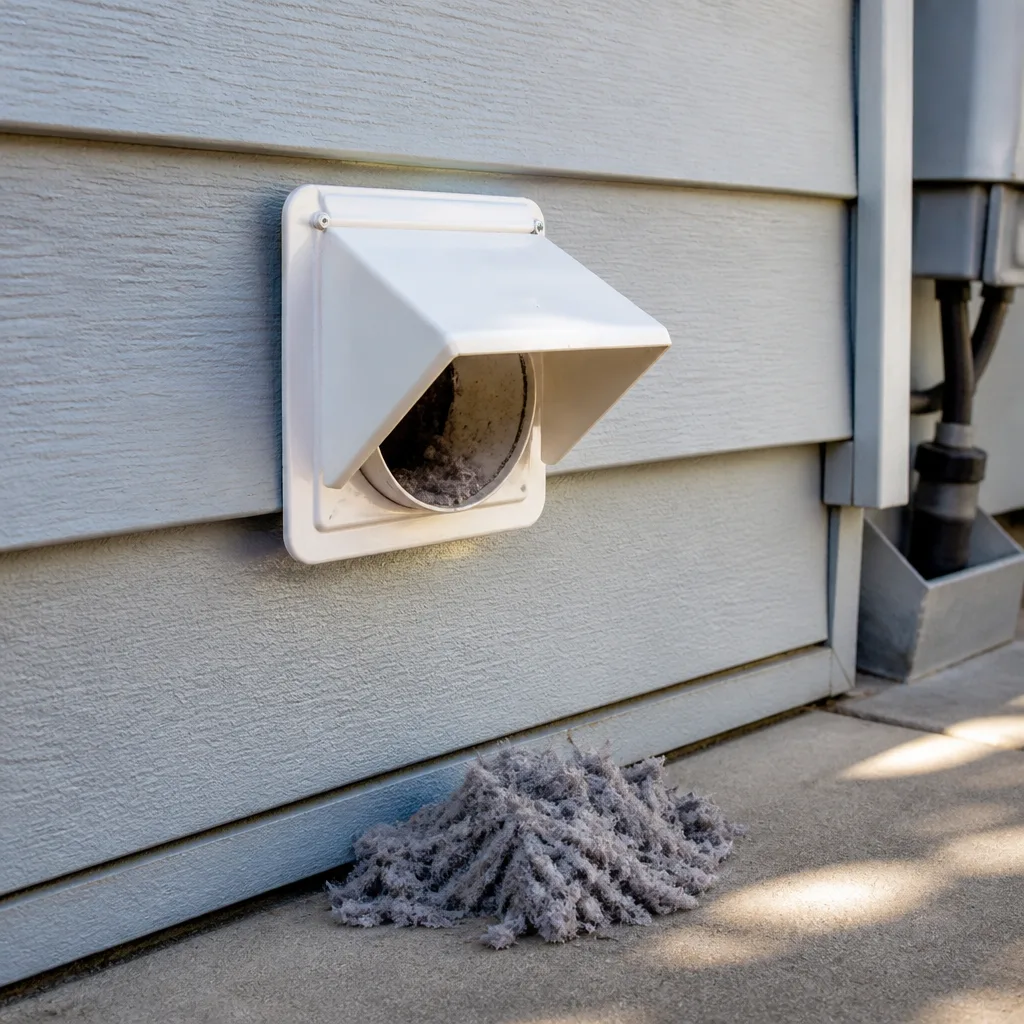 Dryer vent cleaning
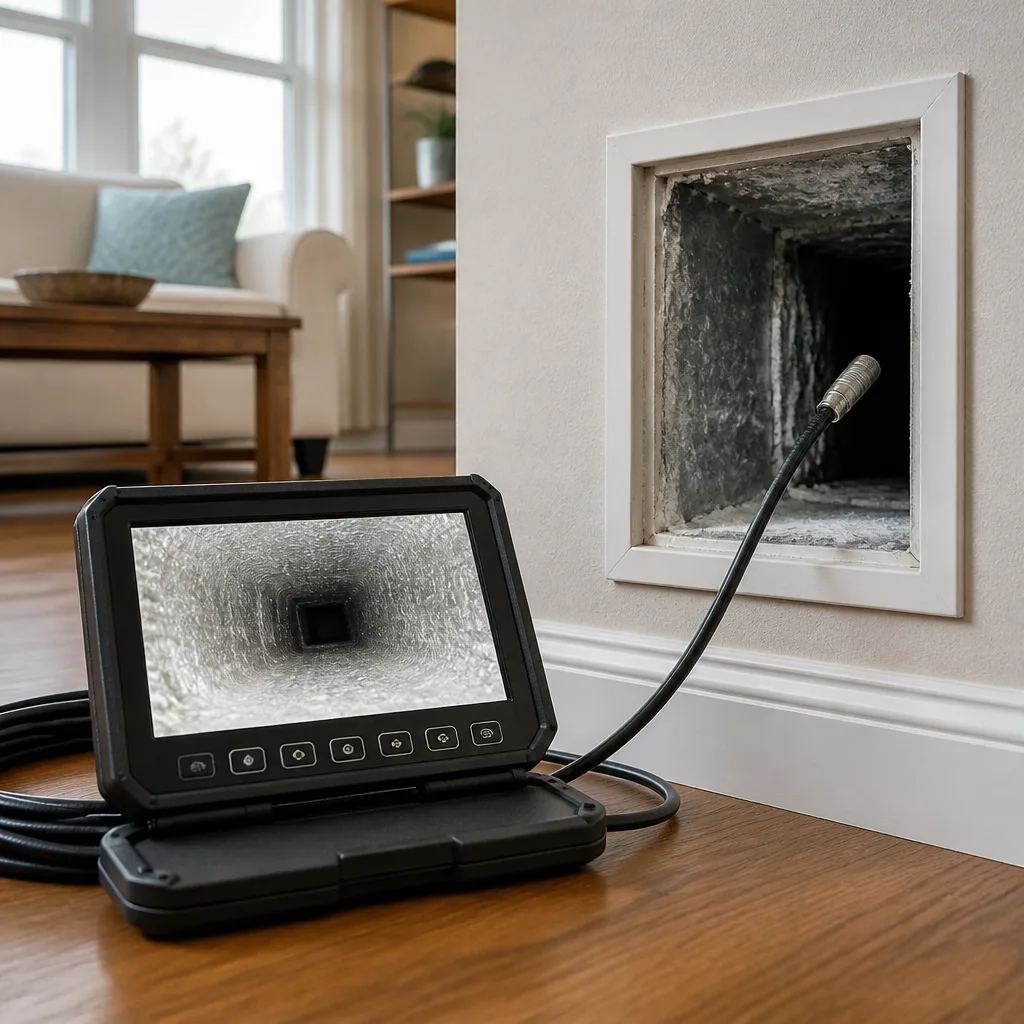 Camera inspection
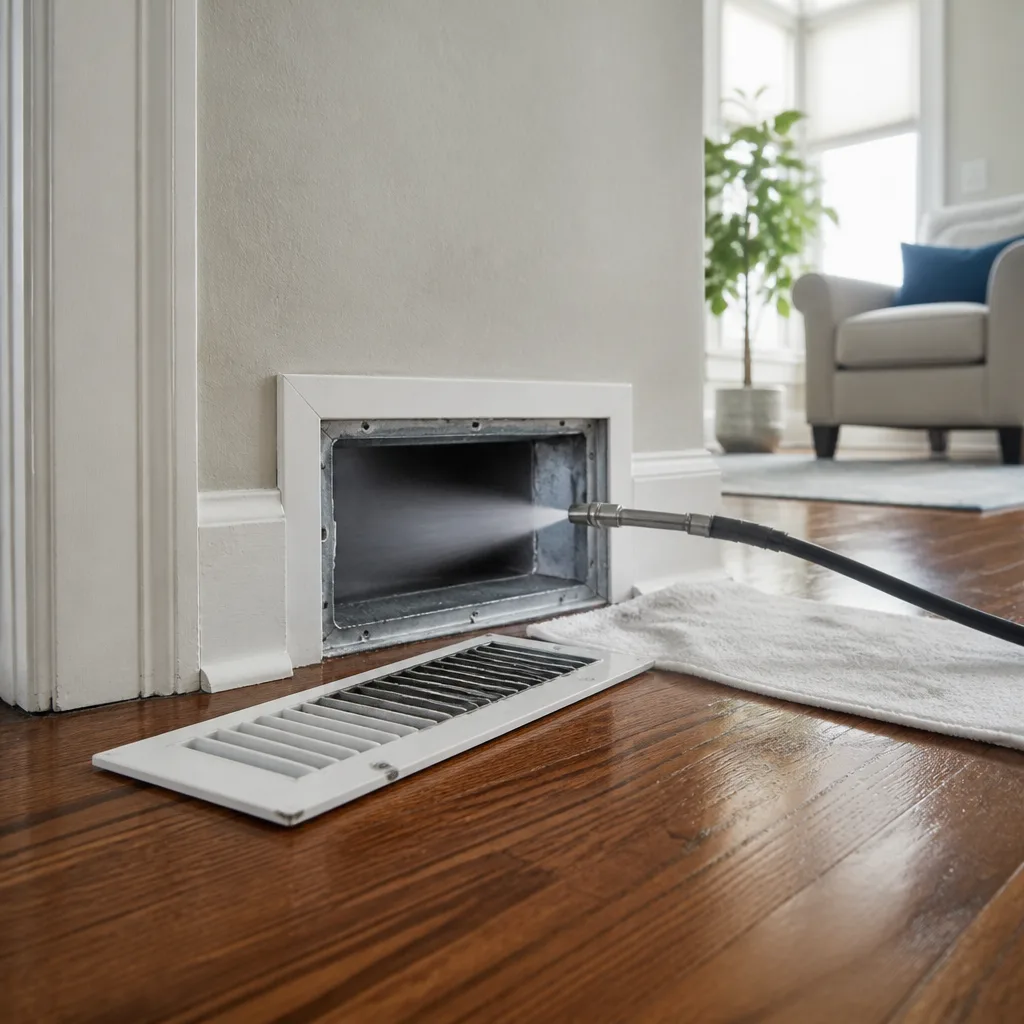 Sanitizing & deodorizing
Whole-system duct and dryer vent check with before-and-after photos - you see exactly what came out of your vents
That "$99 whole-house special" is a bait ad - the real number appears once they are in your hallway, or the "clean" is a shop-vac at the register. We photograph the inside of your ducts before and after instead.
Air Duct Cleaning Troubleshooting in Suffolk: Common Problems and How to Fix Them
If a duct cleaner shows up and starts the job before inspecting your system, they’ve already skipped the step that tells them what’s actually wrong. That’s the uncomfortable truth about most duct work in Suffolk: the cleaning is the easy part, and the diagnosis is the part that decides whether the cleaning was worth doing at all. Weak airflow, dust that settles a day after you wipe it, a musty smell that shows up when the heat first kicks on – each of those has a mechanical cause, and none of them is automatically “dirty ducts.” This guide walks through how to read those symptoms like a technician, what each one usually points to, and how to confirm the cause before anyone touches your system.
Quick Answer
Most duct problems in Suffolk trace back to one of four causes: a restricted filter or blower, a collapsed or disconnected flex run, deteriorated internal duct liner, or contamination in the trunk lines and branch runs. A proper visual inspection plus static pressure readings taken before and after service will tell you which one you’re dealing with. Cleaning fixes contamination. It does not fix collapsed ductwork or a failing blower.
Styles & brands we work with
- Whole-home duct cleaning
- Dryer vent cleaning
- Camera inspection
- Sanitizing & deodorizing
Table of Contents
- What a Real Diagnostic Looks Like
- Weak Airflow: Dirty Ducts or Something Else?
- Musty Smells After Cleaning: What They Actually Mean
- Collapsed Duct vs. Blockage: Two Different Problems
- How to Tell If Your Ducts Were Actually Cleaned
- When a Troubleshooting Inspection Is Worth Scheduling
- Common Mistakes to Avoid
- When to Call a Professional
What a Real Diagnostic Looks Like
A real diagnostic happens before the vacuum is turned on. The technician looks at the system first, writes down what they find, and then tells you what the cleaning will and won’t solve. If your system needs air duct cleaning, you’ll know why. If it doesn’t, you should hear that too.
Here’s the order we work through on a typical Suffolk home:
- Walk the whole system, not just the visible registers. That means the air handler, the plenum, the trunk line, every accessible branch run, and the return side. Problems hide in the return far more often than people expect.
- Check the filter and blower compartment. A clogged filter or a blower wheel caked with dust mimics a duct restriction almost perfectly. It’s the cheapest thing to rule out and the most commonly missed.
- Take static pressure readings at the return and supply sides before any work starts. This gives you a baseline number for the whole system.
- Open access points and look inside. A camera or a direct look through an access panel shows you the actual condition of the duct interior – buildup depth, liner condition, moisture, disconnected joints.
- Confirm the duct layout matches what the house needs. Older Suffolk homes sometimes have additions or converted spaces where the ductwork never caught up with the floor plan.
Only after those five steps is anyone in a position to tell you what’s wrong. A quote given before an inspection isn’t a quote, it’s a guess with a number attached.
The equipment matters here too. Professional-grade gear like Rotobrush contact-cleaning systems and Nikro high-powered vacuum units work the surfaces and pull the debris out rather than blowing it around. Equipment like Abatement Technologies negative-air units keeps what’s loosened from migrating into your living space during the job. Consumer machines and shop-vacs can’t do any of that, which is why a blow-and-go setup often leaves dust where it started.
Weak Airflow: Dirty Ducts or Something Else?
Weak airflow from one vent is almost always a branch-run problem. Weak airflow from every vent in the house is almost always a system-level problem. That single distinction saves you a lot of chasing.
When the complaint is one room or one register, we look at the run feeding it:
- A closed or partially closed damper in the branch. Easy to miss and easy to fix.
- A disconnected joint, especially in flex duct where a fitting came loose in the attic or crawlspace.
- A crushed or kinked flex run, which we’ll come back to below because it’s the most common structural failure we see.
- Debris lodged in the branch – construction dust from a renovation, insulation, or an actual object that fell in during a repair.
- A register blocked by furniture, a rug, or a poorly placed return path.
When every register is weak, the cause is upstream:
- A dirty filter, which throttles the whole system in one move.
- A fouled blower wheel, which reduces the volume of air the system can move regardless of how clean the ducts are.
- Undersized return air, a common issue in Suffolk homes where returns were sized for a smaller system than the one now installed.
- A failing blower motor or capacitor, which is an HVAC matter, not a duct matter.
- Genuinely contaminated trunk lines, where buildup has narrowed the effective path for air.
We work with the systems already in your home, including whole-home filtration set up on Honeywell or Aprilaire equipment. On homes with that kind of filtration, a restricted flow can also mean a loaded media filter rather than dirty ducts at all, so we check the filter cabinet before we recommend anything.
Musty Smells After Cleaning: What They Actually Mean
A musty smell that returns within days of a cleaning usually means the contamination wasn’t fully removed, or something wet is still inside the system. It’s not a scent that airs out. It’s a signal.
We trace it to one of three causes:
- Missed sections. Trunk lines, return plenum, or branch runs that weren’t opened and cleaned properly. Every section has to be contacted and pulled, not just the runs closest to the registers. If the smell is strongest at one register, the problem is probably in the branch feeding it.
- Deteriorated internal duct liner. Fiberglass liner on the inside of sheet metal duct breaks down with age and moisture. Once it starts, cleaning alone won’t fix it, because the liner itself is the source. It has to be inspected, and in many cases removed or replaced. This is where air duct repair work comes in, and it’s the reason we keep repair inside our scope rather than handing the problem off.
- Moisture intrusion. A leaking coil pan, condensate line, humid crawlspace, or a run that sweats in an unconditioned attic will keep feeding a musty smell no matter how clean the ducts are. Cleaning a wet duct system is a waste of money until the moisture source is fixed.
Here’s how each one gets confirmed. Missed sections show up as inconsistent buildup depth between one run and the next during inspection. Liner deterioration is visible directly once an access point is open, and the material will feel brittle or crumbling rather than intact. Moisture intrusion shows up as staining, standing water in the pan, or high humidity readings inside the system compared with the house.
None of those three get resolved by running the vacuum longer. Each one requires knowing which cause you’re looking at first.
Collapsed Duct vs. Blockage: Two Different Problems
A collapsed duct and a blocked duct both cause low airflow, and they need completely different fixes. Cleaning won’t resolve either one, and diagnosing which one you have is the whole point of the inspection.
A collapse is structural. Flex duct that’s been kinked sharply, crushed under attic decking, pulled tight around a corner, or sagged between hangers loses its shape and stops moving air. The duct is still there, it’s just pinched. You can’t vacuum a collapsed run back open. It has to be rerouted, re-supported, or replaced. This is one of the most common calls we get, and it’s why Duct Cleaning Suffolk includes repair as a core service rather than treating it as someone else’s job. A single visit can identify the crushed run and replace it.
A blockage is a restriction inside an otherwise intact duct. Construction debris from a renovation, insulation that got pulled into the system, a separated liner flap, or an object that dropped in during a repair. The duct shape is fine; there’s just something sitting in the path. Cleaning equipment can clear a blockage if it’s loose material. If it’s an object or a liner flap, it has to be physically removed.
How we tell them apart:
- Visual confirmation at the duct interior, which shows whether the duct is pinched or whether something is resting inside it.
- Static pressure readings compared across runs. A collapsed run and a blocked run can look similar on the gauge, but the number combined with what’s visible gives you a clear answer.
- Airflow testing at the register while the air handler runs. A collapsed run reads low and stays low. A blocked run sometimes reads low and fluctuates.
If you’ve been told to “just get the ducts cleaned” for a weak room, ask what the inspection showed. If the answer is a collapse, cleaning was never the fix.
How to Tell If Your Ducts Were Actually Cleaned
Static pressure readings taken before and after service are the most honest proof that something changed. The technician measures at the return and supply sides before any work, records the numbers, and then measures again after. On a restricted system, the numbers move. That’s the point of recording them.
Here’s what to ask for so you’re not taking anyone’s word for it:
- Before-and-after photos of your own ducts, taken through access points, showing the same location both times. Not stock photos, not a generic gallery. Yours.
- The static pressure numbers, written down, before and after.
- A list of which sections were cleaned – trunk, branches, returns, plenum – so you can see whether the whole system was covered or just the easy parts.
- A note on anything found but not fixed, such as a crushed run or deteriorated liner, with a recommendation for what happens next.
Those four items separate a real cleaning from a visit that mostly involved a vacuum and a promise. Professional equipment like Nikro vacuum units and Rotobrush contact cleaning is what makes the before-and-after difference visible in the first place. With a consumer blower, the interior looks roughly the same either way, because the debris just gets pushed to another part of the system.
Containment matters too. When loose material gets disturbed and nothing captures it, it ends up on your furniture and in the air you breathe for the next few hours. Negative-air equipment holds it in the work zone. Ask what kind of containment the technician uses before they start, and if the answer is unclear, that tells you something.
When a Troubleshooting Inspection Is Worth Scheduling
A troubleshooting inspection is worth scheduling before you spend money on anything else – a new air purifier, a higher-MERV filter, a second opinion from an HVAC contractor, or a full cleaning you’re not sure you need. The inspection tells you which of those is actually the right call.
Schedule one when:
- One room is consistently colder or warmer than the rest of the house, and nothing obvious explains it.
- You’ve noticed a musty smell that comes and goes with the heating or cooling cycle.
- You’ve just finished a renovation, and drywall dust or construction debris may have made it into the returns.
- Your dryer takes noticeably longer than it used to. That’s a dryer vent cleaning trigger, and it’s a safety matter as much as a performance one – dryer vent lint is one of the leading causes of residential fires.
- Someone has already told you to clean the ducts, but nobody inspected the system first.
- Your system is older and you want a baseline before deciding whether to repair ductwork or replace equipment.
An inspection is also worth it before you buy a premium filtration upgrade. If a crushed run is the real problem, a better filter won’t solve it, and you’ll want to know that before spending money on equipment.
For homeowners across Suffolk, the climate adds a wrinkle worth mentioning. Summers here run hot and humid, which means the air conditioning system is working hard for months and pulling moisture out of the air at the same time. That combination makes a wet coil pan or a sweaty duct in an unconditioned attic a real risk, and those are exactly the conditions that feed a musty smell. The humid stretch also makes crawlspace moisture more likely to work its way into ductwork runs that pass through it. None of that shows up in a cleaning quote; it shows up in an inspection.
Common Mistakes to Avoid
- Booking a cleaning before an inspection. If nobody has looked at the system, nobody knows what the problem is. A quote before a look is a guess.
- Assuming every problem is dirty ducts. Weak airflow and musty smells often trace back to a filter, a blower, a collapsed run, or moisture. Cleaning doesn’t fix any of those, and paying for it first delays the real repair.
- Accepting a per-vent price as a whole-house price. It’s the classic bait-and-switch setup. A flat price for the whole system, agreed in writing before work starts, is the only comparison worth making.
- Skipping the before-and-after photos. Without photos of your own ducts, you have no way of knowing what the inside of the system looked like when the technician left.
- Treating a dryer vent as a convenience service. It’s a fire-safety item. Lint accumulates in the vent run regardless of how clean your ducts are, and a restricted vent run is a genuine risk. It should be on its own schedule, not tacked onto a cleaning.
- Cleaning ducts while a moisture source is still active. If a condensate line is leaking or a crawlspace run is sweating, cleaning first is wasted money. Fix the moisture, then clean.
- Ignoring a collapsed run because the rest of the system tests fine. One crushed run in an otherwise healthy system still means one room that never gets the air it should. Repair it rather than working around it.
When to Call a Professional
Call a professional when you’ve got a symptom you can’t trace, or when you’ve traced it and the fix requires opening up ductwork. Weak airflow in one room, a musty smell that returns, buildup visible at a register, a dryer that takes too long, or a system that was cleaned and still doesn’t feel right – those are all inspection calls. So is any ductwork that’s visibly crushed, disconnected, or lined with material that’s breaking down.
Duct Cleaning Suffolk offers free estimates in Suffolk. Reach us at (855) 740-0661. We answer 24/7. Fast dispatch, 7am-7pm, Sunday through Friday. The estimate is free, the price is set per job in a written estimate before work starts, and the estimate comes after an inspection, not before it. Our technicians have up to 12 years of experience, and we work with Honeywell and Aprilaire filtration systems already installed in your home.
See the difference
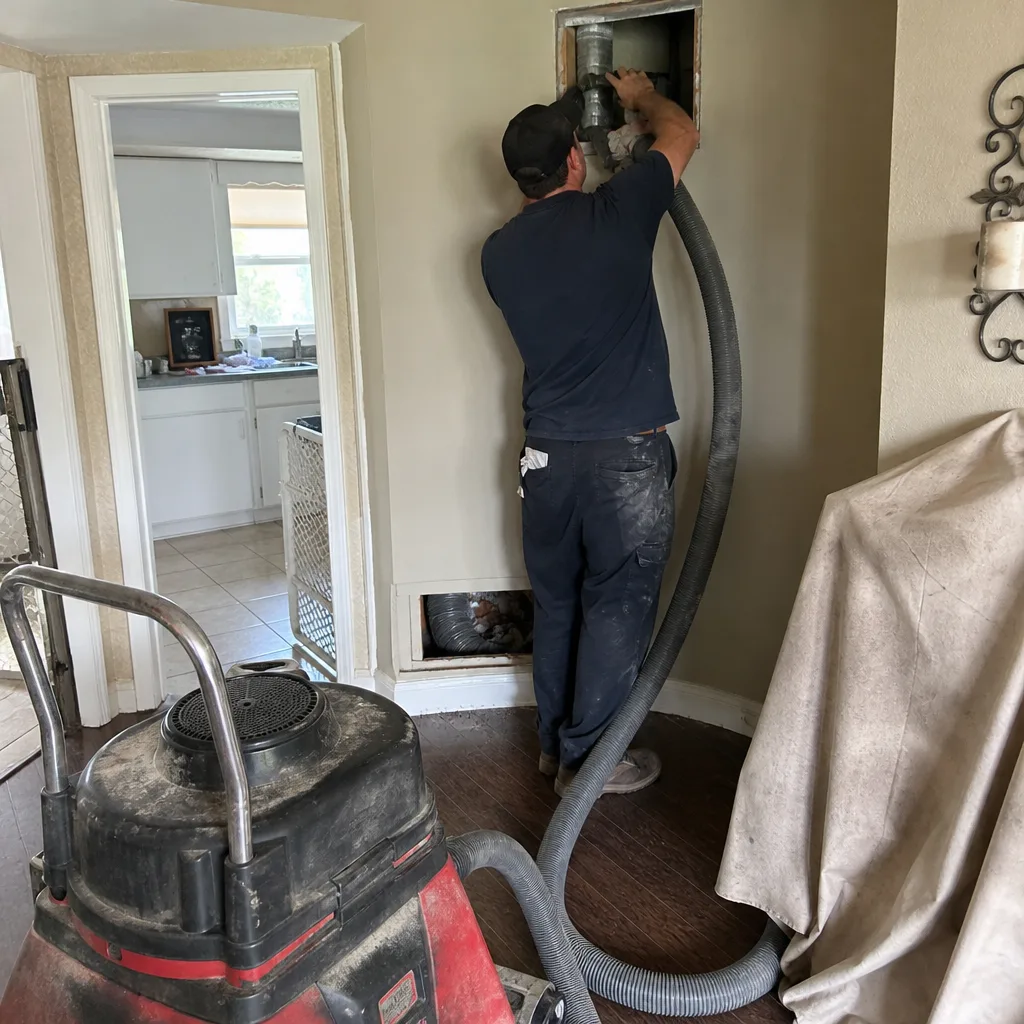 Before
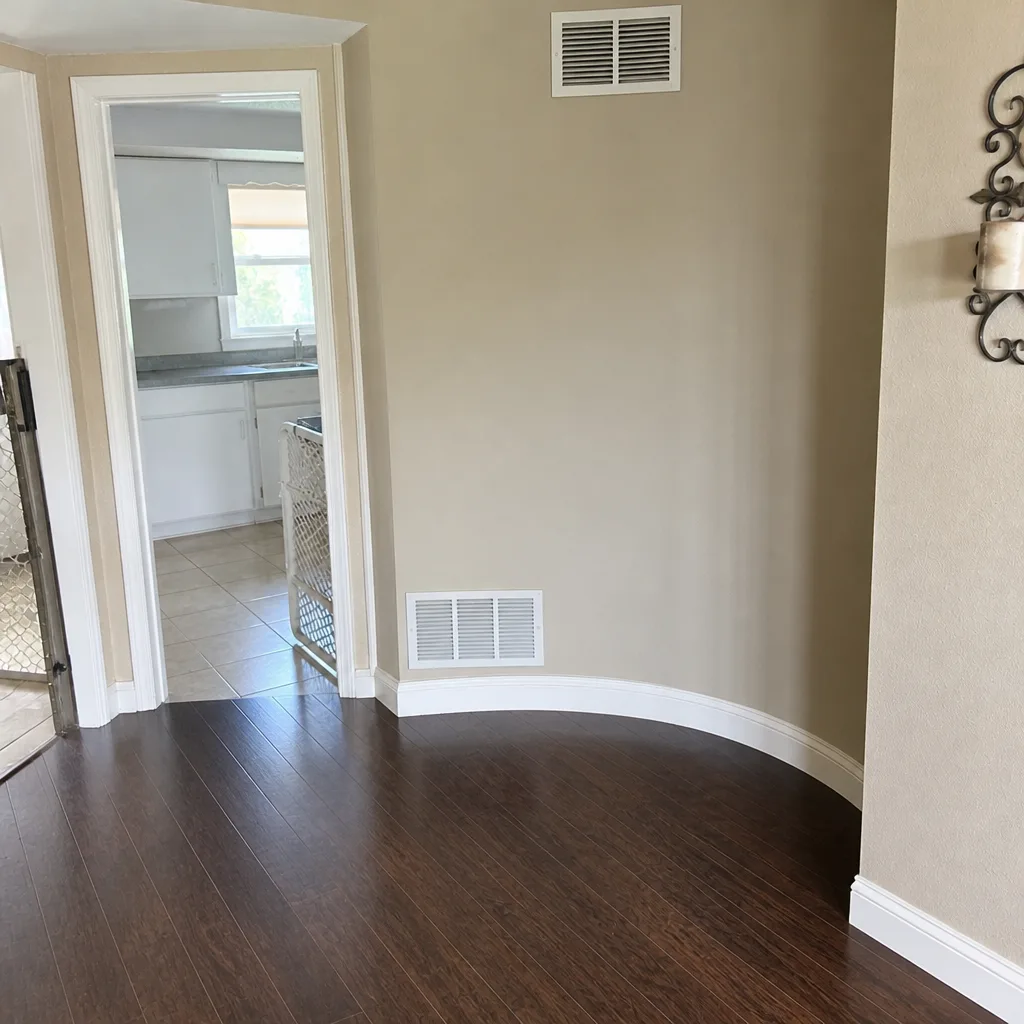 After
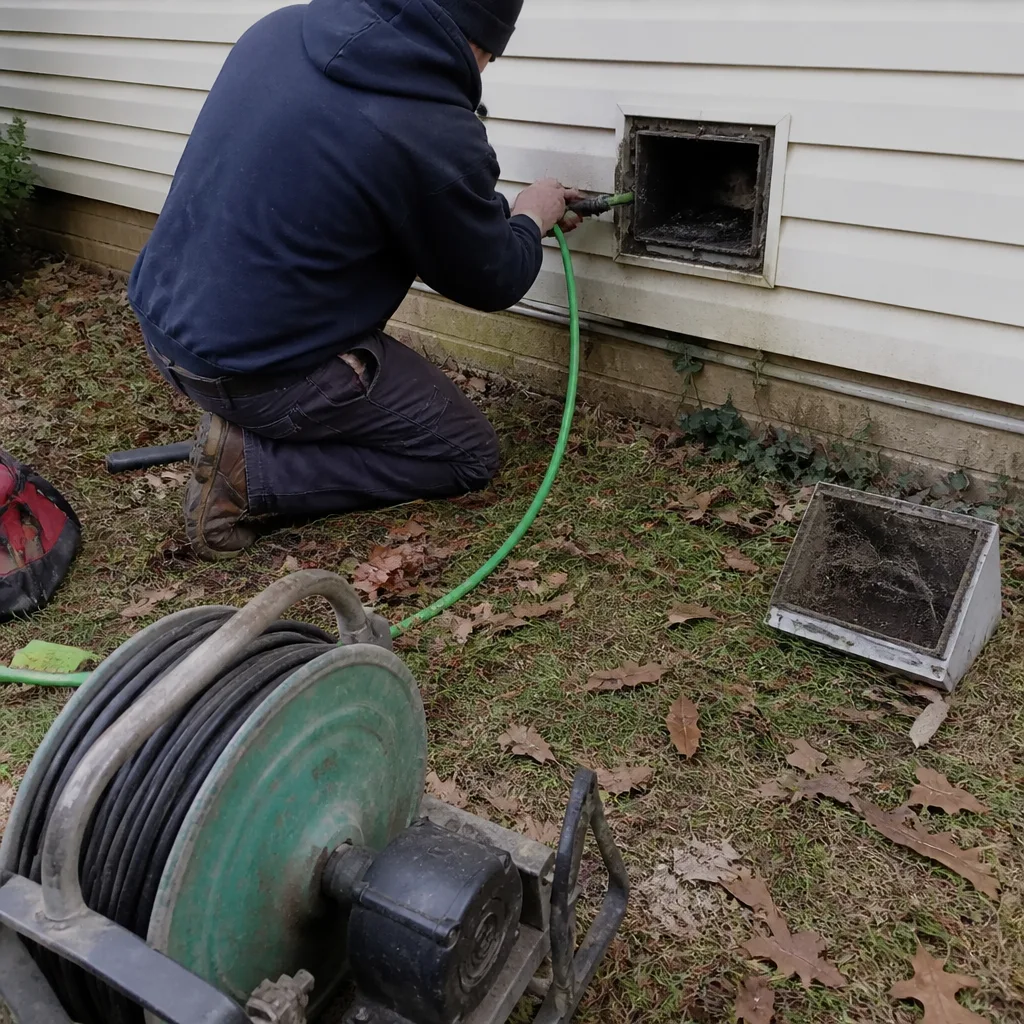 Before
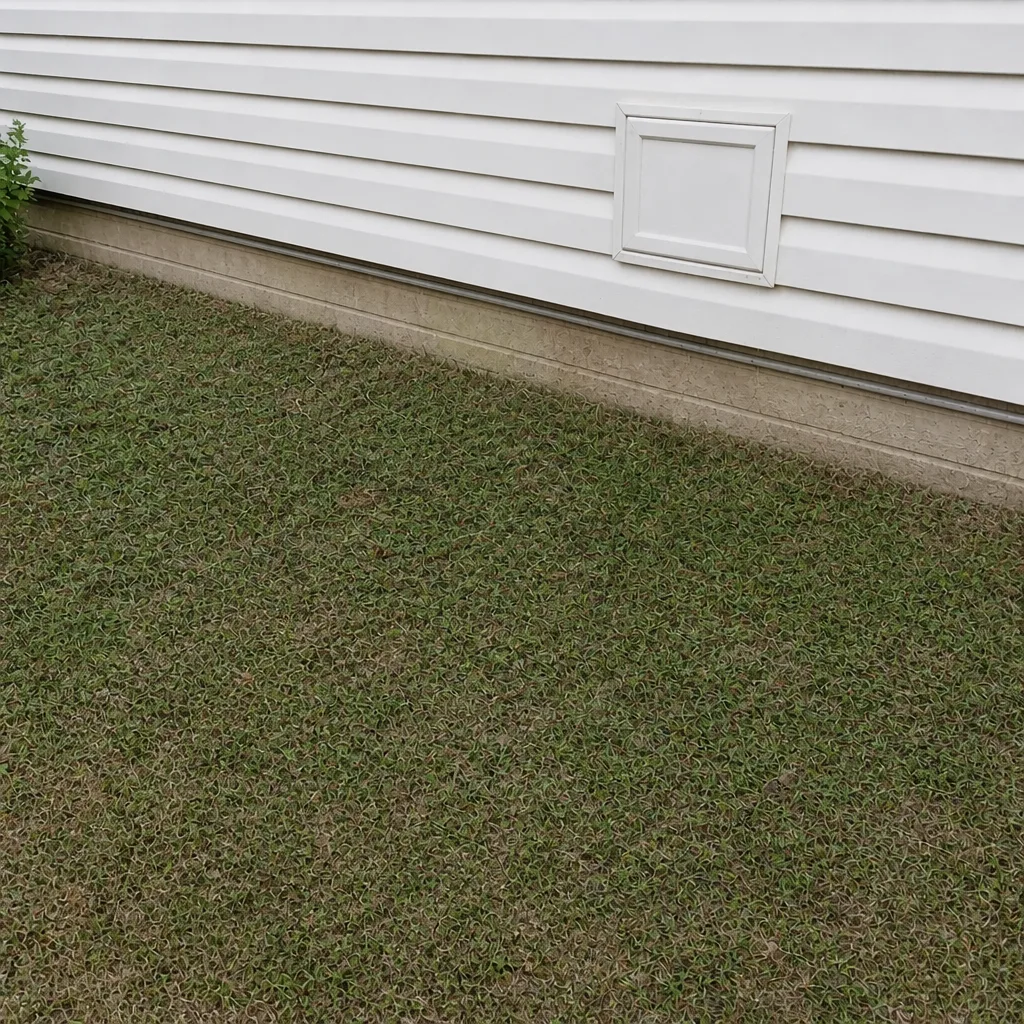 After
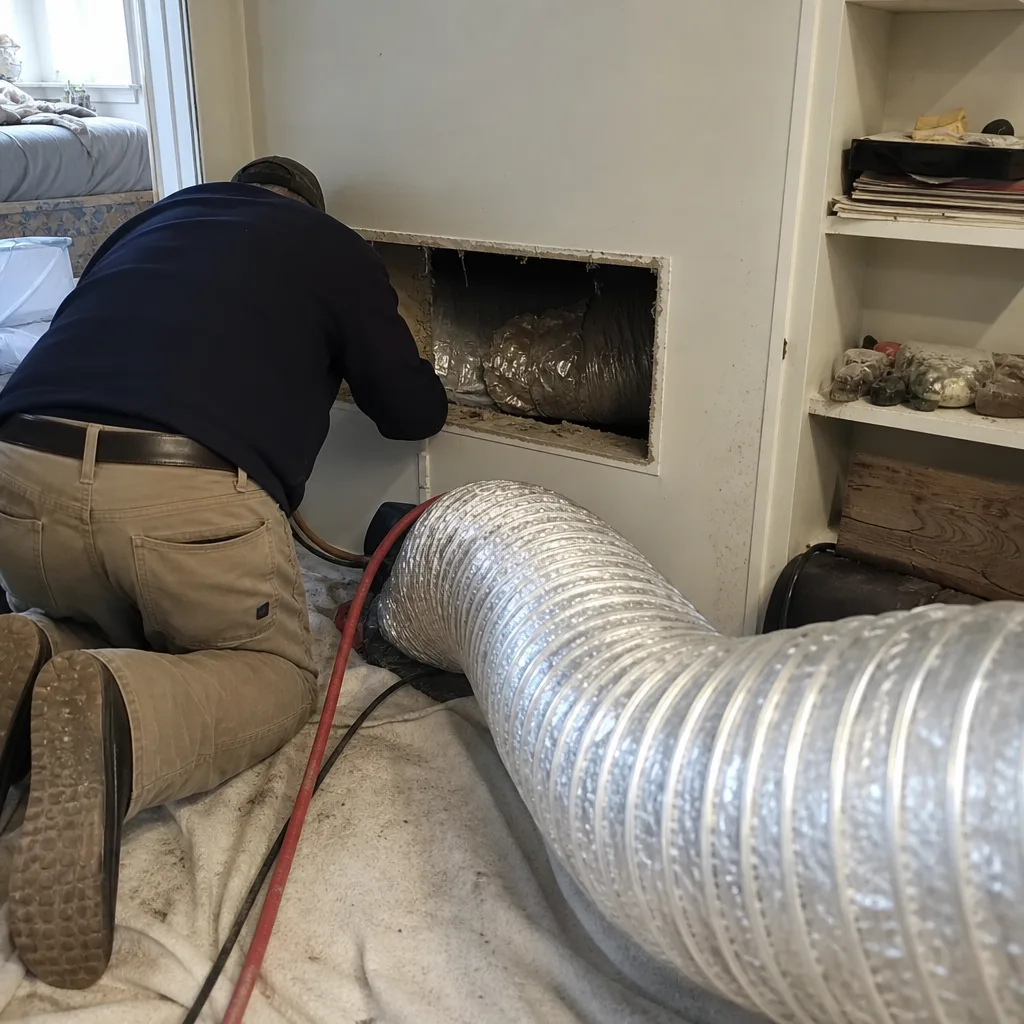 Before
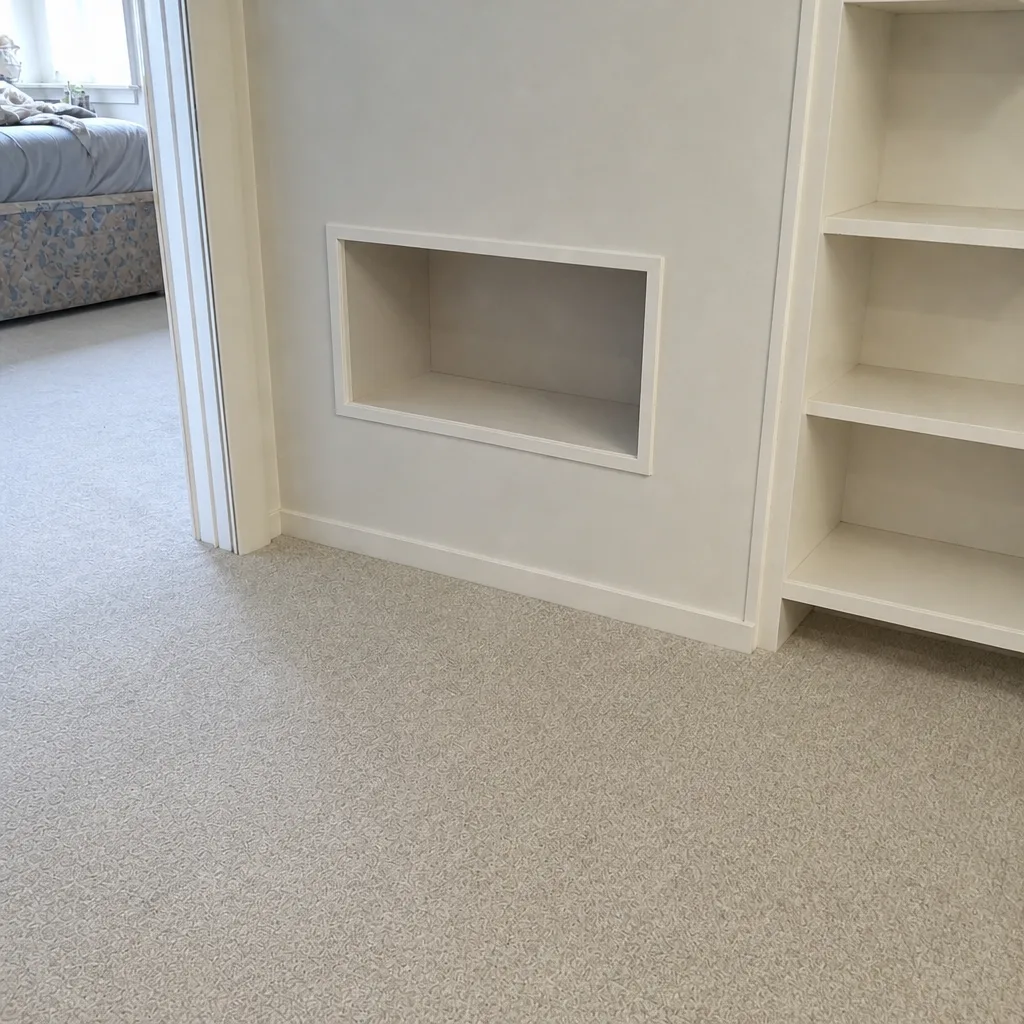 After
Frequently Asked Questions
Most whole-home duct cleanings in Suffolk fall in a range set per job based on the size of the system, the number of runs, and whether repair work is needed. We don’t quote per vent and we don’t use a teaser price – the flat price is agreed in writing before work starts, after an inspection. Call (855) 740-0661 for an exact quote. Estimates are free.
Low quotes usually cover less than the full system, or they’re a starting number that grows once the technician is on site. A cheap quote often means registers only, no containment, consumer-grade equipment, and no before-and-after documentation. A flat price for the whole system, agreed in advance, is what makes quotes comparable. Call (855) 740-0661 to get a written number for your home.
Ask for before-and-after photos of your own ducts and static pressure readings recorded before and after the job. Those two items show what changed inside the system, not just that a truck was in the driveway. Any technician who can’t provide either hasn’t given you proof of anything. Call (855) 740-0661 and we’ll walk you through what the report includes.
There’s no fixed schedule that fits every home. A home with pets, a recent renovation, or an older system usually needs it sooner than a newer home with a well-maintained filter and no moisture issues. An inspection tells you whether it’s needed now, which is more useful than a calendar rule. Call (855) 740-0661 to schedule one.
Three causes account for most of these cases: sections that weren’t cleaned, deteriorated internal liner, or an active moisture source inside the system. Each one is confirmed during inspection – buildup depth across runs, visible liner condition, and moisture readings. Call (855) 740-0661 and we’ll identify which one you’re dealing with before recommending anything.
Not reliably. A collapsed flex run and a blocked run can produce similar airflow symptoms, and the difference only becomes clear when someone looks inside the duct and compares pressure readings across runs. Call (855) 740-0661 to book an inspection. The written estimate that follows sets the price for any repair.
The Bottom Line
Most duct problems in Suffolk have a specific mechanical cause, and a visual inspection plus static pressure readings will find it before anyone starts cleaning. Weak airflow from one room points to a branch run. Weak airflow everywhere points upstream. A musty smell means missed sections, failing liner, or moisture. A collapsed duct and a blocked duct are two different jobs with two different fixes. And before-and-after photos plus before-and-after pressure numbers are the only proof that a cleaning accomplished anything. Cleaning fixes contamination. Repair fixes structure. Knowing which one you need is the whole game – and asking for the inspection first is how you get there.
Call (855) 740-0661 for a free estimate. We answer 24/7. Fast dispatch from 7am to 7pm, Sunday through Friday.
Written by the team at Duct Cleaning Suffolk.