
Last updated November 15, 2026
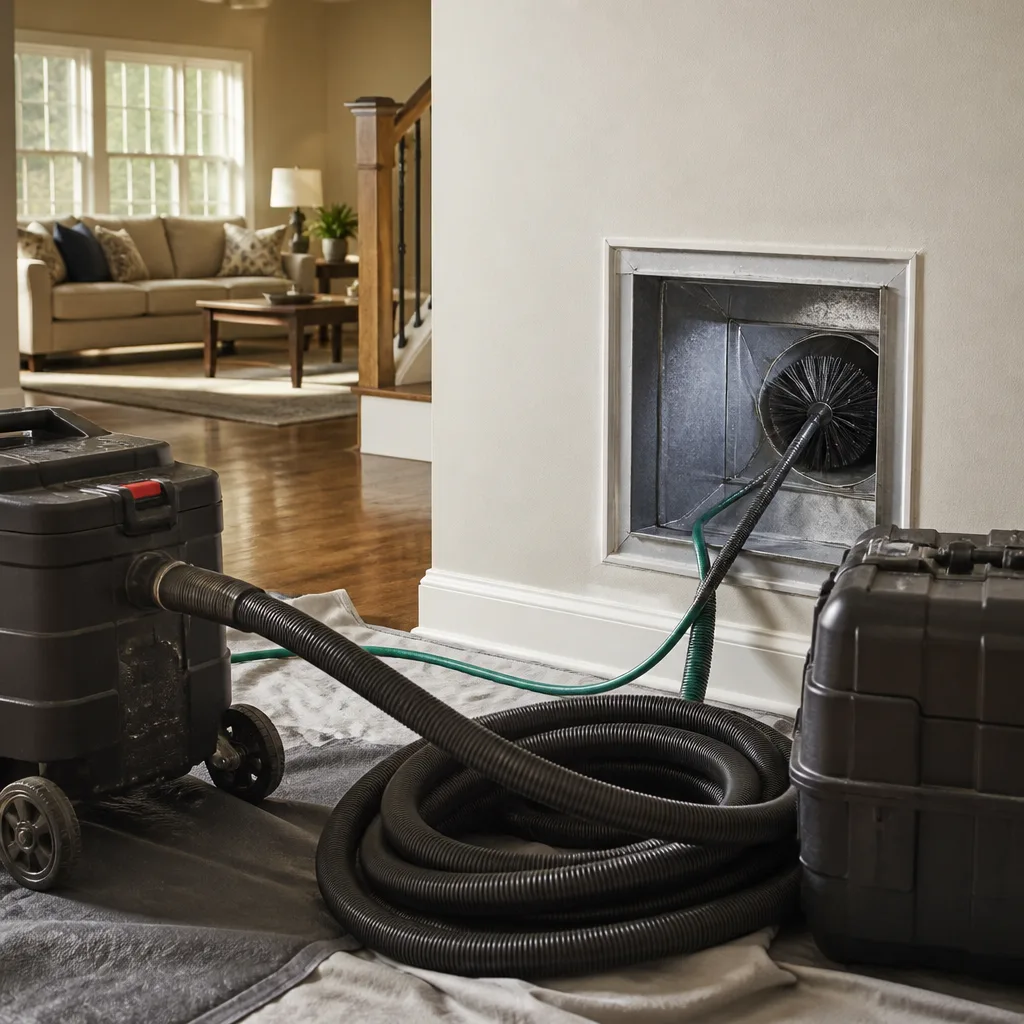 Whole-home duct cleaning
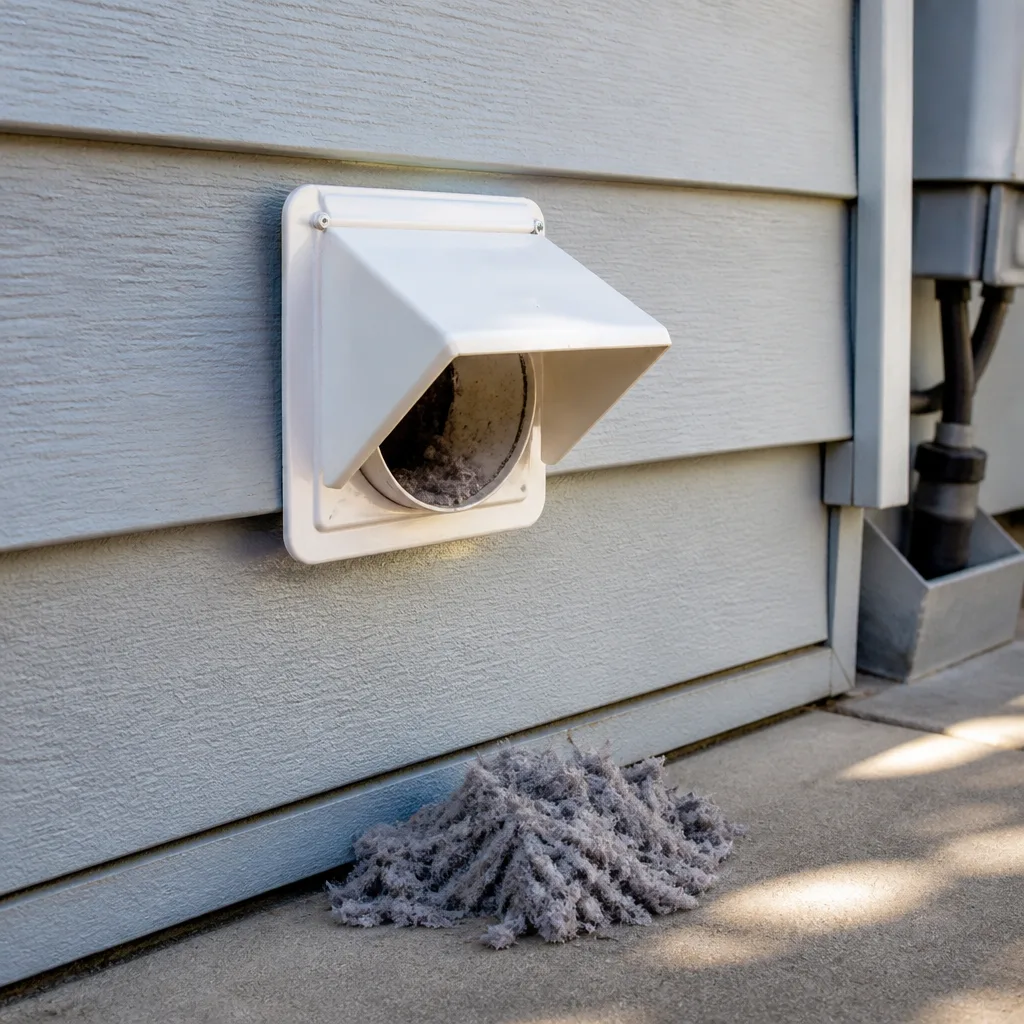 Dryer vent cleaning
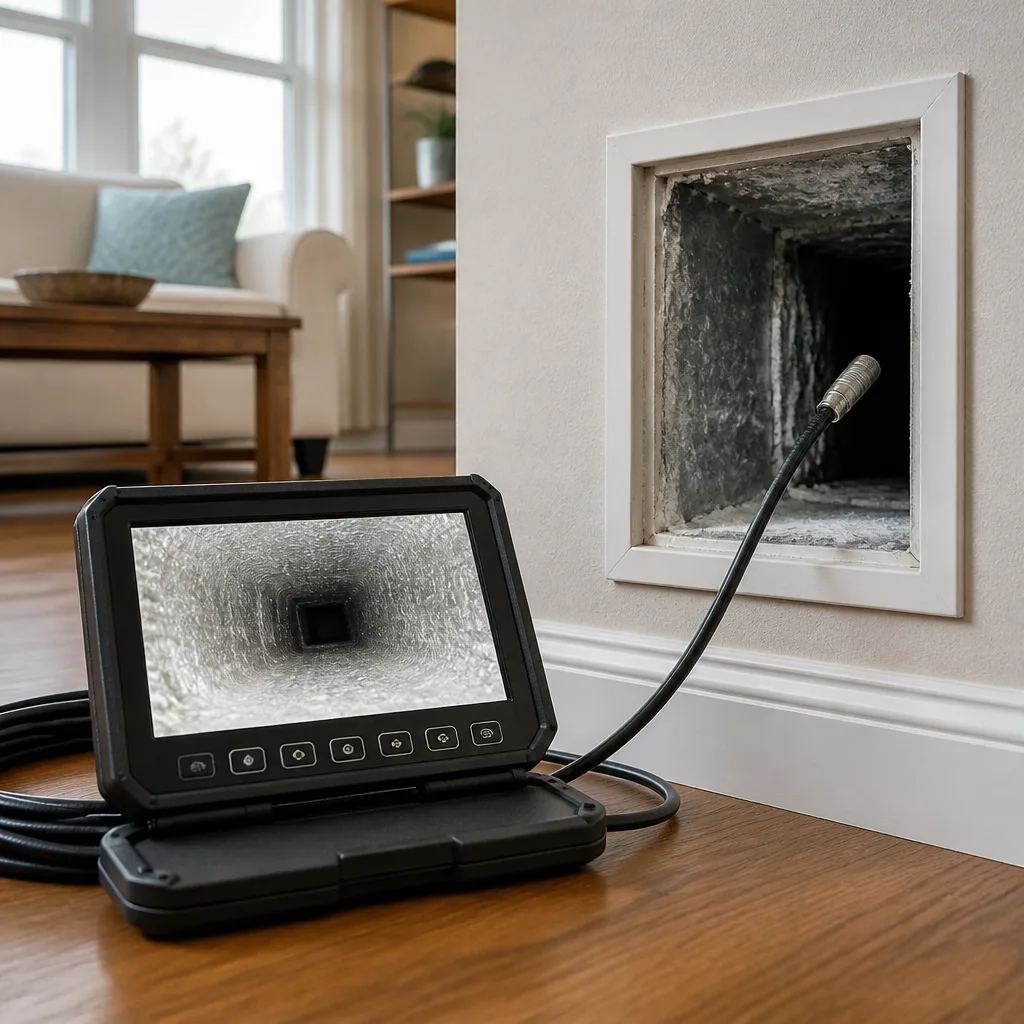 Camera inspection
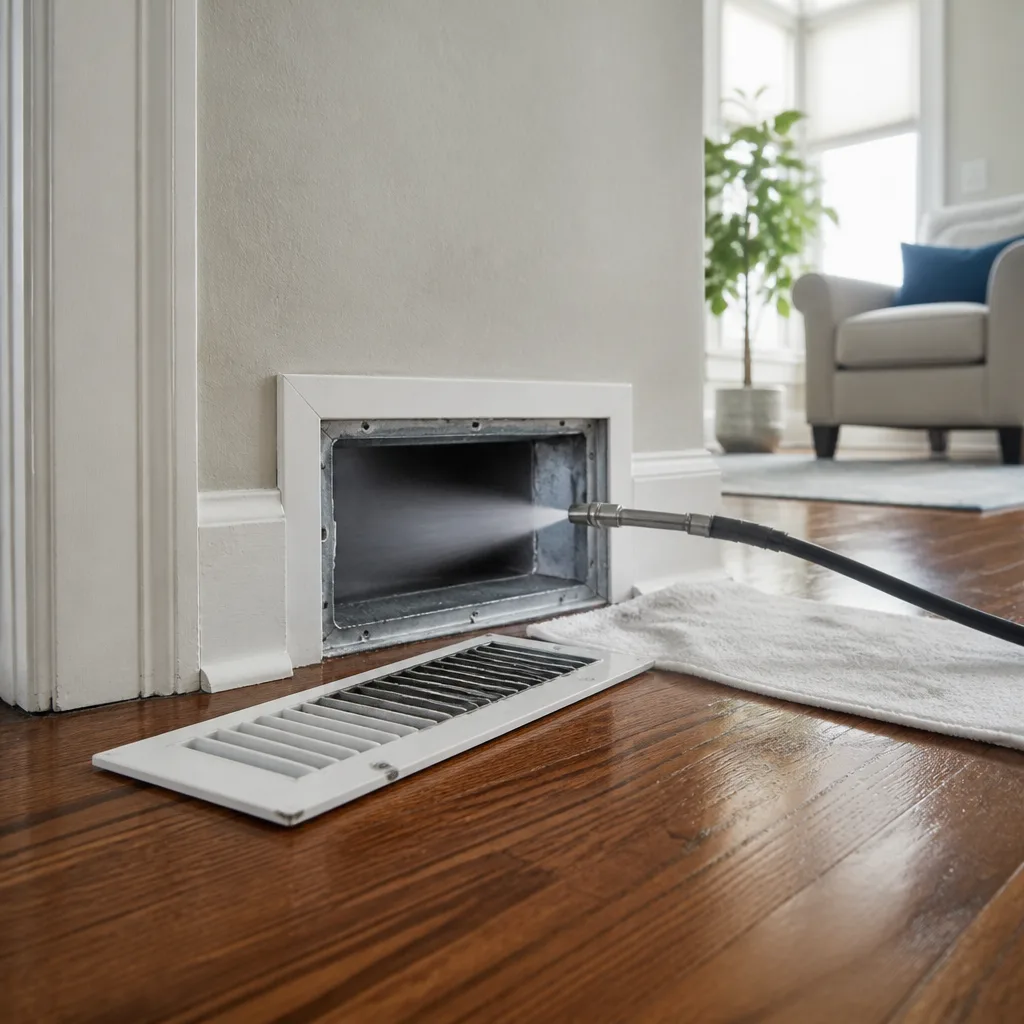 Sanitizing & deodorizing
Whole-system duct and dryer vent check with before-and-after photos - you see exactly what came out of your vents
That "$99 whole-house special" is a bait ad - the real number appears once they are in your hallway, or the "clean" is a shop-vac at the register. We photograph the inside of your ducts before and after instead.
Air Duct Cleaning Maintenance Schedule: What to Do and When
Most homeowners treat duct cleaning as a one-time fix. Something smells musty, someone sneezes more than usual, and they book a cleaning with no plan for the year that follows. The EPA’s guidance to clean “only as needed” was written before high-efficiency systems with tight duct sealing became the norm, and it left a lot of people asking what “as needed” actually means for their home. For a Suffolk house in 2026, it means a layered calendar, not a single interval. This guide breaks down filter, vent, dryer, and full-system tasks by season, so you’ll know what to do and when.
Quick Answer
In Suffolk, most homes need full air duct cleaning every 3 to 5 years, with filters changed every 1 to 3 months depending on MERV rating, and dryer vents inspected once a year. Homes with pets, allergy sufferers, or recent renovations should shorten the duct interval to 2 to 3 years. The biggest scheduling shift specific to this area is a post-summer humidity check in late September, before you switch the system to heating mode.
Styles & brands we work with
- Whole-home duct cleaning
- Dryer vent cleaning
- Camera inspection
- Sanitizing & deodorizing
Table of Contents
- The Suffolk Seasonal Calendar
- How Often Should Air Ducts Be Cleaned in Suffolk VA?
- Filter Changes Tied to MERV Rating and Runtime
- Dryer Vent Inspection Cadence and the Fire-Risk Threshold
- What Shortens the Base Interval: Pets, Allergies, Renovations
- What to Log After Every Service
- What You Can Check Yourself vs. What Needs a Pro
- Common Mistakes to Avoid
The Suffolk Seasonal Calendar: Month-by-Month Tasks
An annual cleaning interval hides what actually needs doing. The schedule below spreads the work out across the year so no single system load catches you off guard. Suffolk’s climate drives this calendar. Summers here are humid enough that condensation can linger in ductwork and flex connections, and that moisture is what feeds microbial growth between cleanings.
- January and February: Change or check the filter at the start of the heating season push. Listen for whistling at the return grille, which can mean a clogged filter or a restricted return. This is when a worn filter costs the most because the blower runs harder.
- March, April, May: Pull the return grille covers and look inside with a flashlight. Light dusting is normal. A visible mat of dust, debris, or anything fuzzy means the ducts need attention. Spring pollen also coats return grilles faster than most people expect.
- June, July, August: Change filters more often during peak cooling. The system runs longer, moves more air, and pulls in more humid air through every gap. Keep an eye on the condensate lines and drain pans.
- September (the key one): After a summer of high humidity, do a post-summer moisture check before heating season. Smell the air coming from each register. Look inside the returns. Any musty odor or visible growth at this point should trigger a cleaning and an inspection, not a wait-and-see.
- October and November: Book a full-system cleaning or inspection if you’re on a 3 to 5 year cycle and it’s due. Before the heating season starts is the practical time, not mid-winter when a system is already loaded.
- December: Change the filter and review your log for the year. Note the runtime hours, the filter type, and any changes in the home (pets, renovations, occupants).
The calendar is the frame, not a rigid rule. A home with two dogs and a newborn is going to move faster through it than a two-person household with no pets. When we work in Suffolk, the seasonal moisture question comes up more than any other, and it’s the one that gets skipped most often. If you have questions about timing for your own home, we offer air duct cleaning as one of our three core services, and the inspection tells you exactly where you stand.
How Often Should Air Ducts Be Cleaned in Suffolk VA?
The short answer for Suffolk VA is every 3 to 5 years for most homes, dropping to 2 to 3 years for homes with pets, allergy occupants, or recent construction dust. The EPA’s “clean only as needed” guidance isn’t wrong, but it puts the burden on the homeowner to recognize “as needed.” Here’s what that actually looks like in practice.
The core signal is not time. It’s what’s inside the ducts and what’s coming out of the registers. A visual check with a flashlight at a return grille and a few supply registers tells you more than a calendar does. Look for:
- Visible dust, debris, or anything fuzzy on duct walls, especially at the base of the run
- Musty, stale, or “old house” odor from registers when the blower runs
- Consistently clogged filters (the kind you change well before the recommended interval)
- Increased dust on horizontal surfaces in rooms closest to registers
- Excess pollen or construction dust entering the system during spring or after work
For most homes in Suffolk, we treat 3 to 5 years as the baseline and adjust upward or downward based on the list above and the household facts. Homes with central air that runs long cooling cycles in summer tend to move toward the shorter end. Homes with basic forced-air heating and few occupants can stay closer to the longer end. Duct Cleaning Suffolk is the starting point for scheduling a system inspection if you’re unsure where you sit, and the rest of this guide will help you build your own version of this calendar.
Filter Changes Tied to MERV Rating and Runtime
Filter intervals are usually set by the month, but MERV rating and actual runtime are what determine when a filter is really done. A high-MERV filter on a system that runs 14 hours a day in July loads up far faster than a basic filter in April. Tying the change to the calendar alone is how filters get swapped too early in mild months and too late in heavy months.
Here’s a rough starting point by filter type:
- Basic pleated filters (low MERV): change every 1 to 3 months. Runtime matters more than months. If the system runs nearly all day in summer, lean toward the shorter end.
- Medium MERV filters: change every 2 to 3 months, or whenever the filter looks visibly gray and matted at a one-month check.
- High MERV (thicker, box-style): change every 6 to 12 months, but check pressure drop or a visual inspection at the 6-month mark. High-efficiency filters restrict airflow if overloaded, which can strain the blower.
The practical move: write the date and MERV rating on the filter frame with a marker, and note the approximate weekly runtime. When the filter is ready to swap, look at what you wrote. Over two or three changes you’ll start to see the pattern for your own home, and that pattern is the real schedule. If you’ve invested in a whole-home air quality system like an Aprilaire or Honeywell setup, the filter and media decisions are tied to that equipment, so check the filter recommendation the system itself calls for before you swap to a higher-MERV alternative.
Dryer Vent Inspection Cadence and the Fire-Risk Threshold
Dryer vents need their own schedule, separate from duct cleaning, and the threshold most homeowners don’t know is the lint accumulation point, not the calendar. Dryer vent cleaning is one of our three core services, and it’s the one where the safety case is most direct. The NFPA cites failure to clean as a leading contributor to dryer fires, and lint that builds inside a vent run is the fuel.
Inspect and clean the dryer vent once a year as a baseline. Shorten it when any of these are true:
- The dryer takes more than one cycle to dry a normal load
- The outside vent flap doesn’t open fully during operation
- The dryer or the laundry area feels unusually hot
- The vent run is long, has multiple elbows, or has a flexible transition that sags
- There’s visible lint around the dryer or behind the lint trap housing
The common mistake is treating a slow dryer as a normal aging issue. It usually isn’t. A dryer that used to finish in 40 minutes and now needs 70 has a restriction somewhere. Every extra cycle is more heat going where it shouldn’t. We use dryer vent cleaning as a standalone service and a risk-reduction measure, not an upsell. If you haven’t had the vent inspected in a couple of years, that inspection belongs on your annual calendar right next to the filter schedule.
What Shortens the Base Interval: Pets, Allergies, Renovations
The 3 to 5 year baseline is a baseline. Real homes have conditions that shift it, and knowing which conditions apply to you is how you turn a generic schedule into one that fits your house. The three that move the needle most in Suffolk homes:
- Pets: Each pet adds hair, dander, and dander-bound dust to the return air stream. Households with one or two pets should move to a 2 to 3 year interval. Households with multiple pets that shed heavily should consider a 2 year check or at minimum an annual visual inspection of the returns.
- Allergy and asthma occupants: When someone in the home has a diagnosed allergy or asthma, the goal isn’t just cleanliness, it’s reducing the airborne particle load from the duct system. A 2 to 3 year interval is a reasonable starting point, paired with a filter strategy that matches the household. A whole-home filtration system like Aprilaire or Honeywell can change how often a full cleaning is needed, and it’s worth a conversation with a technician who knows those systems.
- Recent renovation: Drywall dust, sawdust, and construction debris enter the return air stream no matter how well you seal off a work area. After a renovation that involved significant drywall or demolition, book a cleaning once the project is done, not on the normal cycle. If there were openings cut into the ductwork, add an inspection for gaps and disconnected runs while the cleaning is done.
There’s also a structural trigger. If the system has had any work done on it and the ductwork wasn’t sealed properly after, you’re not just due for cleaning, you may need repair. We handle Duct Cleaning Suffolk and the repair line under the same roof, which matters if the cleaning finds a compromised run. It’s more efficient to fix the ductwork and clean the system in one visit than to clean now and come back for the gap.
What to Log After Every Service (So the Next Tech Isn’t Guessing)
A short log turns each service into useful data. Without it, the next technician starts from zero, and you can’t spot trends like filters loading faster than they used to or a slow dryer getting slower. Here’s what to record after each service:
- Date and work performed. Cleaning, inspection, repair, or dryer vent. Note the service address and which rooms or runs were accessed.
- Filter brand, MERV, and change date. Plus a rough note on how loaded the old filter was (light, moderate, heavy). That single note over 2 or 3 cycles tells you whether the interval is right.
- Condition findings. What the technician saw: debris level, moisture, visible growth, gaps or disconnects, damaged flex, or compromised connections. Before-and-after photos of your own ducts are the fastest way to capture this. Ask for them.
- Dryer vent result. Whether lint was removed, whether the run was restricted, and the approximate time the dryer takes to dry a normal load before and after.
- System runtime notes. Any change in how long the system runs, or the setpoint behavior in summer.
- Next-due dates. Write the next filter change, the next vent inspection, and the next full-system target. This is the whole point of the log. It’s what stops the calendar from drifting.
Before-and-after photos of your own ducts serve two purposes. They confirm the work was done, and they document the starting condition so the next person has a real reference. Every cleaning we perform includes before-and-after photos for that reason. It’s also the direct answer to the most common question a homeowner has: how do I know the work was actually done.
What You Can Check Yourself vs. What Needs a Pro
Some of the maintenance schedule belongs in your hands, and some of it genuinely doesn’t. The split is mostly about the physical work involved. Checking and changing filters, keeping the return grilles clean, and looking with a flashlight are all reasonable homeowner tasks. Cleaning the inside of a sealed duct system, repairing compromised runs, and cleaning a dryer vent run that has elbows and restrictions are not, and trying can cause problems.
The reason isn’t just that the work is hard. It’s that the wrong equipment does more harm than good. A consumer shop-vac and a blower can send dust and debris into other parts of the house, into the air handling equipment, or into the occupants’ living space. That’s why the professional side of this trade relies on the right systems: contact-cleaning tools like Rotobrush, high-powered vacuum units like Nikro, and containment equipment such as Abatement Technologies negative-air units. The containment part matters most. Debris should be captured, not just displaced.
So the division looks like this. You handle filter changes, visual checks, the log, and keeping the area around the equipment clear. A professional handles the full-system cleaning, the dryer vent cleaning beyond a surface inspection, and any repair. If your calendar says “full cleaning due” and the visual check shows visible debris or moisture, book the cleaning.
Our technicians have up to 12 years of experience, and the equipment they use is professional-grade from the start, not consumer shortcuts. When you’re looking at your calendar and not sure whether a full cleaning or just an inspection is due, that’s the moment to ask.
Common Mistakes to Avoid
- Treating duct cleaning as a one-time event. A single cleaning resets the clock but doesn’t keep it. Without a filter schedule and a visual check cadence, the system drifts back to the same condition.
- Going by the calendar alone on filters. A filter changed every three months in a low-runtime month is often changed too early, and a filter on a system running 14 hours a day in summer is often changed too late. Runtime and MERV rating drive the real interval.
- Skipping the post-summer humidity check. In Suffolk, this is the single most-skipped step. The transition from cooling to heating is the natural window to check for moisture and musty odors before they become a winter problem.
- Treating the dryer vent as a convenience. A slow dryer and a warm laundry area are signals, not quirks. The NFPA fire-risk case makes this an annual check, not a someday task.
- Ignoring a compromised ductwork run. Cleaning a system with disconnected or crushed flex is cleaning the wrong problem. If the cleaning finds a gap, it needs repair, not another cleaning pass.
- Not asking for before-and-after photos. Photos of your own ducts document the starting condition and confirm the work. Without them, the log only records what you were told.
- Setting the interval from a coupon or a generic guide. A 3 to 5 year number is a starting template. Your household’s pets, occupants, and renovation history set the actual interval.
See the difference
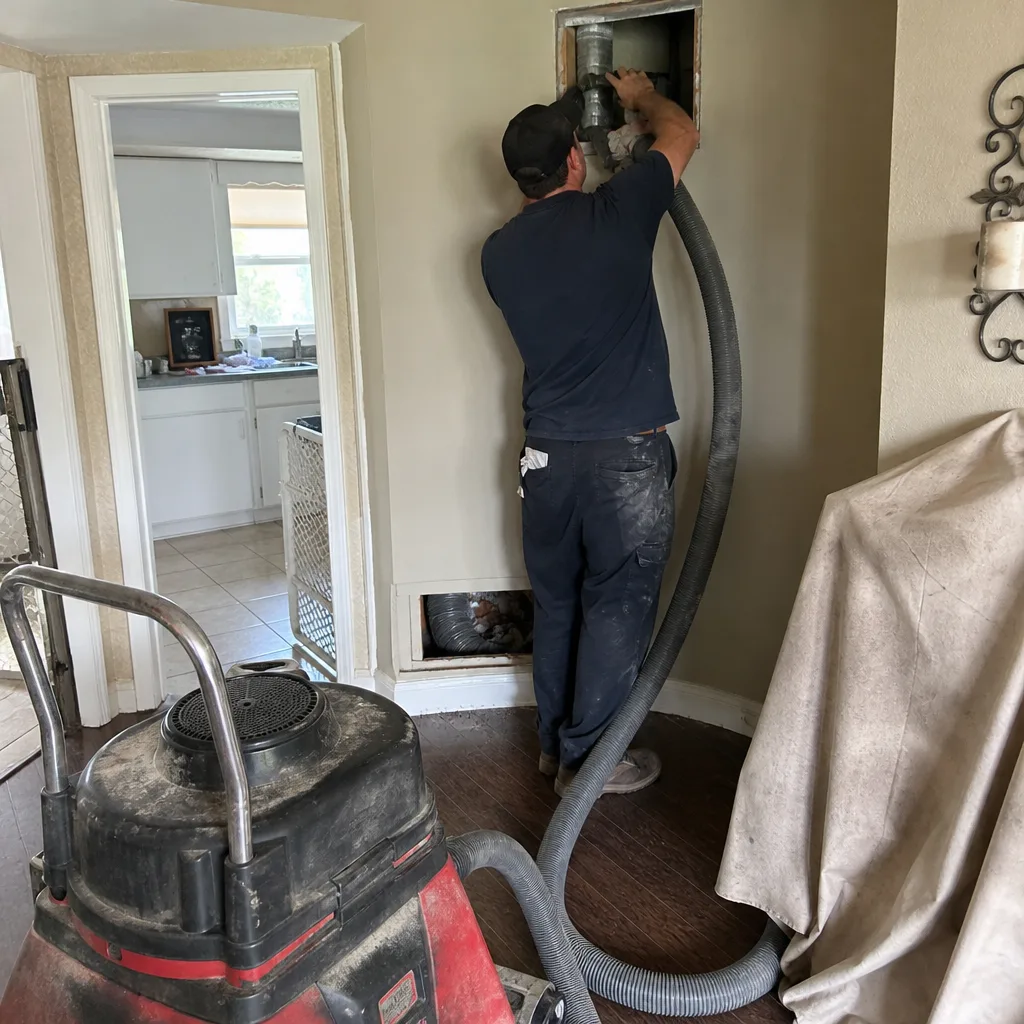 Before
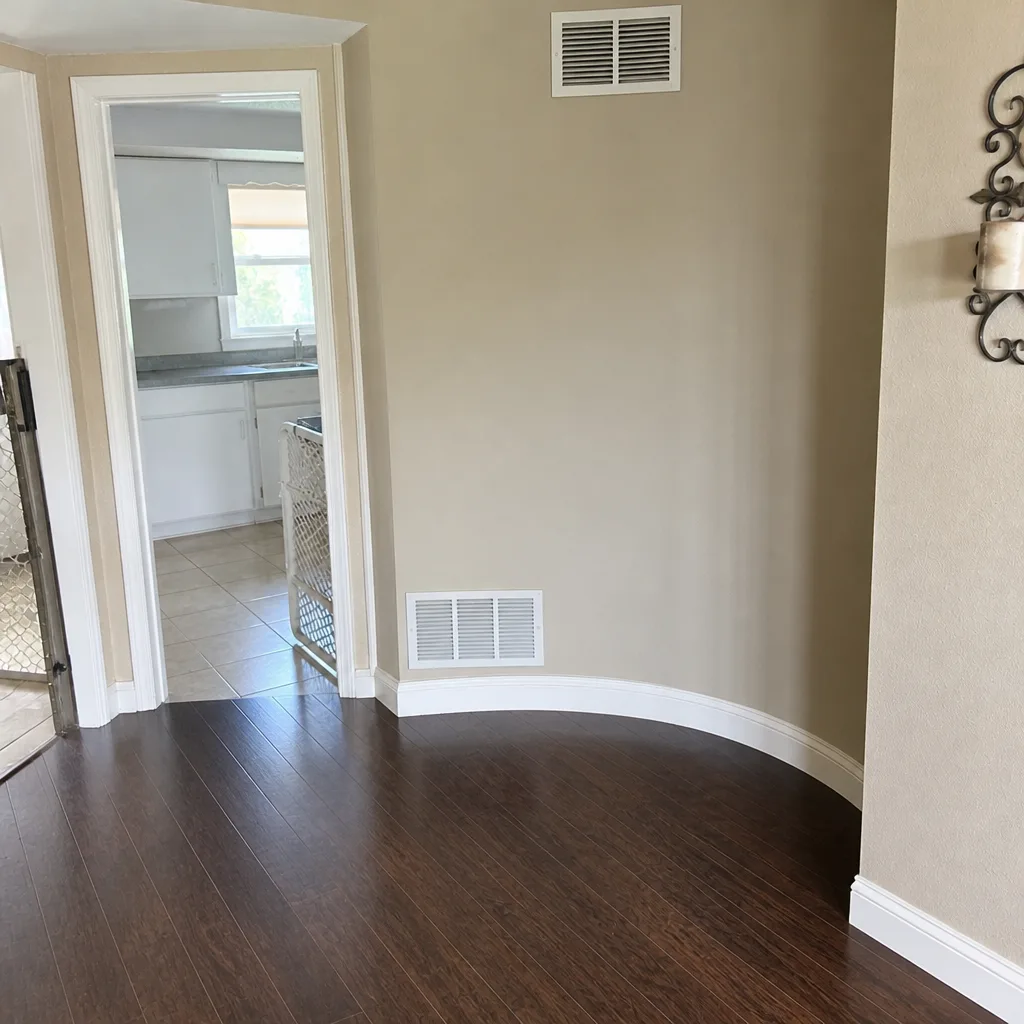 After
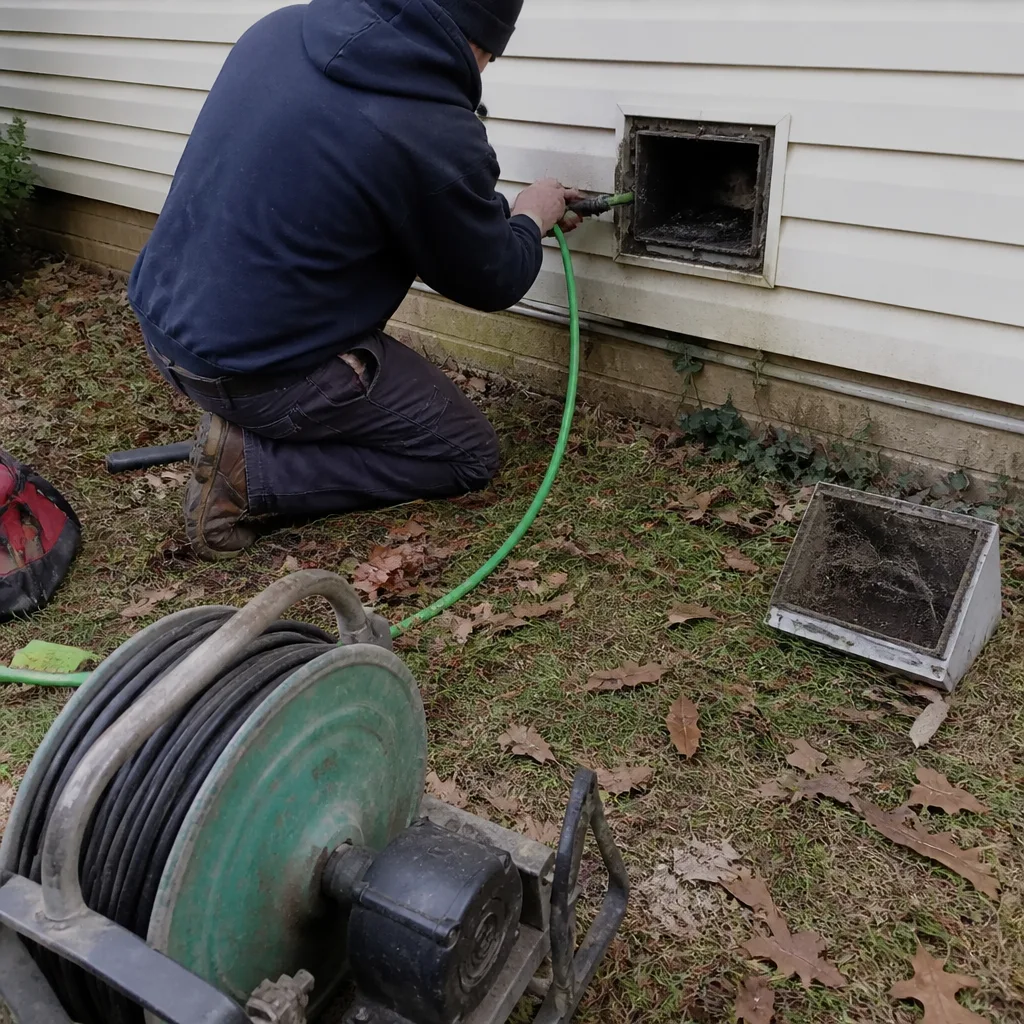 Before
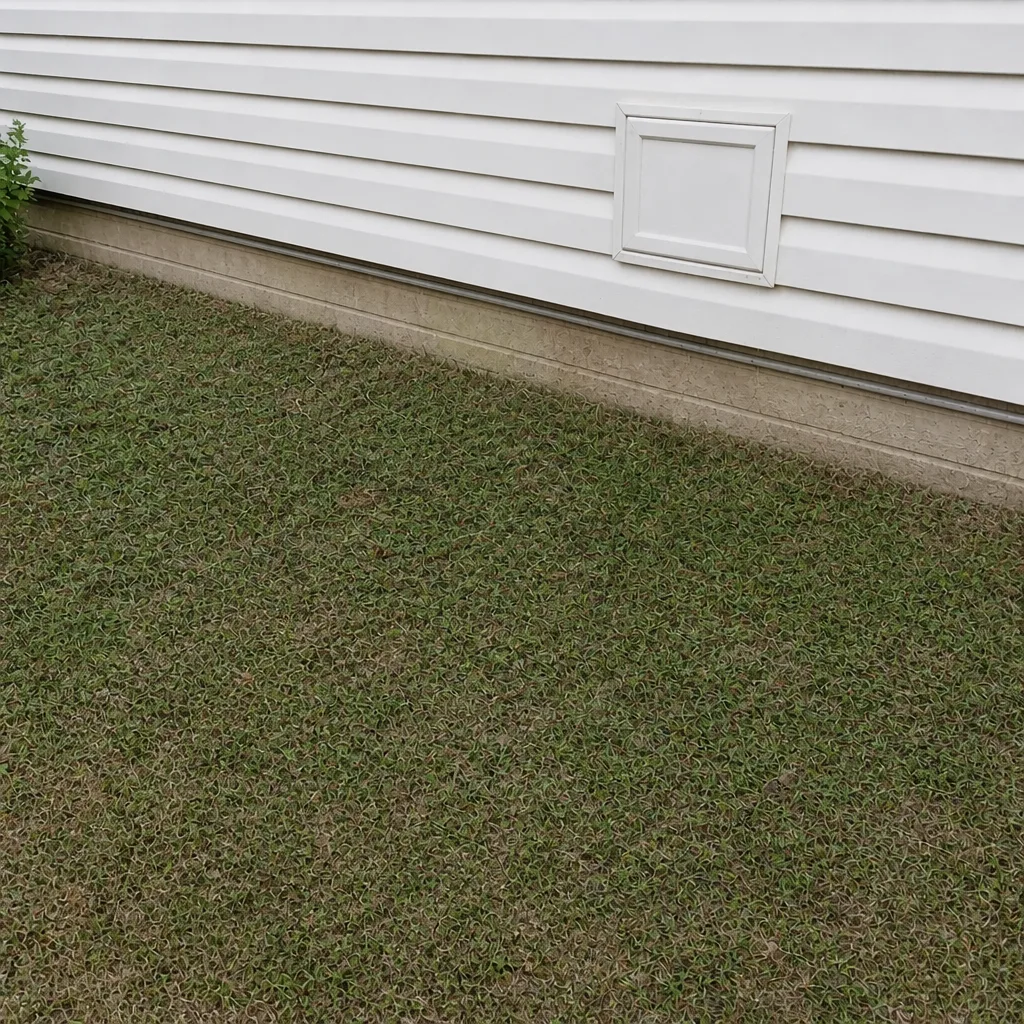 After
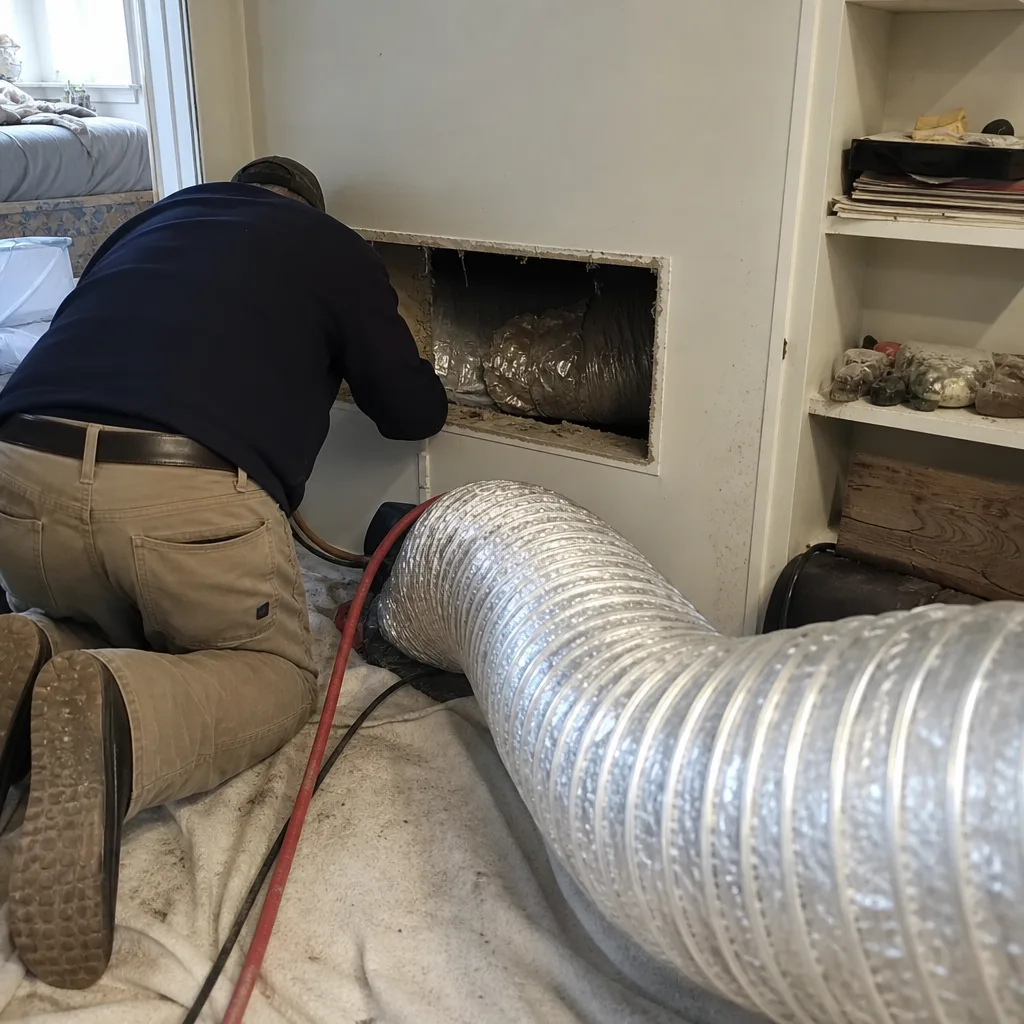 Before
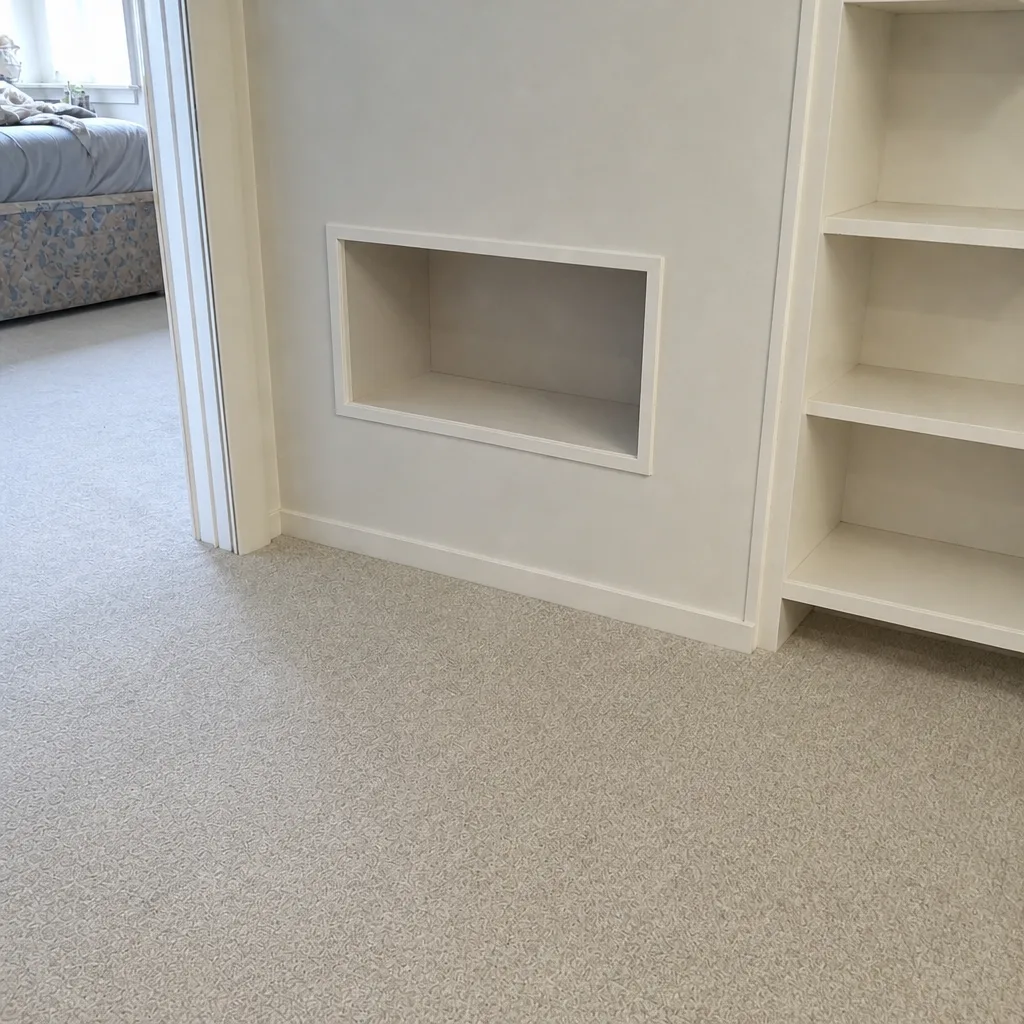 After
When to Call a Professional
Call a professional when the visual check turns up visible debris or moisture inside the ductwork, when a musty odor comes from the registers, when the dryer is taking noticeably longer than it used to, or when your calendar log says a full cleaning is due. Also call when renovation work has just finished, when you move into a home and don’t know the service history, or when you discover a gap, disconnected run, or crushed flex during an inspection. The repair line is where a general visual check stops being enough. We offer free estimates in Suffolk. Call (855) 740-0661. We answer 24/7. Fast dispatch from 7am to 7pm, Sunday through Friday.
Frequently Asked Questions
Most Suffolk homes need a full cleaning every 3 to 5 years, dropped to 2 to 3 years for homes with pets, allergy occupants, or recent renovations. The base interval is a starting point. The visual check and the condition findings inside the ducts determine the real due date, and a home in Suffolk with high summer humidity should get a post-summer moisture check every year regardless of the cleaning cycle.
Pricing depends on the size of the system and the condition of the ductwork, so the honest answer is that it’s set per job by a written estimate, not by a per-vent or coupon figure. A coupon price that grows on arrival is exactly the pattern to avoid. We give a free written estimate, agree one flat price per system before work starts, and include before-and-after photos of your own ducts. Call (855) 740-0661 for an exact quote.
Cheap quotes usually mean one of three things: consumer-grade equipment, no containment, or a teaser price that grows once the technician is on site. Professional cleaning uses contact-cleaning tools and high-powered vacuum systems plus negative-air containment so debris is captured, not pushed into the living space. A low quote that can’t cover that equipment and labor is not the same service. Ask what equipment and containment are used before you book. Call (855) 740-0661 for a free estimate.
Once a year is the baseline for most homes, and more often when the dryer takes longer than one cycle, the outside vent flap doesn’t open fully, or the vent run is long with multiple elbows. Dryer vent cleaning reduces fire risk, and the NFPA cites failure to clean as a leading contributor. It’s a separate service from duct cleaning on the calendar. Call (855) 740-0661 to book a dryer vent inspection.
Ask for before-and-after photos of your own ducts, and keep them in the log. The photos document the condition found and the condition left, and they give the next technician a real reference. We include photos with every cleaning for this reason, along with one flat price per system agreed before work starts. Call (855) 740-0661 for a free estimate.
Yes. The high summer humidity in Suffolk means condensation can linger in ductwork and flex connections, and moisture is what feeds microbial growth between cleanings. That’s why the post-summer moisture check in September matters more here than a calendar-only schedule. If you smell musty air from the registers before heating season, that’s the trigger. Call (855) 740-0661 for an inspection.
The Bottom Line
A duct maintenance schedule is a calendar, not an interval. Filters go on a MERV-and-runtime schedule, dryer vents get an annual inspection with a shorter trigger list, and full-system cleaning sits on a 3 to 5 year baseline that drops to 2 to 3 years for pets, allergy occupants, or renovations. The Suffolk-specific step is the post-summer humidity check in September, before heating season. Log what happens after every service, ask for before-and-after photos, and the schedule starts to run itself. If you’re ready for a free estimate on a cleaning, an inspection, or a vent check, call (855) 740-0661. We answer 24/7. Fast dispatch from 7am to 7pm, Sunday through Friday, closed Saturday.
Written by the team at Duct Cleaning Suffolk.